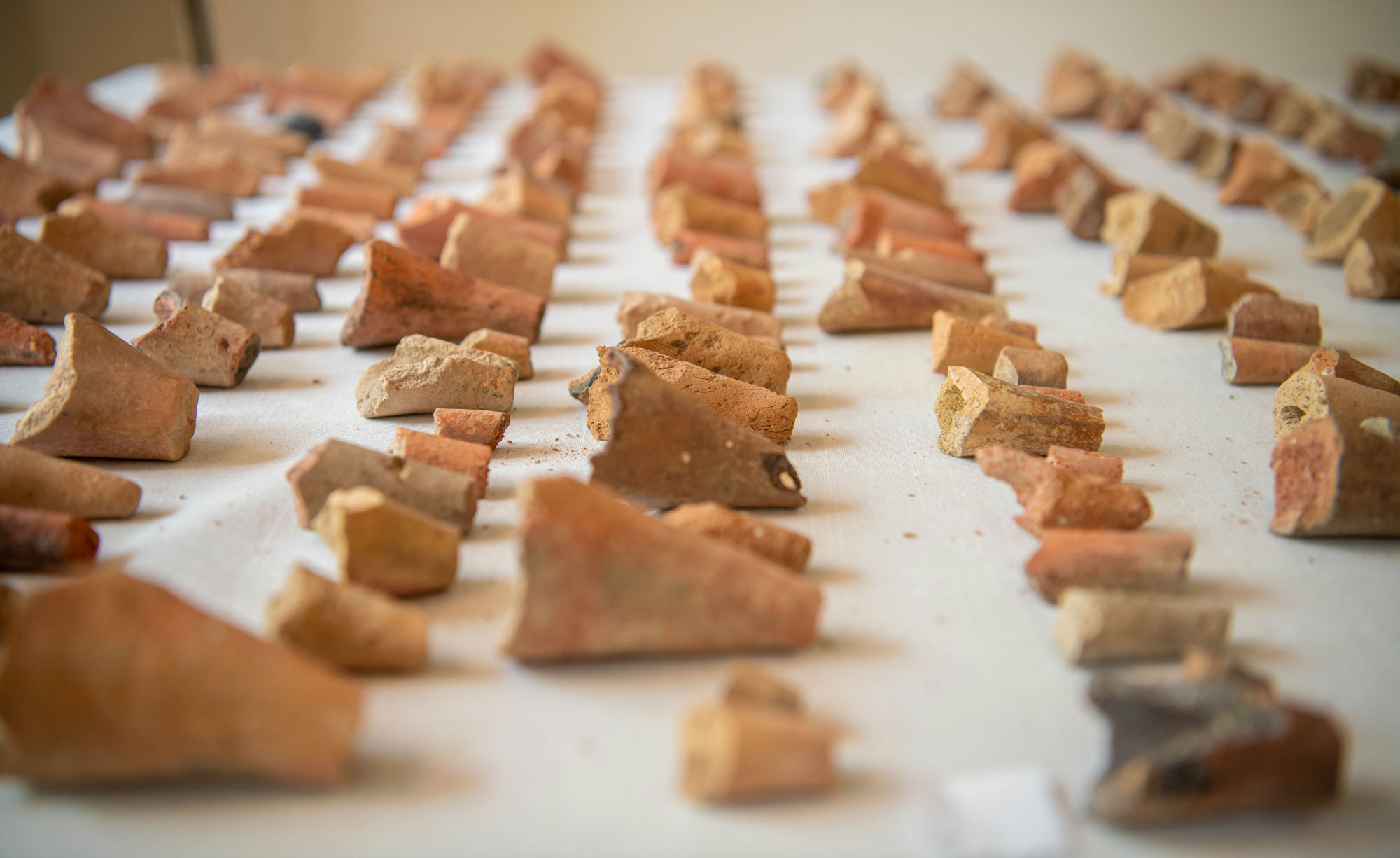
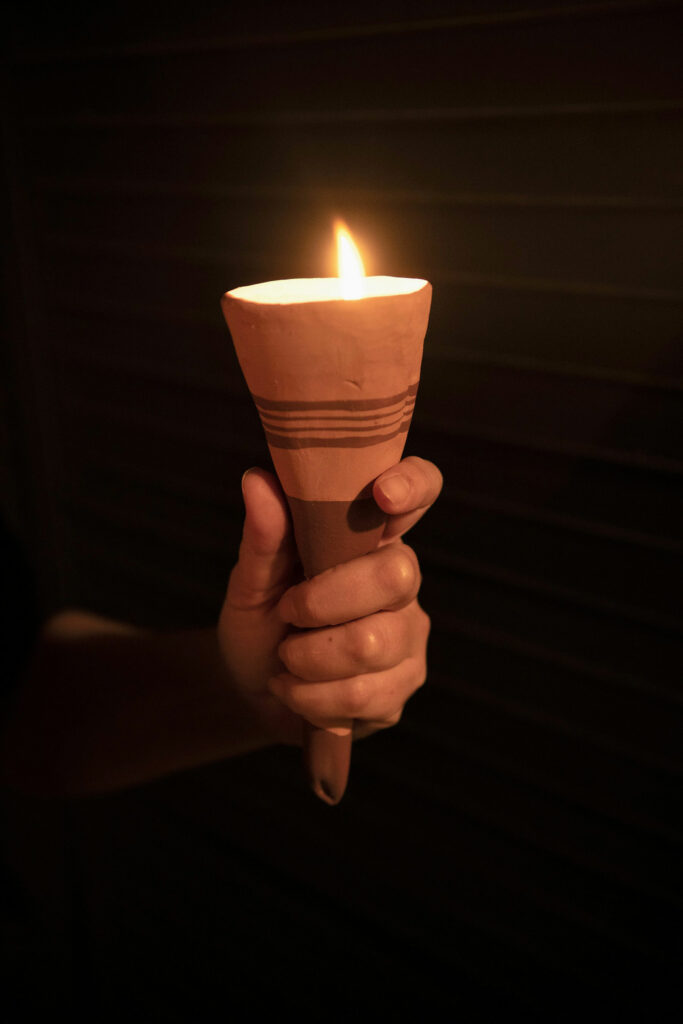
TEL AVIV, ISRAEL—According to a Phys.org report, archaeologists have previously suggested that conical ceramic vessels known as cornets, which have been found at multiple sites in the Levant, could have been used to process dairy, smelt copper, or as beeswax lamps during the Chalcolithic period, between about 4500 and 3600 B.C. Sharon Zuhovitzky, Paula Waiman-Barak, and Yuval Gadot of Tel Aviv University examined cornets and cornet fragments recovered from Teleilat Ghassul, an archaeological site in Jordan. Soot and beeswax were found on some of the pottery, supporting the idea that the vessels were used as lamps. “In my experimental work, beeswax-filled cornets burned for up to nine hours,” Zuhovitzky said. “This duration depends on the quantity and quality of the wax,” she added. The valuable beeswax for the lamps may have been collected from wild hives, or it may have been collected by beekeepers from beehives made from unfired clay, which would not have been preserved, Zuhovitzky argued. “I have suggested that the cornets may have been partially filled with another substance, such as clay, before the wax was added. This would reduce the volume of wax required and improve the lighting function by positioning the flame higher in the vessel,” she concluded. To read in-depth about the Chalcolithic period in the Near East, go to "Ahead of Their Time."