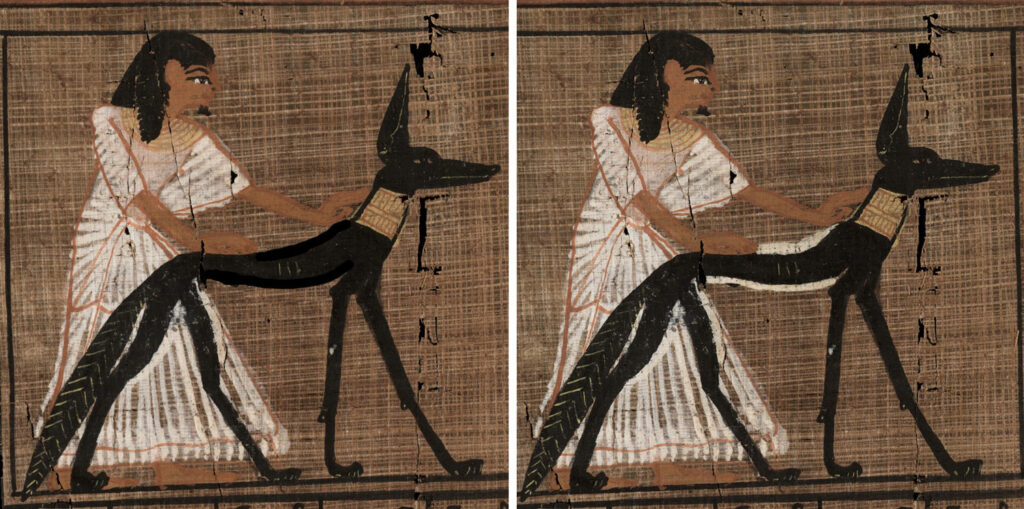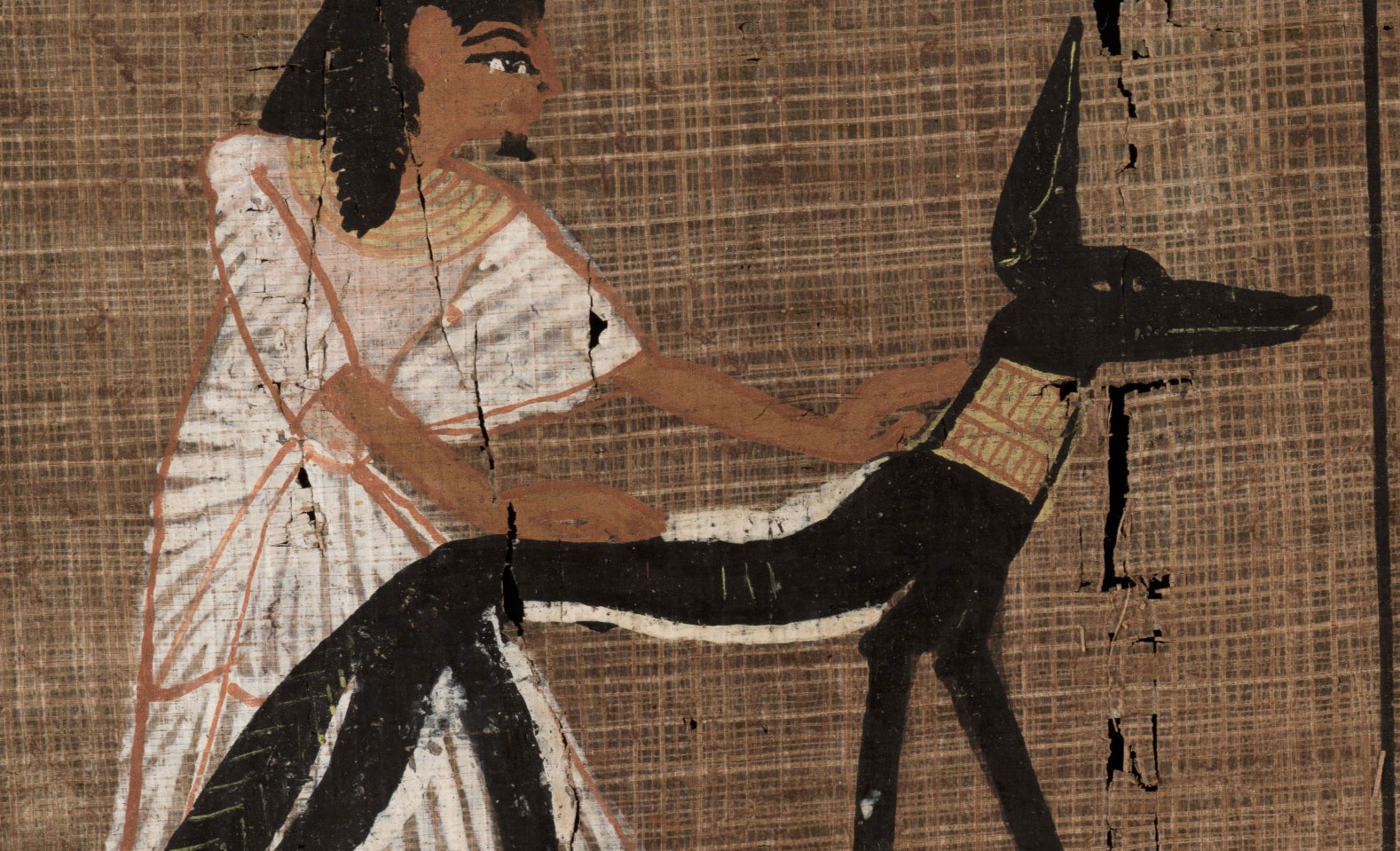
CAMBRIDGE, ENGLAND—Curators at the Fitzwilliam Museum noticed that an image of a jackal on a 3,300-year-old Egyptian papyrus had been modified with white fluid, according to an ArtNet News report. The modified picture was found in a copy of the Book of the Dead made for a royal scribe named Ramose, whose tomb was discovered by William Flinders Petrie in 1922. The image shows Ramose placing his hands on the body of a jackal, identified as Wepwawet, a god of war and hunting. Bold, white lines had been applied to either side of the jackal’s body and the upper halves of its back legs. “It’s as if someone saw the original the way the jackal was painted and said, ‘it’s too fat; make it thinner,’” said Fitzwilliam Museum curator Helen Strudwick. When examined with infrared photography and a 3D digital microscope, Strudwick and her colleagues confirmed that the white lines, a mixture of calcite and huntite, had been painted over the black of the jackal’s figure. Flecks of yellow had been added to the white mixture, presumably to help the correction blend with the color of the papyrus, which would have been much paler 3,300 years ago than it is today.