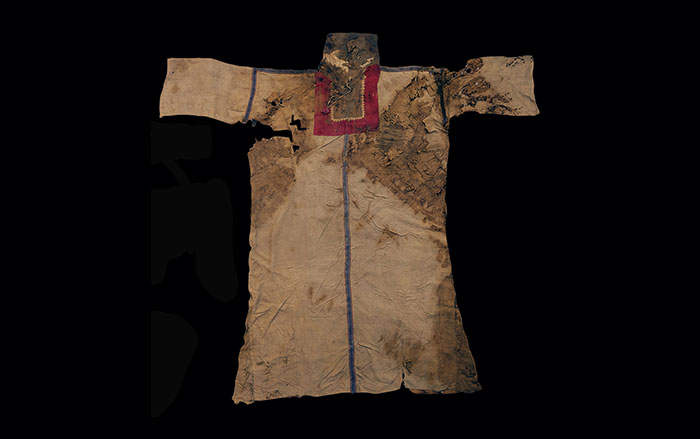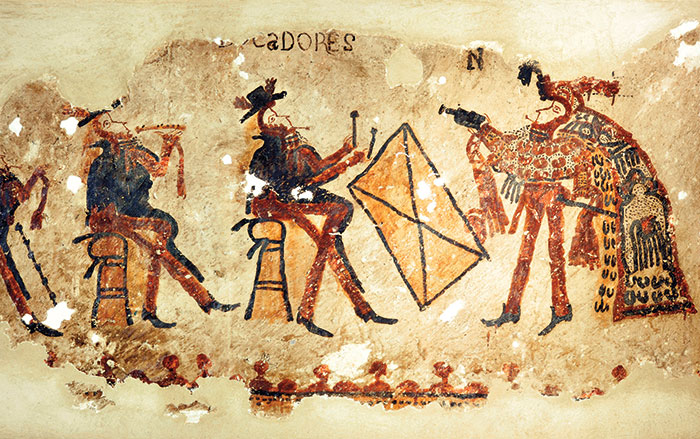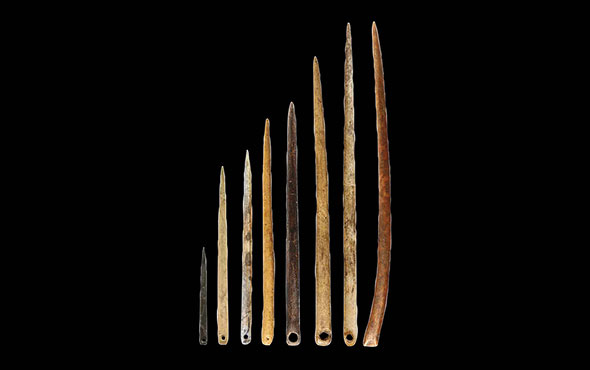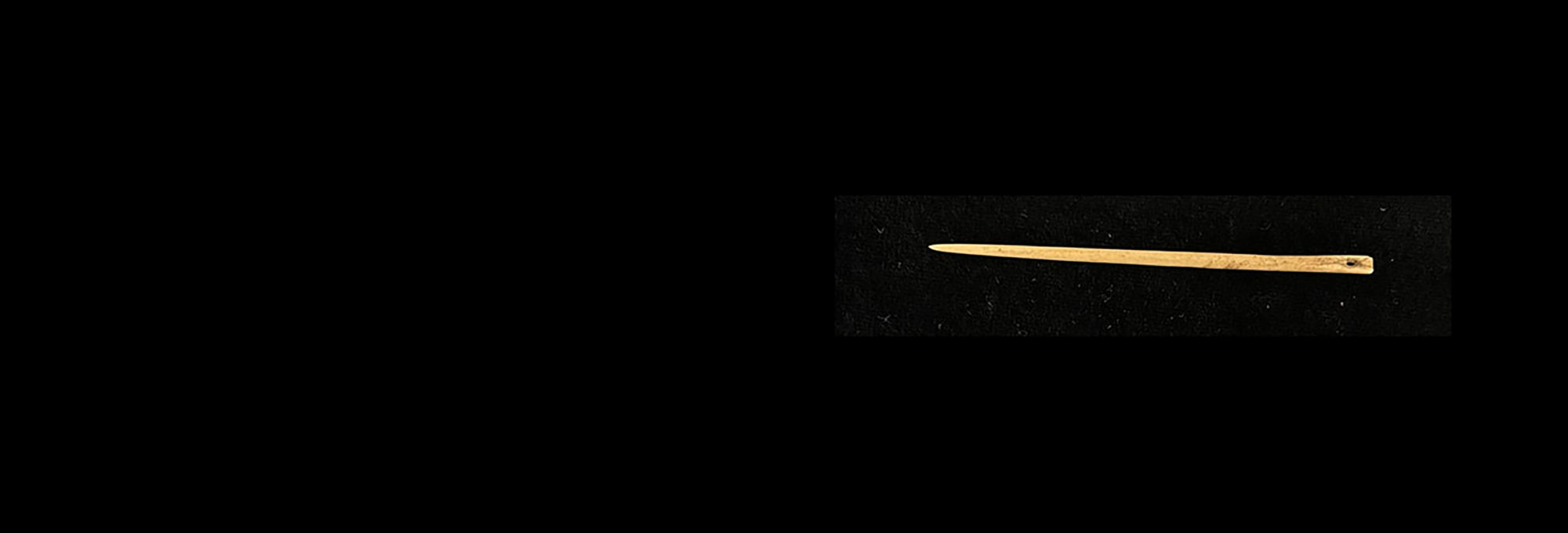
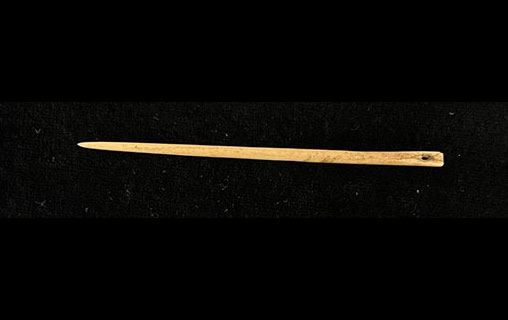
LARAMIE, WYOMING—According to a statement released by the University of Wyoming, McKenna Litynski of the University of Wyoming and her colleagues reviewed hundreds of ethnographic documents dating from the eighteenth through the twentieth centuries for patterns of needle and awl use, and determined that they were most commonly used for sewing. Statistical modeling of the information also suggests that the use of needles and awls was recorded more often in colder climates, where warm, tailored clothing would have been necessary for survival. Needles and awls were also found to have been used for medical suturing, fishing, tattooing, basketry, and ceremonial activities. Read the original scholarly article about this research in PLOS One. To read about North American hunter-gatherers' use of needles to sew clothing, go to "Ice Age Needlework."