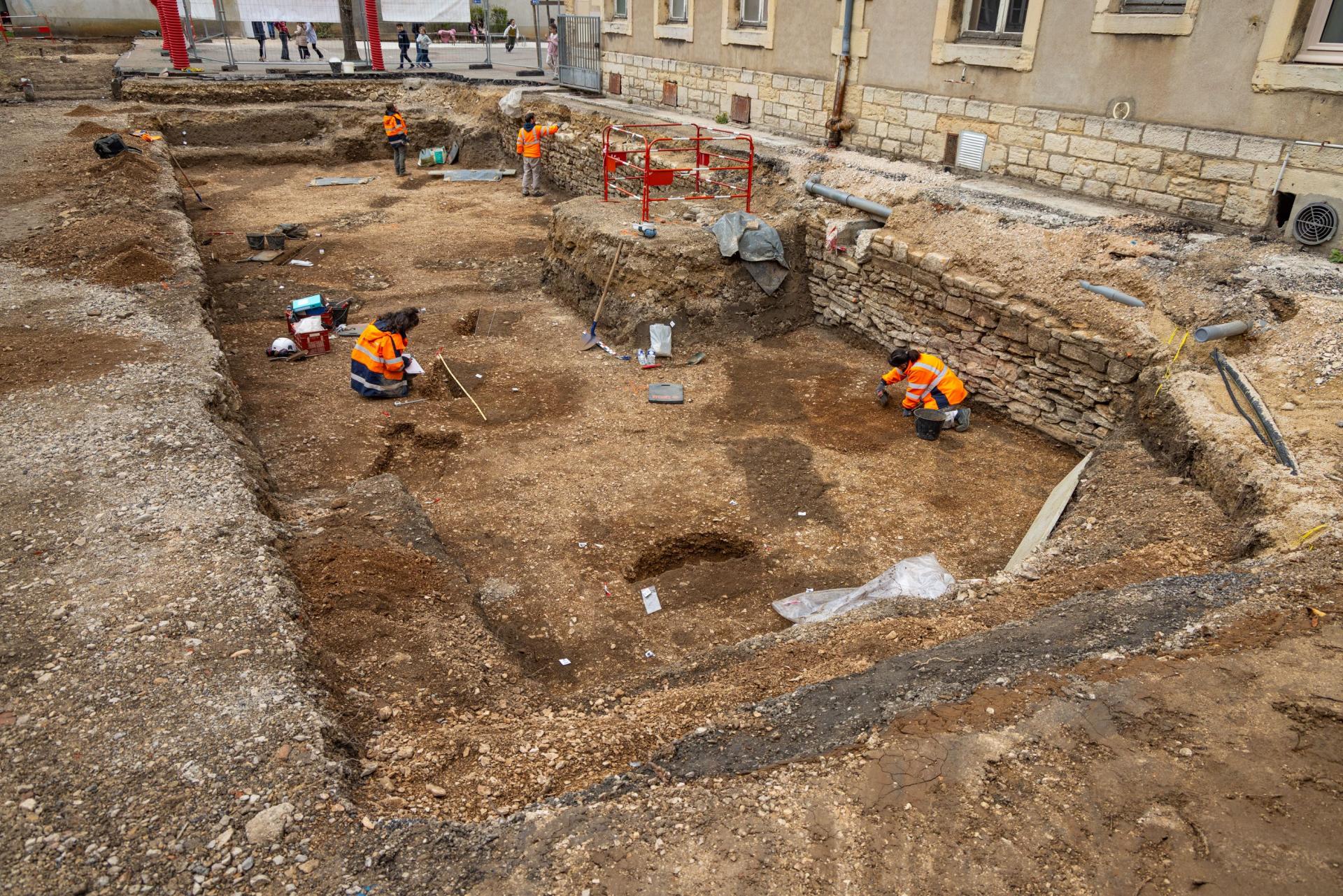
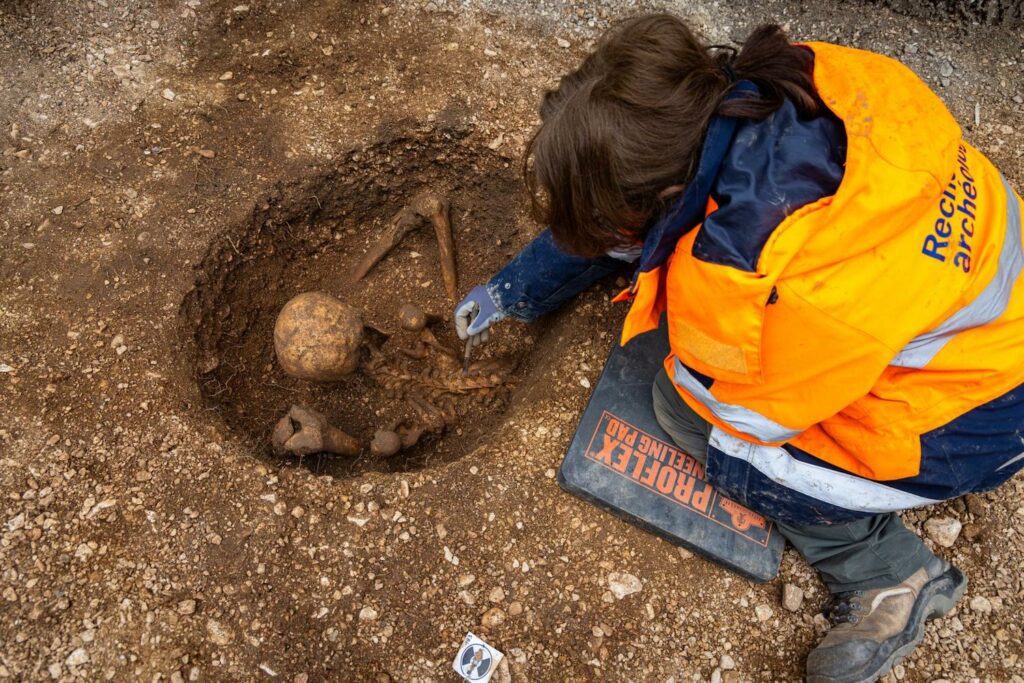
DIJON, FRANCE—A well-preserved skeleton has been found sitting upright and facing west on the site of a school in eastern France's city of Dijon, according to a report in The Guardian. The person had been placed at the bottom of a pit measuring about three feet wide, with his back resting on the eastern wall. His hands rest in his lap. In all, about 20 similar burials have been found in Dijon’s city center. All of the remains belong to male individuals, except for one child, and all have been dated to between about 300 to 200 B.C. “Given the number and quality of these discoveries, we can say there was a significant Gallic settlement in Dijon,” said Regis Labeaune of the French National Institute of Preventive Archaeological Research (INRAP). A single Gallic armband is the only grave good recovered from the 20 burials. Five of the skeletons bear signs of violence, including a fatal skull wound. “Their bones display traces of osteoarthritis, suggesting intense physical activity,” added Annamaria Latron of INRAP. She explained that the original surface layer above the burials is missing, making it difficult to understand why the men were buried in this manner. To read about another discovery from Dijon, go to "A Catalog of Princes."