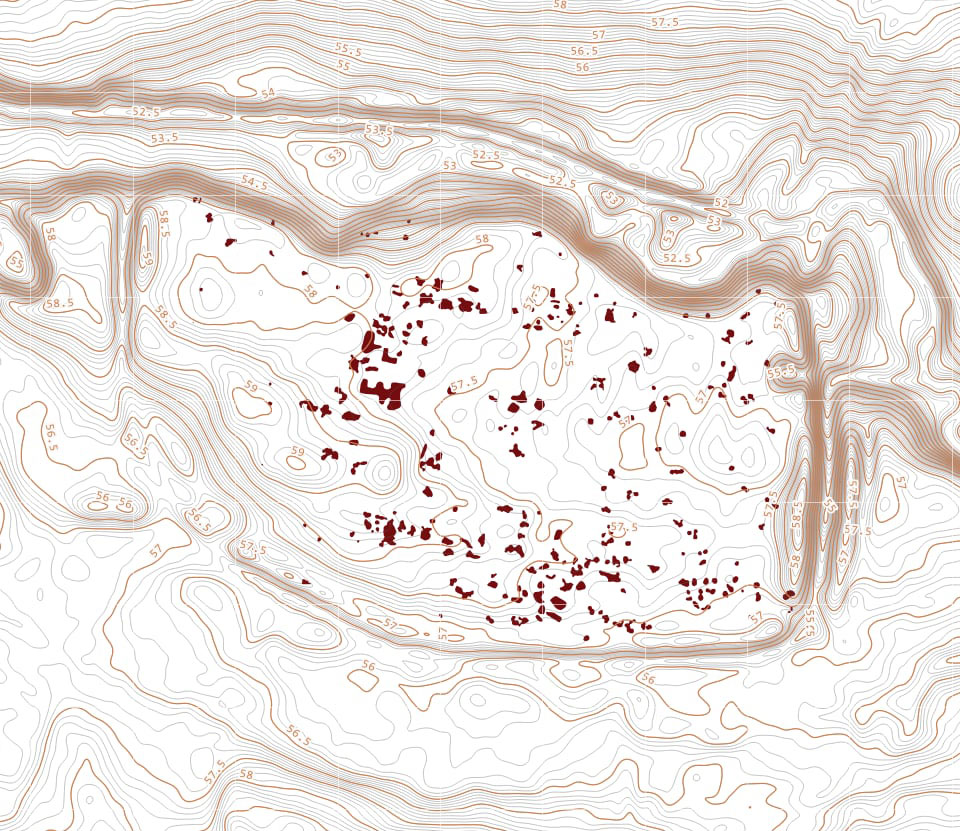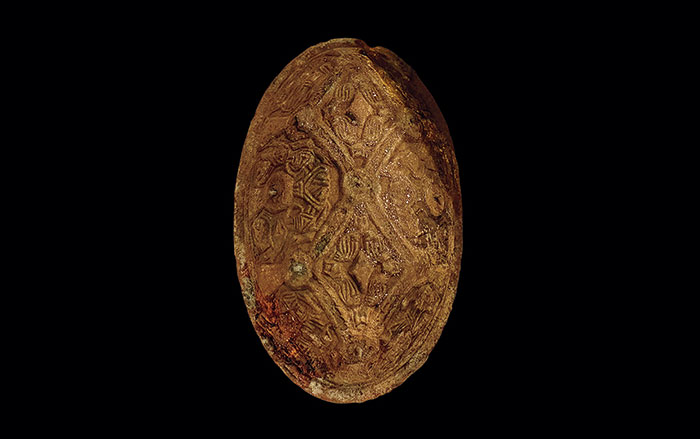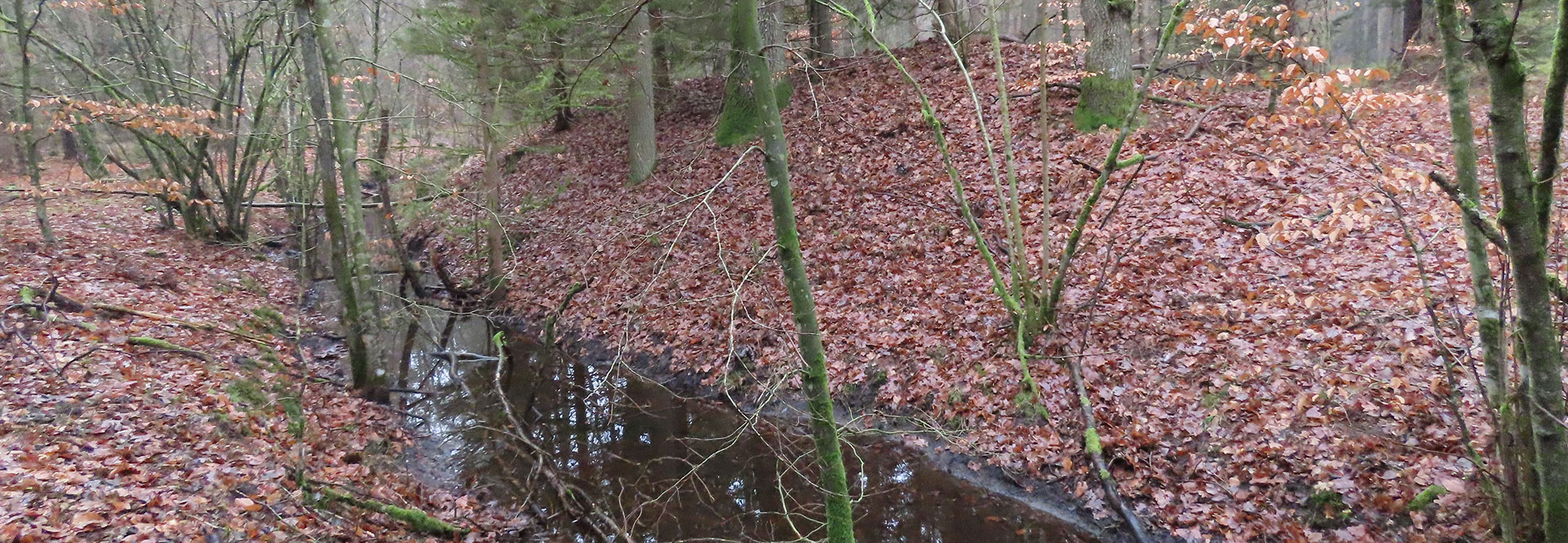
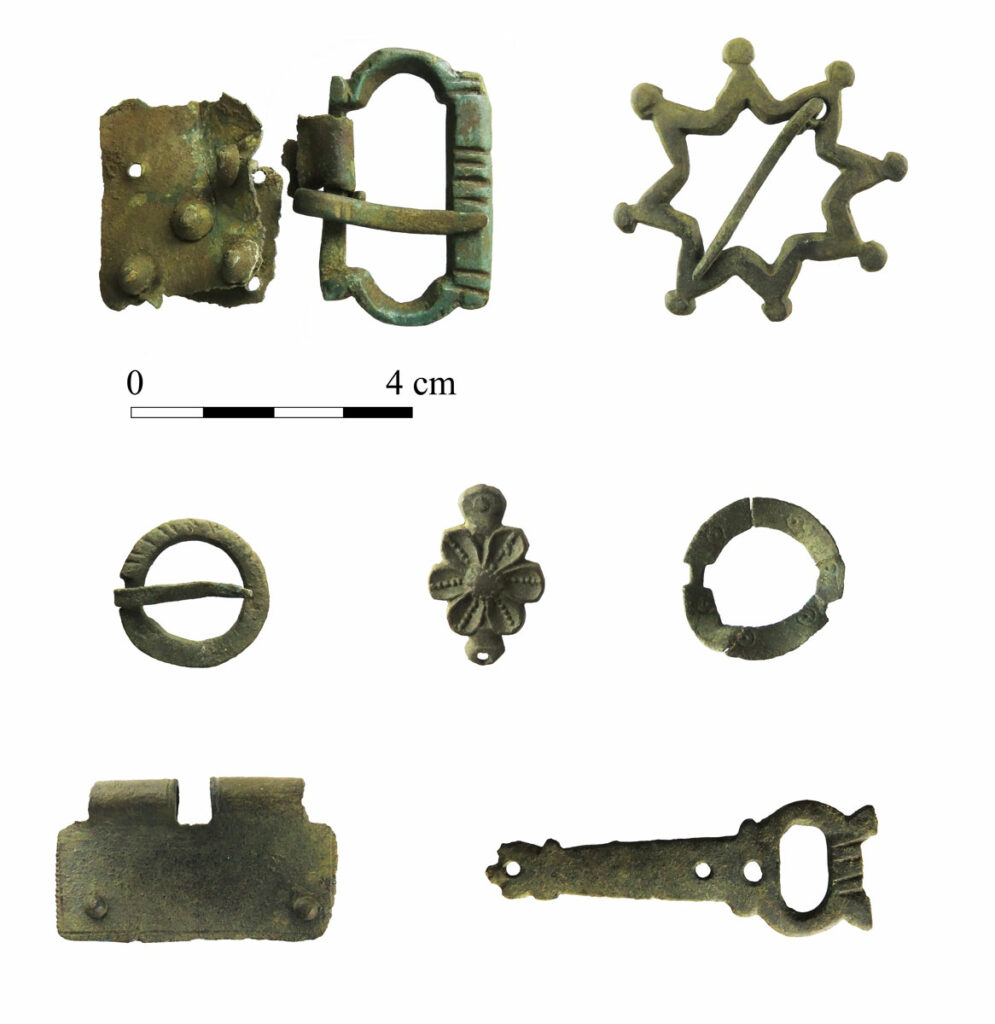
SŁAWOBORZE, POLAND—Science in Poland reports that researchers from the Relicta Foundation, with the support of the Polish Ministry of Culture and National Heritage, have found traces of a medieval town in a heavily forested area of northwestern Poland. The site has been identified as Stolzenberg, which was mentioned in records dating to the sixteenth and nineteenth centuries. A metal detector search of the site several years ago recovered more than 400 items, such as tools, belt fittings, brooches, and coins dated to between the thirteenth and fifteenth centuries. Last year, geophysical analysis, a lidar drone survey, and drilling confirmed the presence of a medieval site. Archaeologist Piotr Wroniecki said that the layout of the town is characteristic of towns founded under German law of the time. There’s a possible central market square surrounded by long, narrow plots of land, and a main street leading to the town gate. Buildings were constructed on some of the plots surrounding the square, Wroniecki added. The town had been protected by a moat and earthwork fortifications, which are still visible. Radiocarbon dating suggests that the town may have been founded in the late thirteenth or early fourteenth century, and so may have been built as a frontier outpost by the Margraves of Brandenburg, who controlled the nearby region of Neumark. More research is required to understand why the town was founded and abandoned, however, concluded Marcin Krzepkowski of the Relicta Foundation. To read about the submerged ruins of an eleventh-century hillfort in western Poland, go to "A Familiar Face."