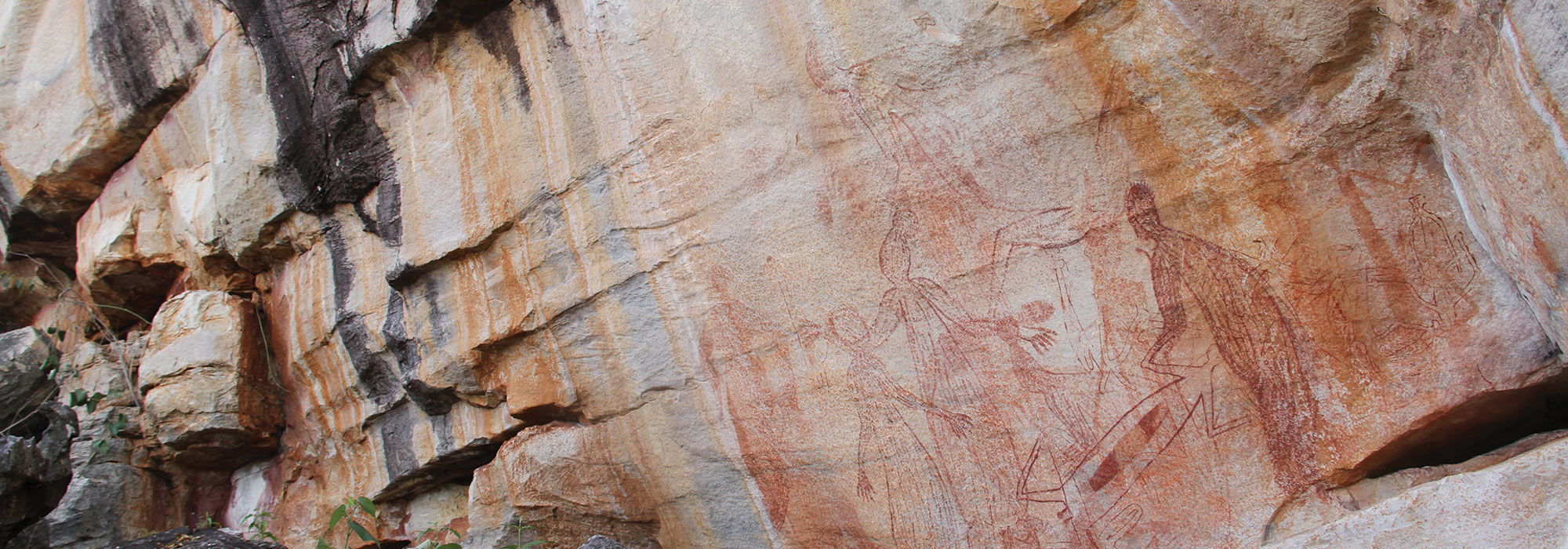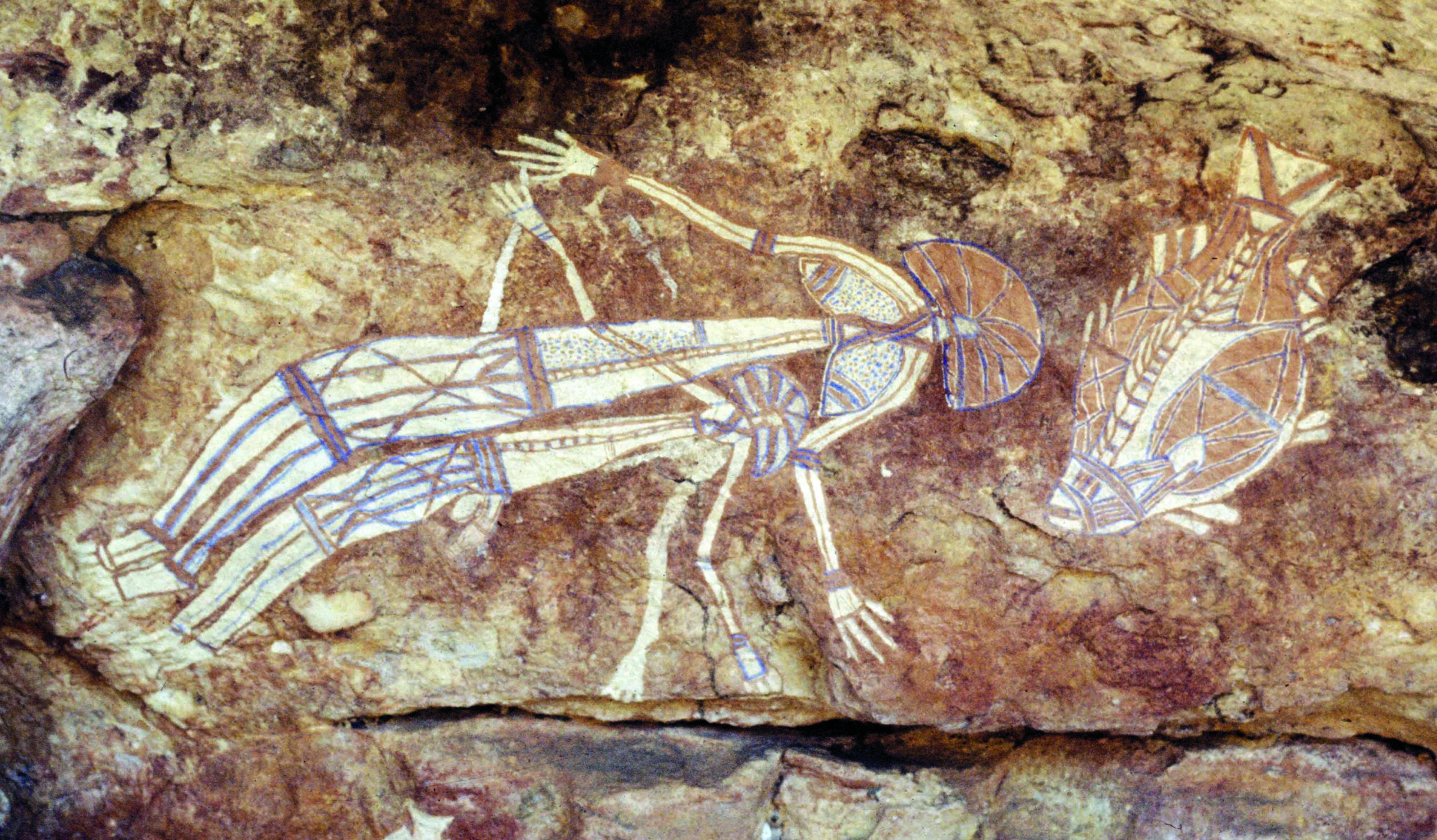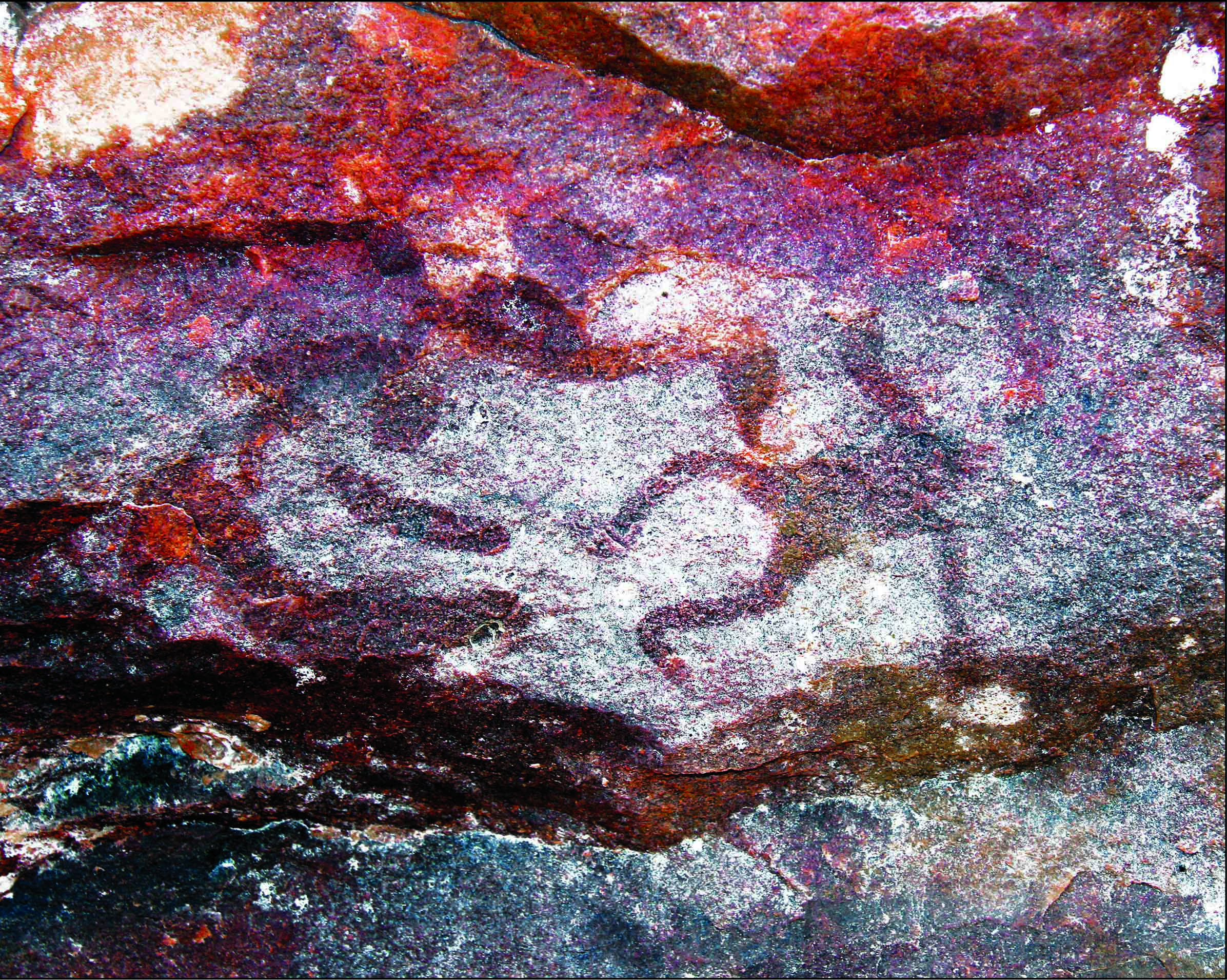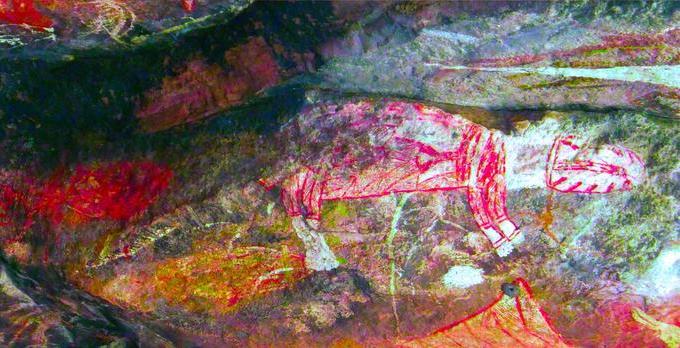
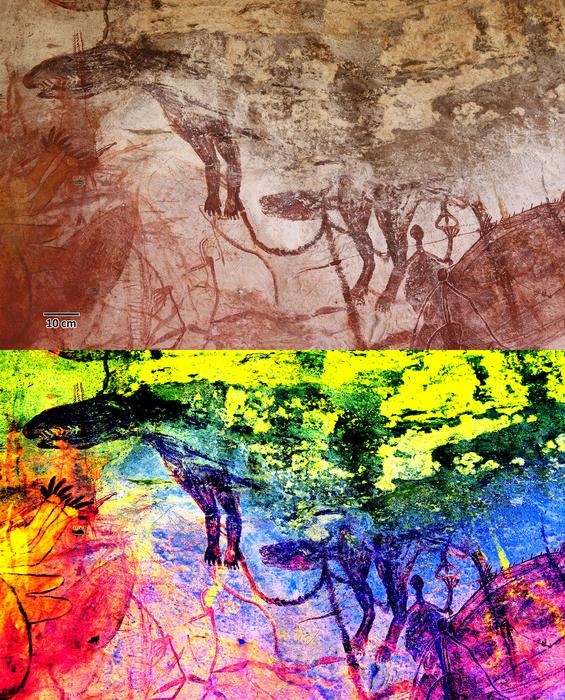
ARNHEM LAND, AUSTRALIA—Live Science reports that Tasmanian tigers, or thylacines, have been identified in rock art in northern Australia. It had been previously thought that that the carnivorous marsupial died out on the Australian mainland about 3,000 years ago, but the 14 drawings suggest that it may have survived in the north for another 2,000 years. These images show a dog-like animal with rounded ears and a long muzzle, sometimes with stripes. The longest drawing is almost five feet long. “The artists who made the more recent paintings may have seen actual living thylacines and some of these creatures may have survived longer in Arnhem Land,” said Paul Taçon of Griffith University. “Alternatively, artists may have been inspired by earlier paintings,” he added. The last known thylacine died in a Tasmanian zoo in 1936. Two images of Tasmanian devils, an animal that survives in Tasmania, were also discovered in northern Australia. One of these images depicts figures of humans and a Tasmanian devil with an eel-tail catfish drawn over part of it. In this rock art panel, the Tasmanian devil measures more than one foot long. In the second drawing, the Tasmanian devil measures about two feet long and is depicted with an open mouth revealing sharp teeth. A fish has been painted over its legs in this image as well. Read the original scholarly article about this research in Archaeology in Oceania. To read about other depictions of thylacines, go to "Letter from Australia: Where the World Was Born."