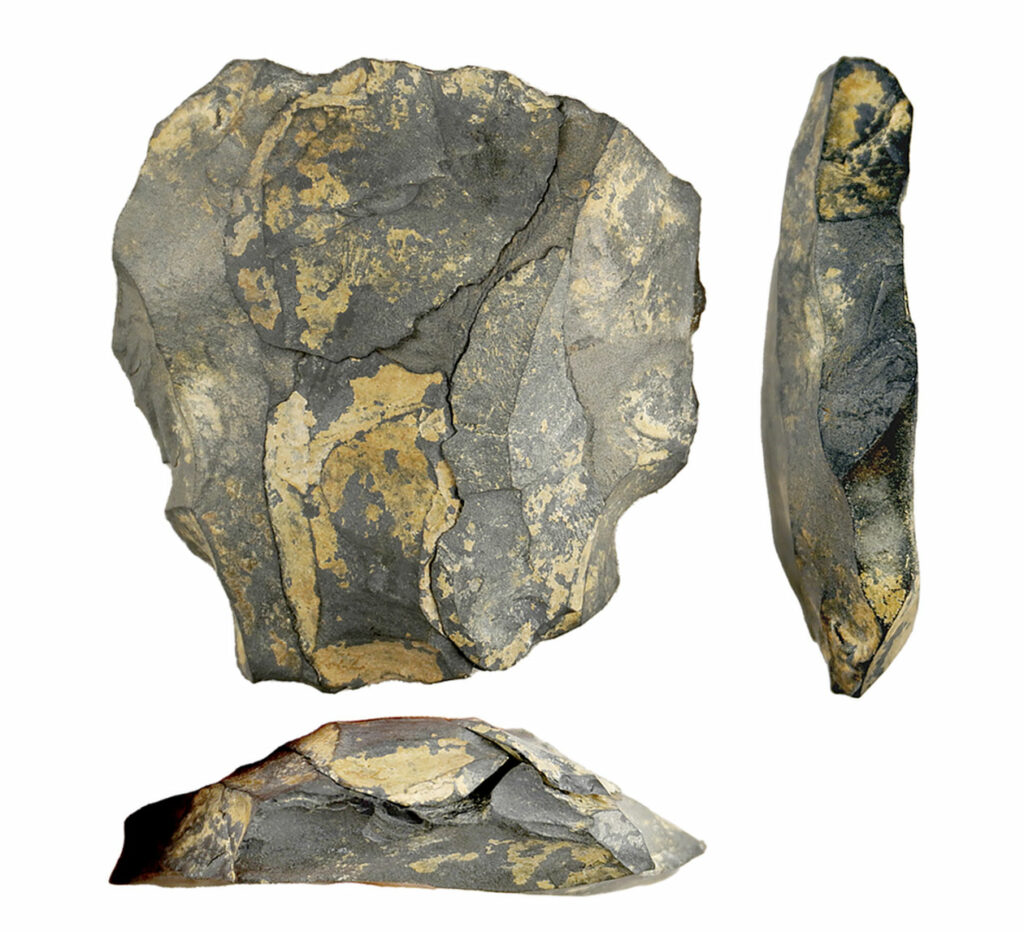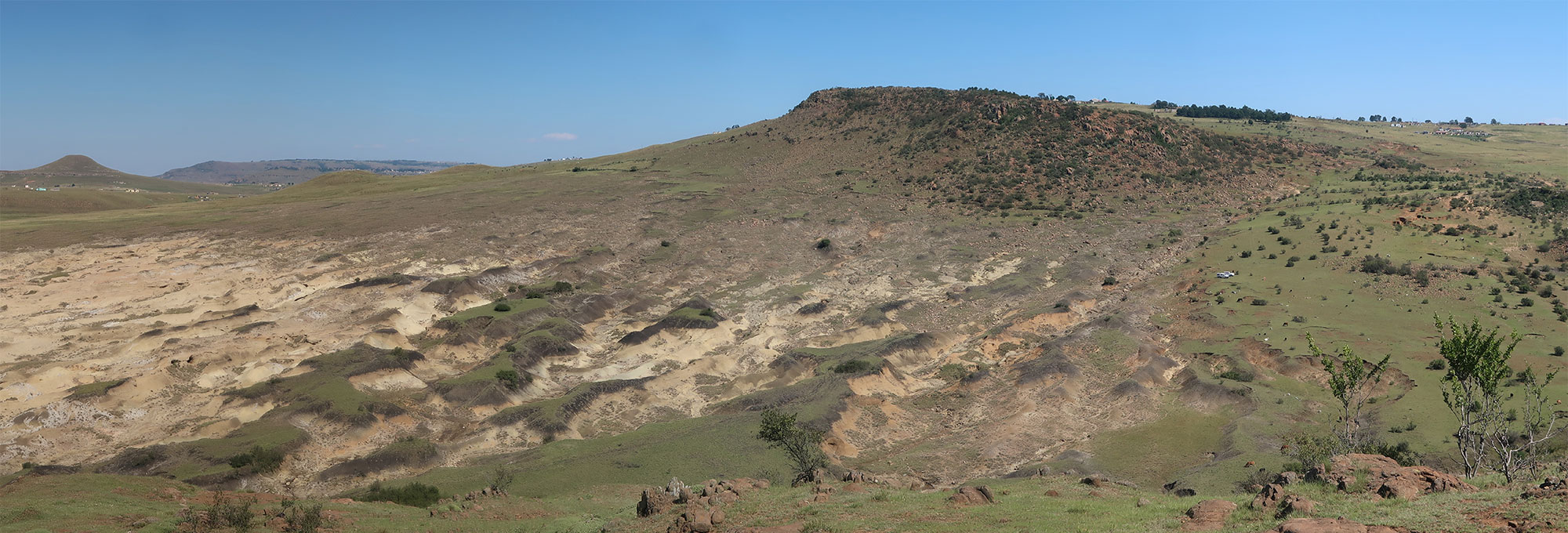
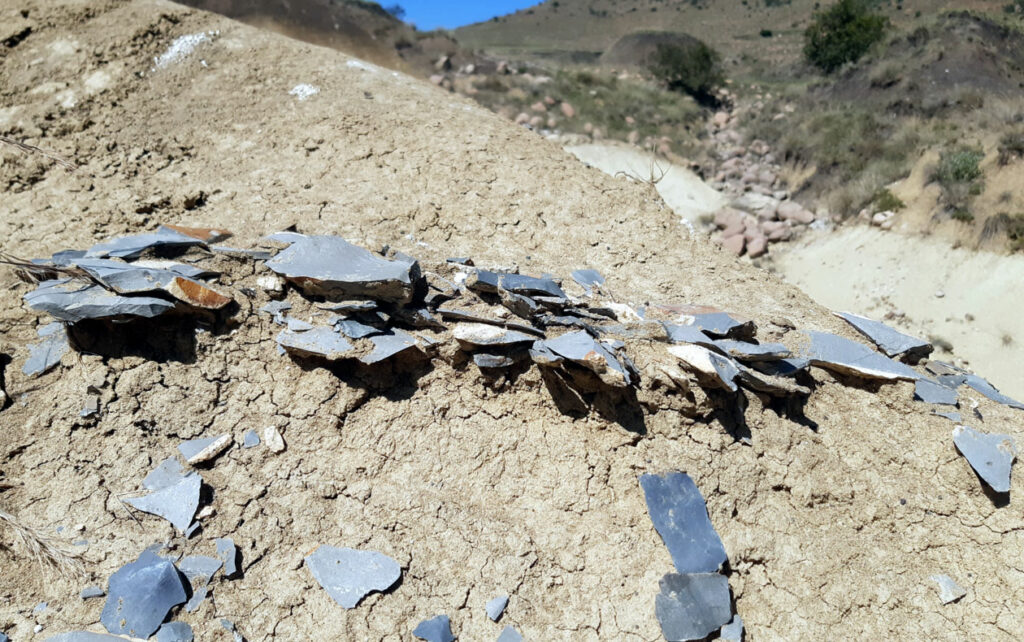
TÜBINGEN, GERMANY—According to a statement released by the University of Tübingen, evidence of quarrying some 220,000 years ago has been discovered at the Jojosi site in eastern South Africa by a team of researchers led by Manuel Will of the University of Tübingen. It had been previously thought that early modern humans found stones for making tools incidentally as they looked for food. Team member Gunther Möller reassembled more than 350 rock fragments recovered from the site into “refits,” or stones that had been broken apart by knapping. “With these 3D puzzles, we were able to see precisely where and how material was chipped off and in what order,” Möller said. “Several of these puzzles together then allow us to draw conclusions about the form of the actual end product, before it was taken to another place,” he explained. The lack of tools or traces of other activities conducted at the site suggests that people traveled to Jojosi only to obtain the desired rocks. This practice continued for about 100,000 years, based on luminescence dating of the finds. Read the original scholarly article about this research in Nature Communications. To read about hunter-gatherers in southern Africa who traveled long distances some 40,000 years ago to obtain special stones for toolmaking, go to "Source Material."