

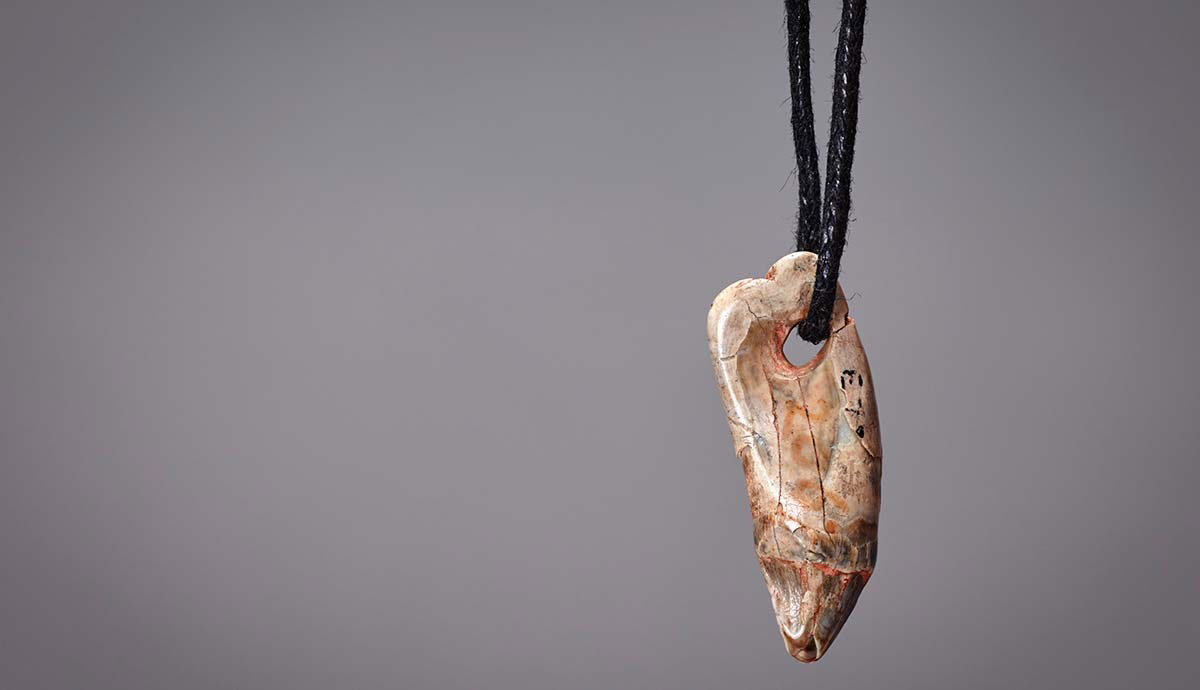
LONDON, ENGLAND—A new study of an artifact unearthed 160 years ago in southwestern England has determined that it came from an adult male grey seal, and not a badger, wolf, or beaver, as had been previously suggested. According to a statement released by London’s Natural History Museum, the researchers, led by Simon A. Parfitt of University College London, concluded that the tooth was extracted from a seal’s jaw, most of the root was removed, and a hole was carefully drilled into the remaining root with a pointed piece of flint some 15,000 years ago. “The pendant was probably worn for many years, because it’s become smooth through wear and repeated polishing,” said Silvia Bello of the Natural History Museum. “A long period of use would also explain why the neat circular hole became more oval shaped, as the cord gradually wore away at the tooth’s interior,” she added. The pendant is thought to have been lost by its owner in Kent’s Cavern, where it was discovered by William Pengelly, a Victorian-era archaeologist who kept notes on the layers of sediments and placements of the artifacts he found. At the time the pendant was lost, Kent’s Cavern was more than 60 miles from the coast, which suggests that people traveled long distances, perhaps to follow migrating animals. The grey seal tooth pendant could also signify that people traded across Britain, and possibly even Europe, the researchers explained. Read the original scholarly article about this research in Quaternary Science Reviews. To read about an 11,000-year-old shale pendant uncovered in North Yorkshire, go to "Mesolithic Markings."
Study Reviews Seal Tooth Pendant from Kent’s Cavern
News April 10, 2026
Recommended Articles
Digs & Discoveries May/June 2016
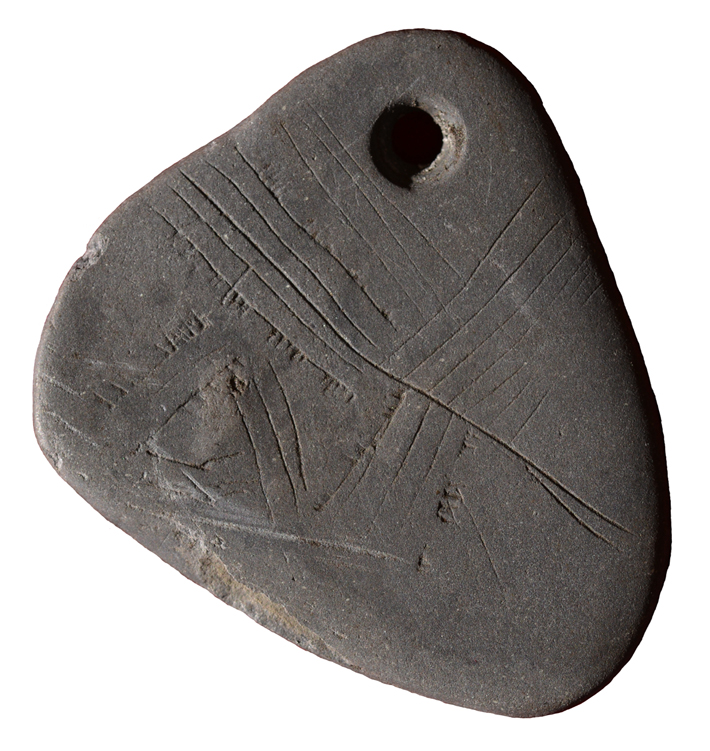
Mesolithic Markings
The Unexpected World of the Odyssey May/June 2026
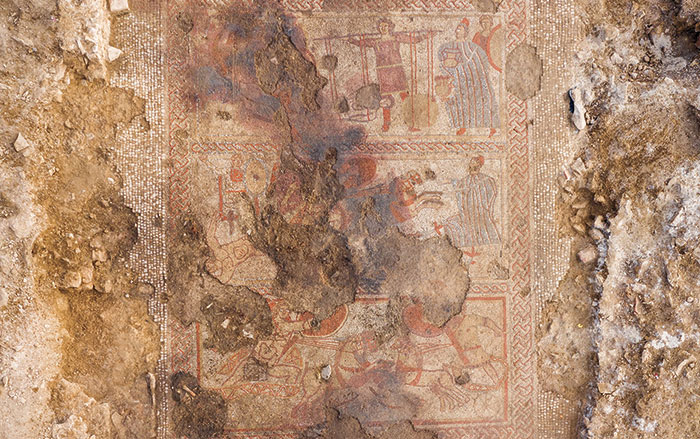
Another Trojan War?
Artifacts September/October 2025
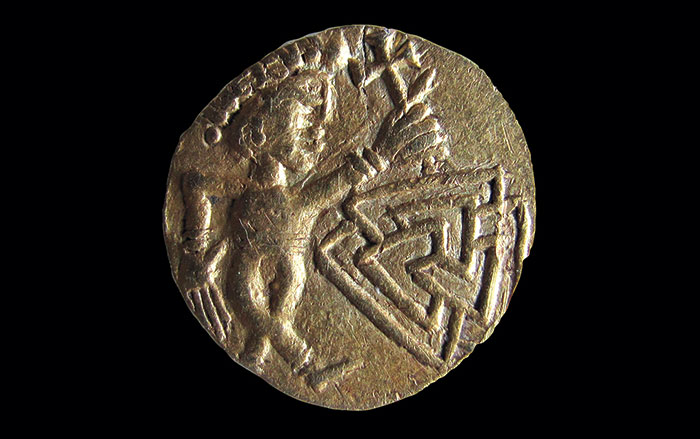
Anglo-Saxon Coin
More to Discover
Features March/April 2026
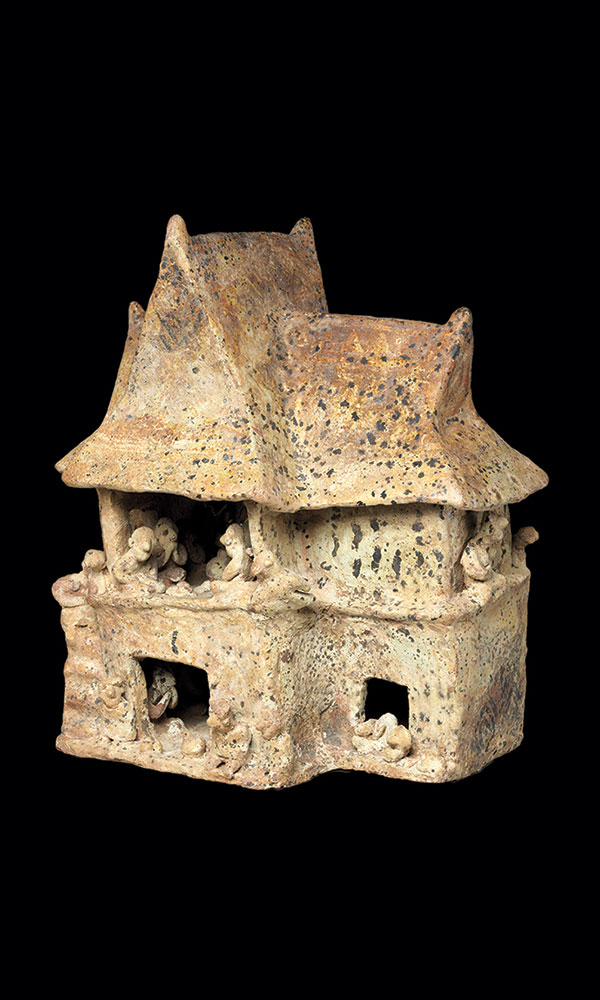
Model Homes
A look inside miniature worlds created for the living, the dead, and the divine

-
Features March/April 2026
Pompeii's House of Dionysian Delights
Vivid frescoes in an opulent dining room celebrate the wild rites of the wine god
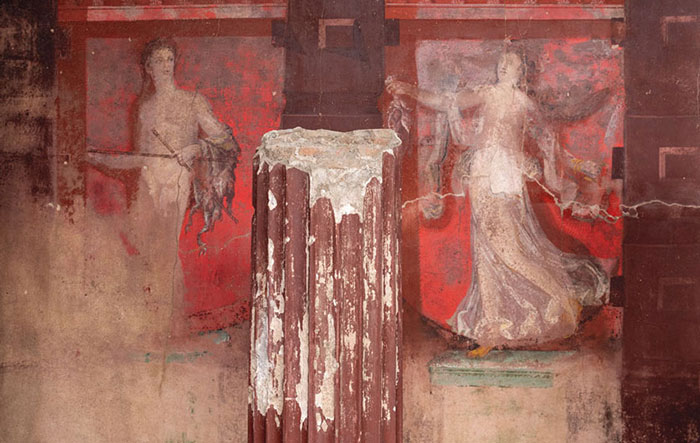 Courtesy Archaeological Park of Pompeii
 -
Features March/April 2026
Return to Serpent Mountain
Discovering the true origins of an enigmatic mile-long pattern in Peru’s coastal desert
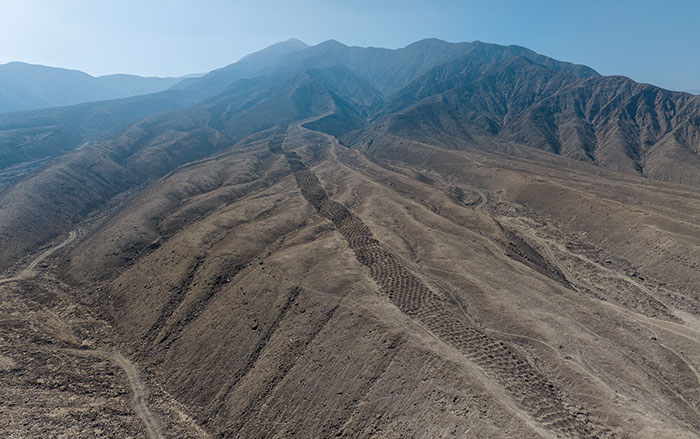 Courtesy J.L. Bongers
 -
Features March/April 2026
Himalayan High Art
In a remote region of India, archaeologists trace 4,000 years of history through a vast collection of petroglyphs
 Matt Stirn
 -
Features March/April 2026
What Happened in Goyet Cave?
New analysis of Neanderthal remains reveals surprisingly grim secrets
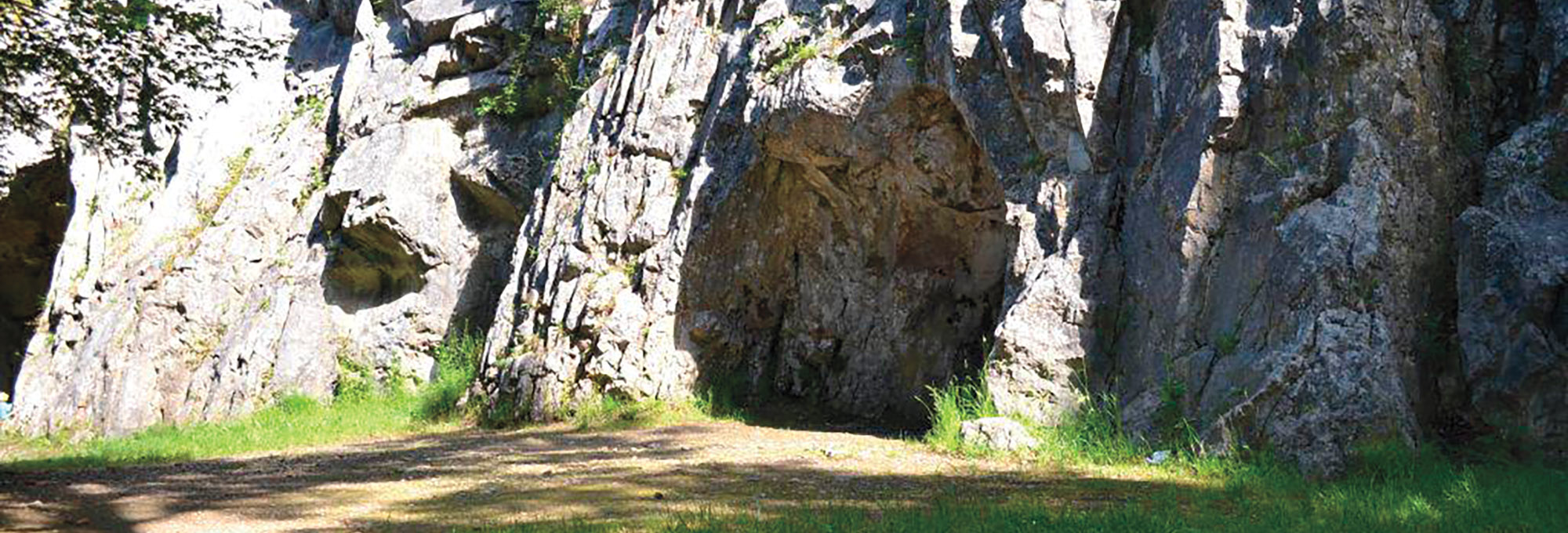 IRSNB/RBINSL