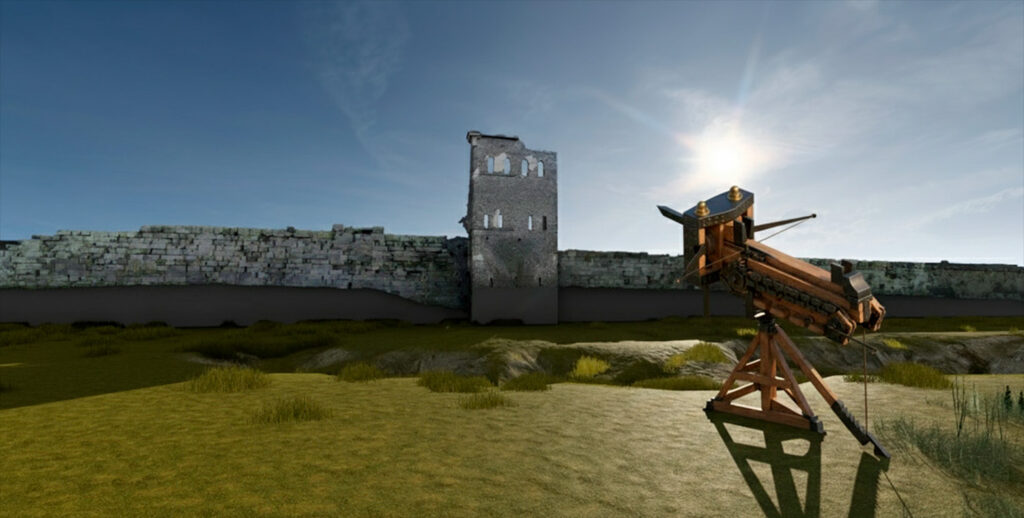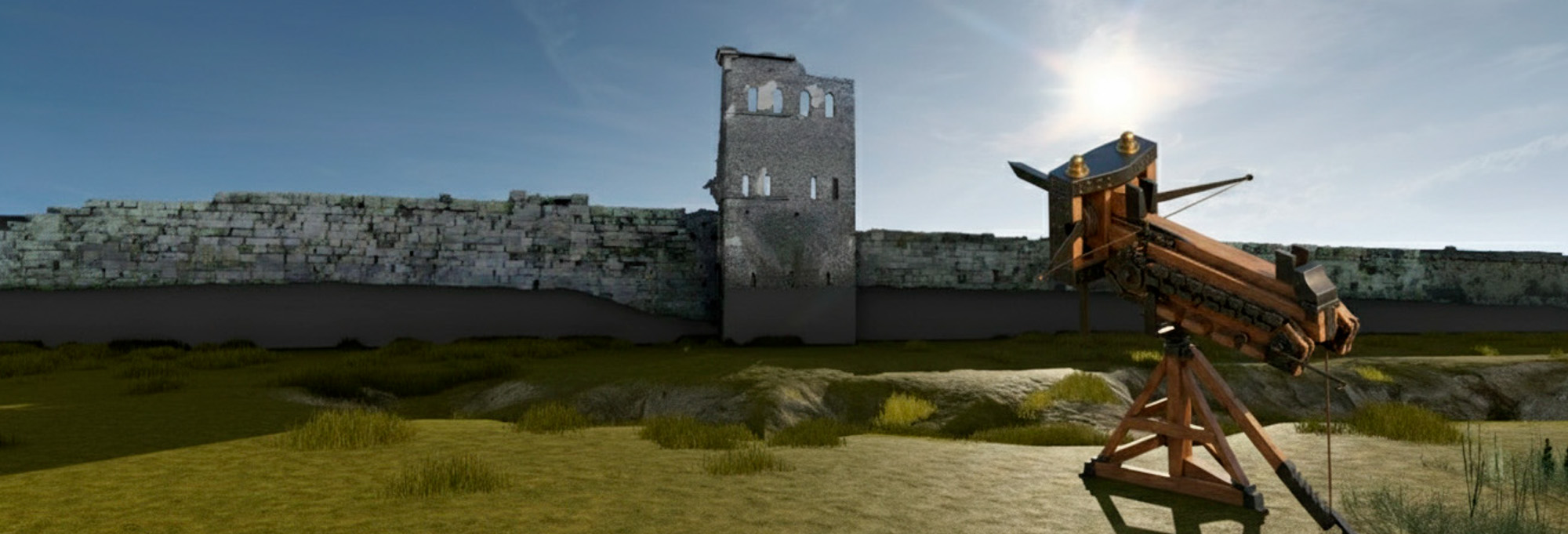
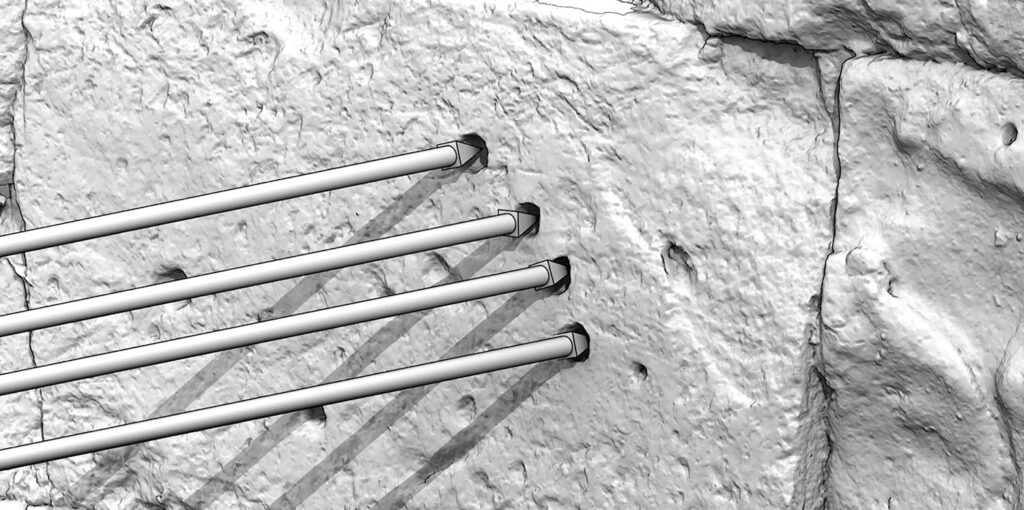
AVERSA, ITALY—The polybolos has long been a legendary weapon of Roman military might, both in the sense that it could inflict tremendous damage and that it may never have existed. But archaeologists and engineers from the University of Campania Luigi Vanvitelli and the University of Bologna have identified ancient artillery holes that they believe correspond to shots from the device, according to a Diario AS report. The polybolos, literally “multiple thrower,” was a chain-driven freestanding catapult that fired metal-tipped bolts from a magazine in quick-repeating succession, automatically, according to a description by Philo of Byzantium, a Greek engineer living in the third century b.c. He attributed its invention to Dionysius of Alexandria. But Philo’s description was the only historical or archaeological evidence that this ancient machine gun–style weapon ever existed, and attempts to build one in the twentieth century met with mixed success. Researchers led by University of Campania engineer Adriana Rossi may have found where a polybolos left its mark, however. Rossi identified several series of square ballistic impact holes, each following a curved path, in the walls of Pompeii. Although the Campanian coastal city was better known as a destination for sun and surf when it was destroyed and buried in the a.d. 79 eruption of Mount Vesuvius, Pompeii hadn’t always been peaceful. In 89 b.c., Lucius Cornelius Sulla besieged the town when it attempted to break away from Roman rule. His army’s artillery rounds can be seen today in the tufa ashlar blocks around the city’s Vesuvius and Herculaneum gates, the area where the newly scrutinized firing patterns appear. The researchers digitally reconstructed the impact points, the bolts, and the polybolos itself, and made solid 3D models of the holes and projectile points that could have made them. No other known weapon from the era of Sulla’s siege, they concluded, could have wrought these patterns of damage. Read the original scholarly article about this research in Heritage. To read about an extraordinary ensemble of newly discovered Pompeian frescoes, go to “Pompeii's House of Dionysian Delights.”