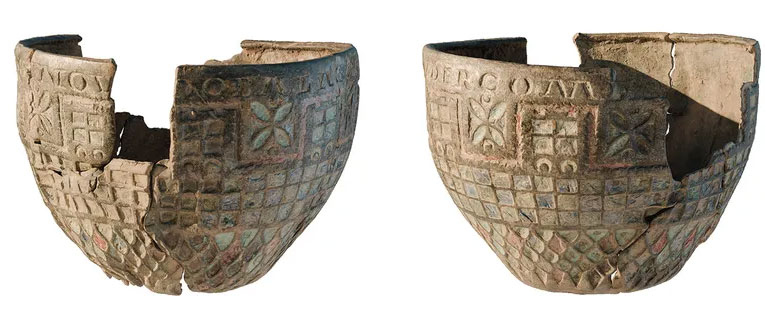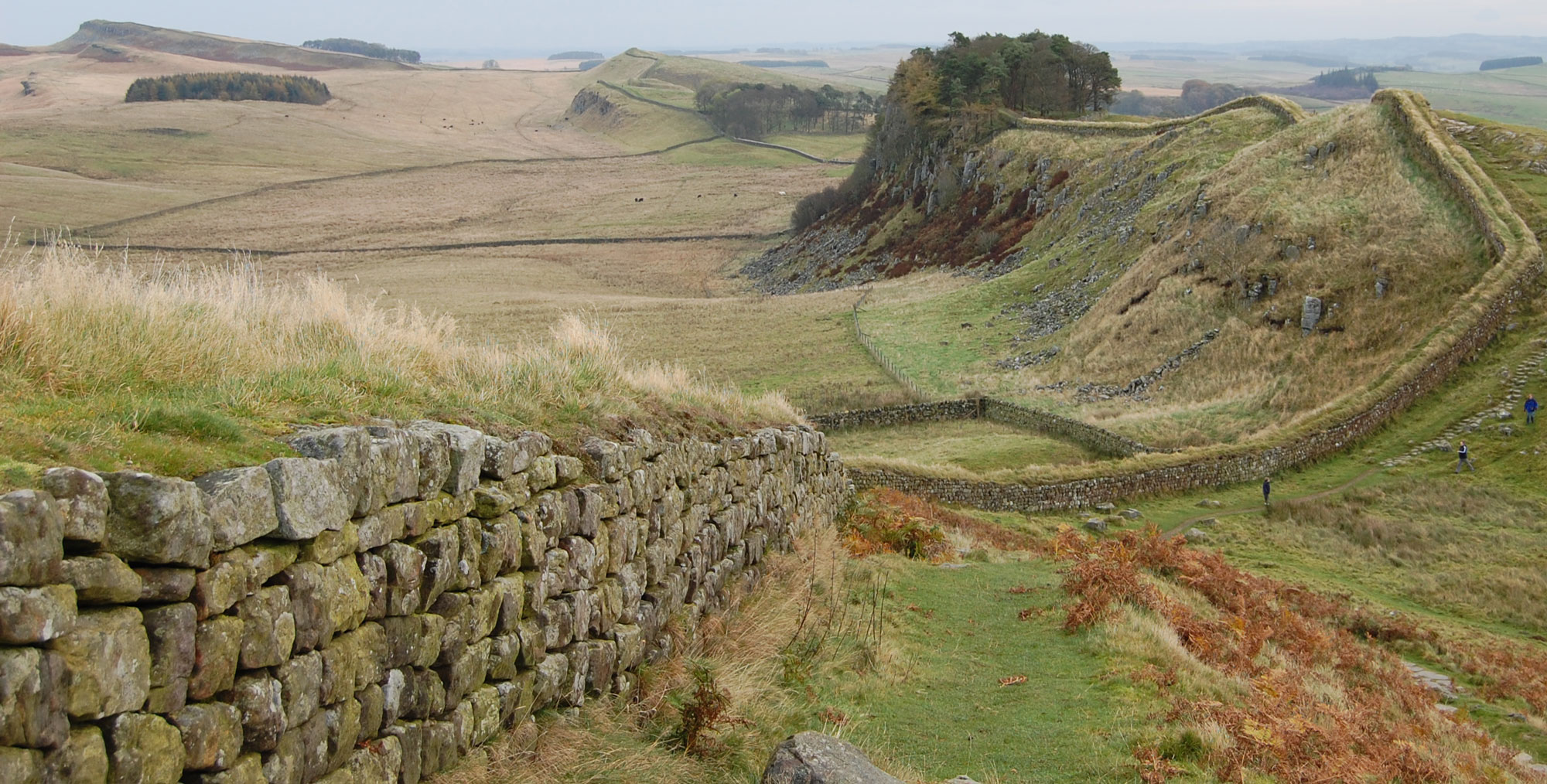
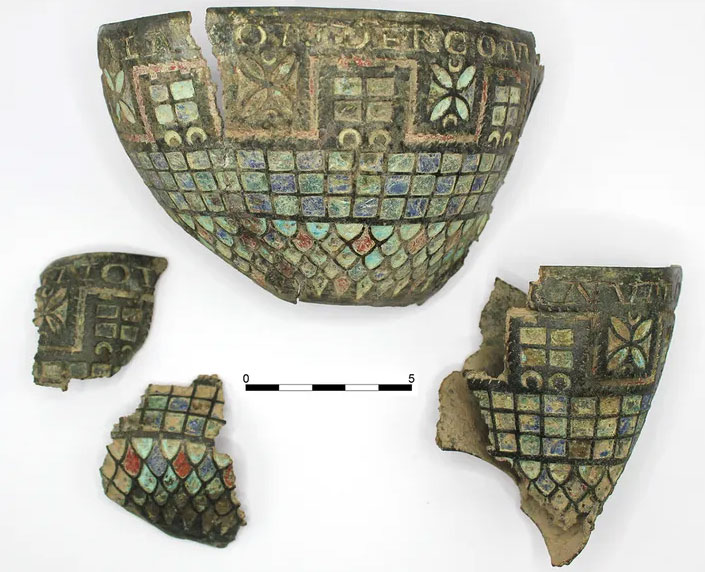
BERLANGA DE DUERO, SPAIN—According to a Live Science report, a new study of the Berlanga Cup, a 1,900-year-old bronze vessel discovered in Spain, suggests that its decorations depict Hadrian’s Wall, which is located some 1,200 miles away from where the cup was discovered. “The cup is a small representation of a functional vessel called a Roman trulla—a bronze or clay cup with a handle used to drink water,” said Jesús García Sánchez of the Archaeological Institute of Mérida. “It is not only crafted with metals, but also expensive enamels, and later on customized. It is definitely not an industrial product,” García Sánchez added. The inscription on the cup lists four forts on the eastern side of Hadrian’s Wall: Cilurnum, Onno, Vindobala, and Condercom. These structures are each depicted as a series of four squares and two half-moons that may represent either turrets or gates. The copper, tin, and lead making up the bronze was likely sourced from mines in northern England, and indicate that cup was made near Hadrian’s Wall between A.D. 124 and 199. The researchers suggest that the cup may have been owned by someone who had been a soldier in the Cohors I Celtiberorum and lived in the ancient settlement of Valeranica. “This contingent was made up of troops from Celtiberia, precisely the area where the piece in questions was found,” García Sánchez and his colleagues said. These soldiers had been stationed near Hadrian’s Wall during the reign of Emperor Trajan, between A.D. 98 and 117. A soldier may have therefore carried the cup home after serving his time at the Wall, the researchers concluded. For the original scholarly paper describing the research, go to Britannia. To read in-depth about discoveries made at Hadrian's Wall, go to "The Wall at the End of the Empire."