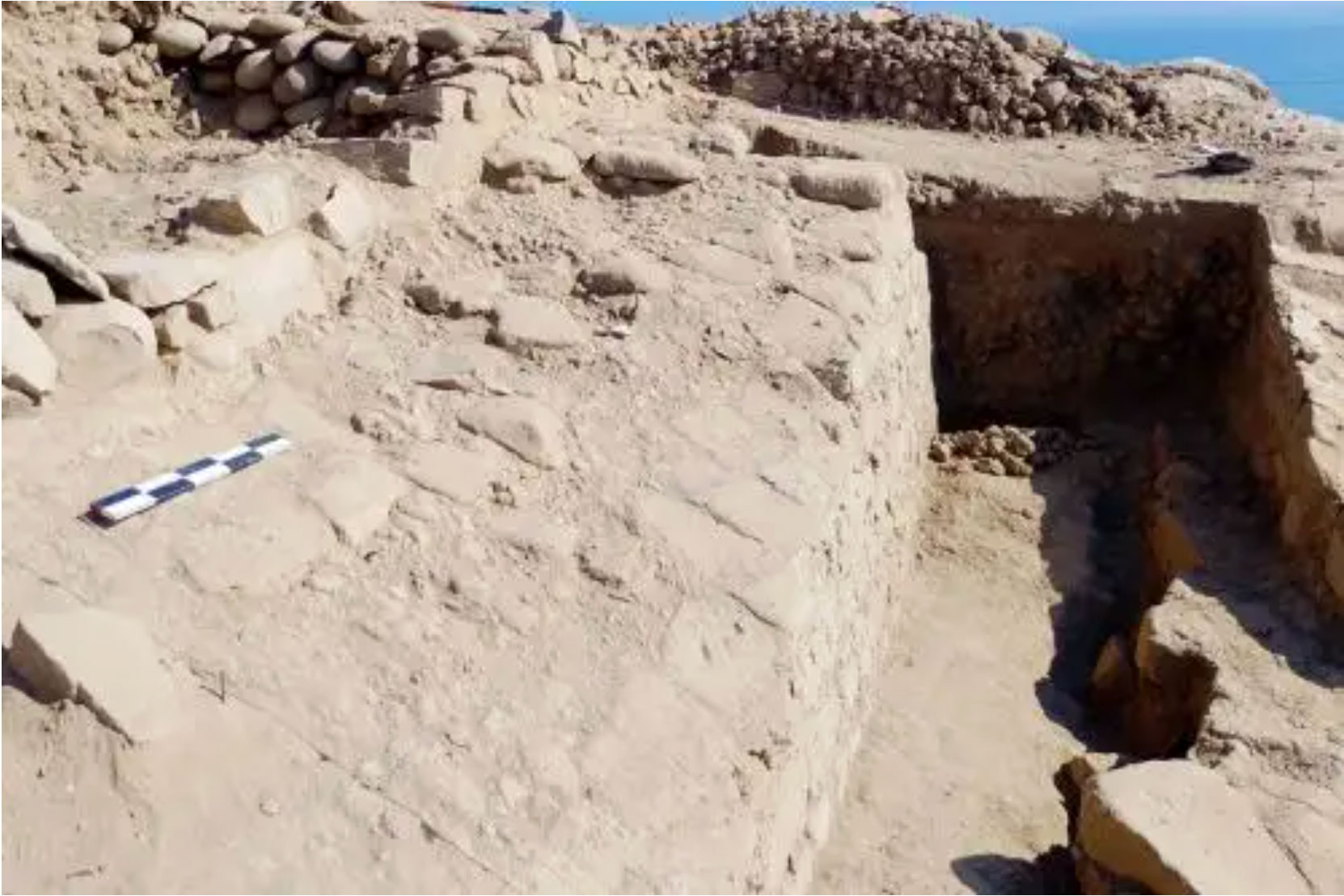
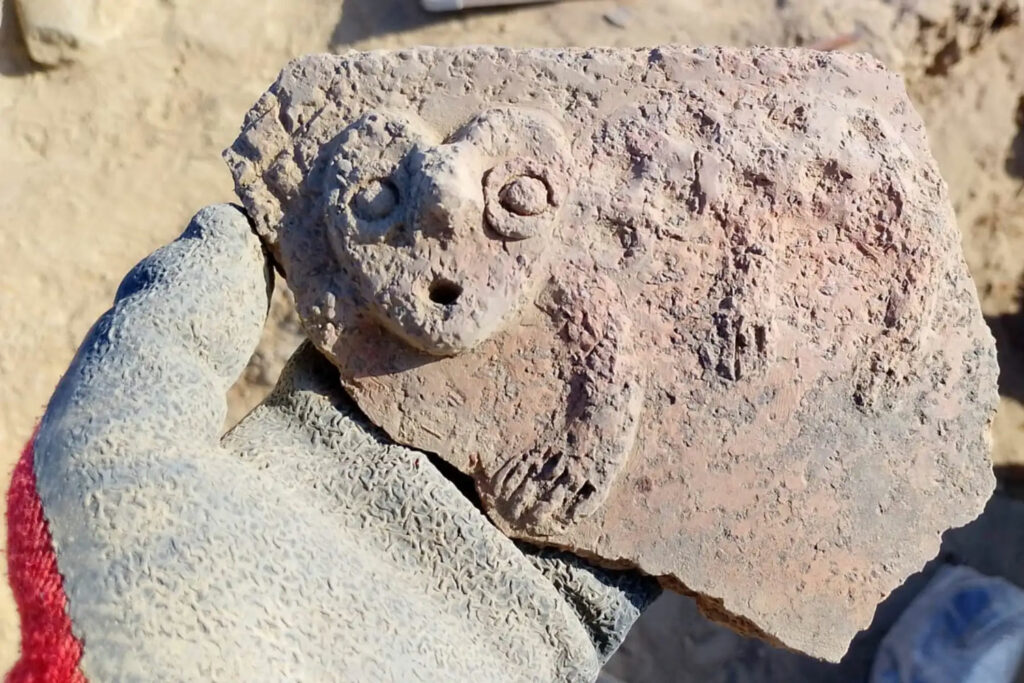
PARAMONGA, PERU—Andina News Agency reports that Jose Luis Fuentes of the National University of San Marcos and his colleagues have uncovered possible ceremonial structures at Cerro de la Horca, or “Gallows Hill,” an archaeological site on Peru’s central coastline that was first inhabited around A.D. 900. “There are around 20 mounds surrounding four plazas, in addition to platforms, walls, and internal roads,” Fuentes said. These mounds may have once been residences for priests or elites, he added. Pottery recovered at the site indicates that it was occupied by various groups, including members of the Pativilca, Casma, and Huaura cultures. Fuentes observed two major construction phases. In the older stage, the structures were made with stone, and are associated with the Pativilca culture. The Inca later made changes in adobe to the structures. The site’s main sanctuary is thought to have been built at the top of the main hill, where three platforms face a cliff overlooking the mouth of the Fortaleza River. Travelers’ accounts from the nineteenth century suggest that the Chimú and Inca executed people by throwing them from this hilltop. “It appears that the name Cerro de la Horca comes precisely from those legends,” Fuentes explained. To read more about recent archaeological research in Peru, go to "Return to Serpent Mountain."