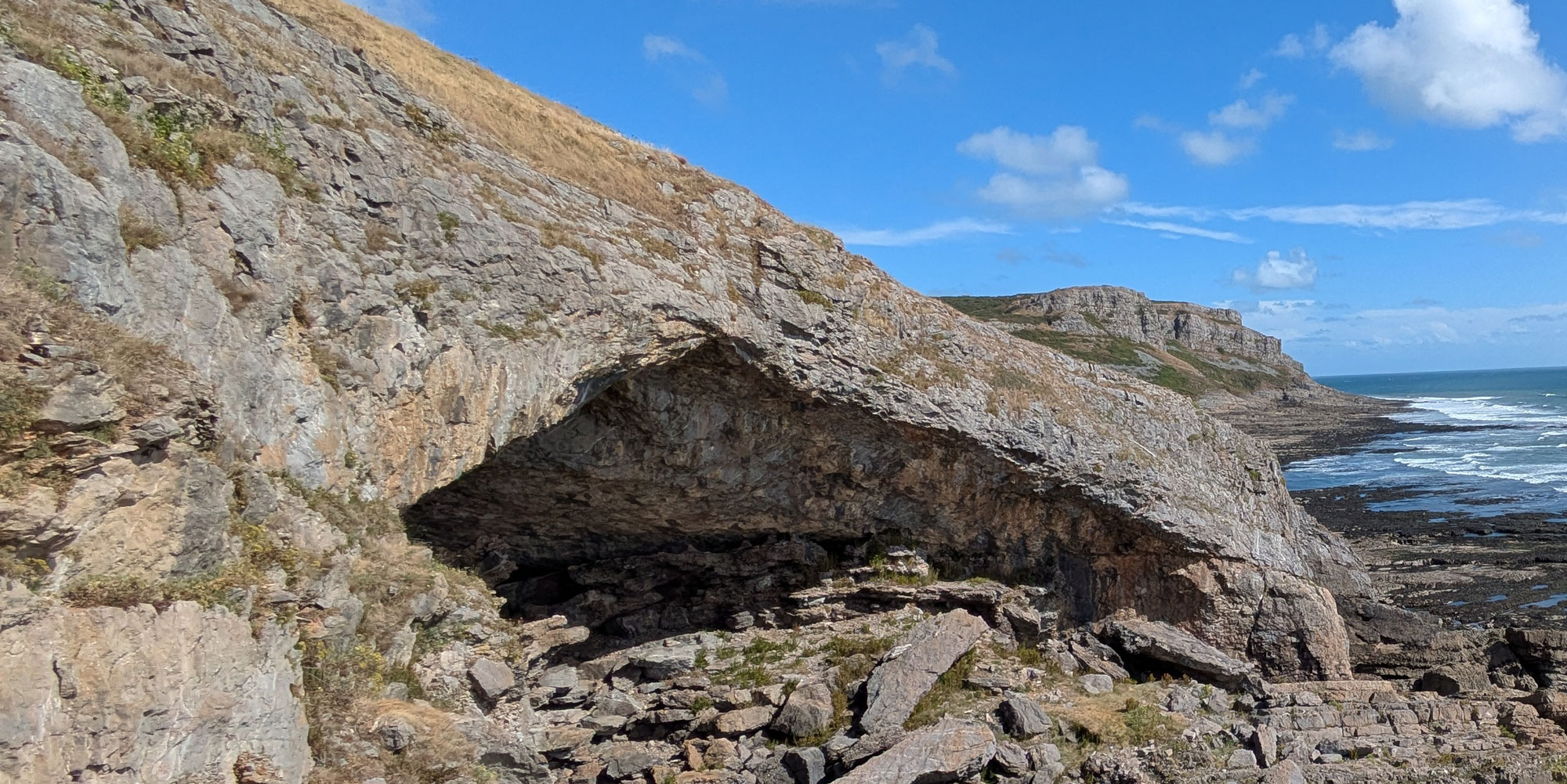
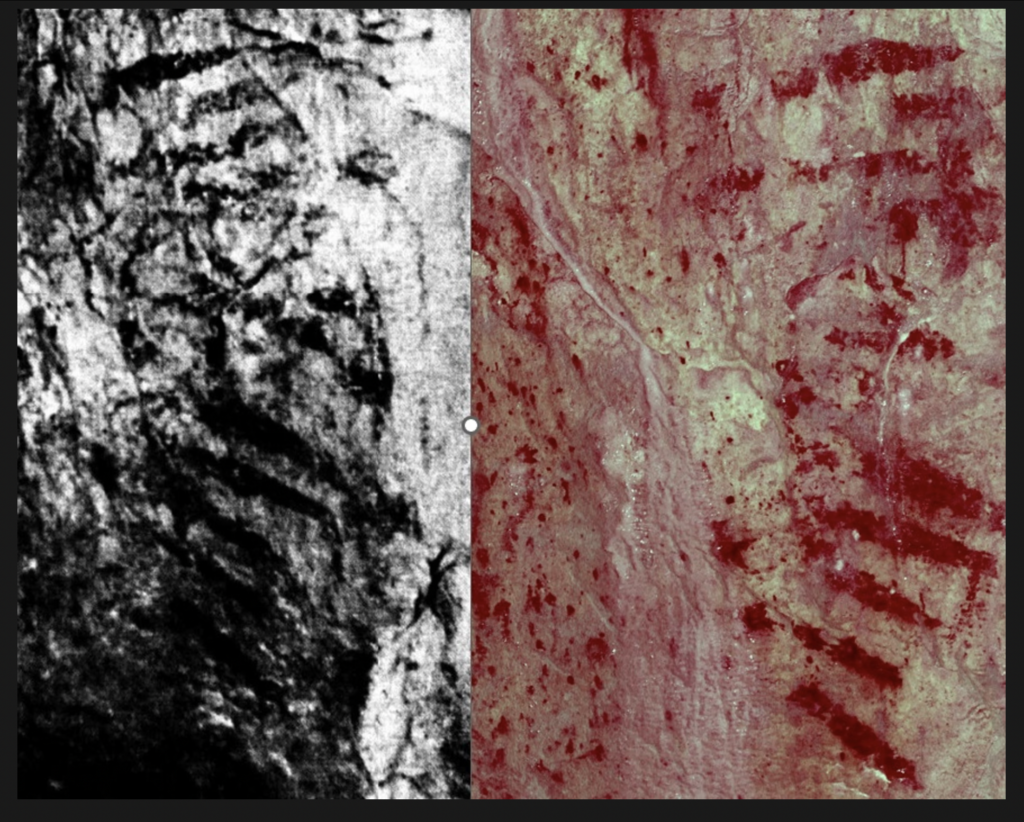
MUMBLES, WALES—According to a report in The Guardian, red horizontal bands on the walls of a cave in south Wales have now been identified as rock art dated to more than 17,000 years ago. The bands, which are equidistant from each other, were discovered near the Bristol Channel in Bacon Hole in 1912, and were considered to be examples of Paleolithic rock art, but a review in 1928 deemed the markings to be a natural phenomenon caused by a red oxide mineral seeping through the rock. George Nash of Coimbra University and the University of Liverpool and his colleagues used uranium-thorium dating to date the pigment. They also analyzed the chemical composition of the rock art, and found a mix of calcite and clay residues mixed with pigment. The study also suggests that the pigments had been applied with a finger. “Based on both field observations … and laboratory examination of the pigment samples, it is evident that the pigmented lines were intentionally created by human agency, rather than resulting from natural processes,” Nash concluded. To read about another recent Paleolithic art discovery, go to "Paleo Palette."