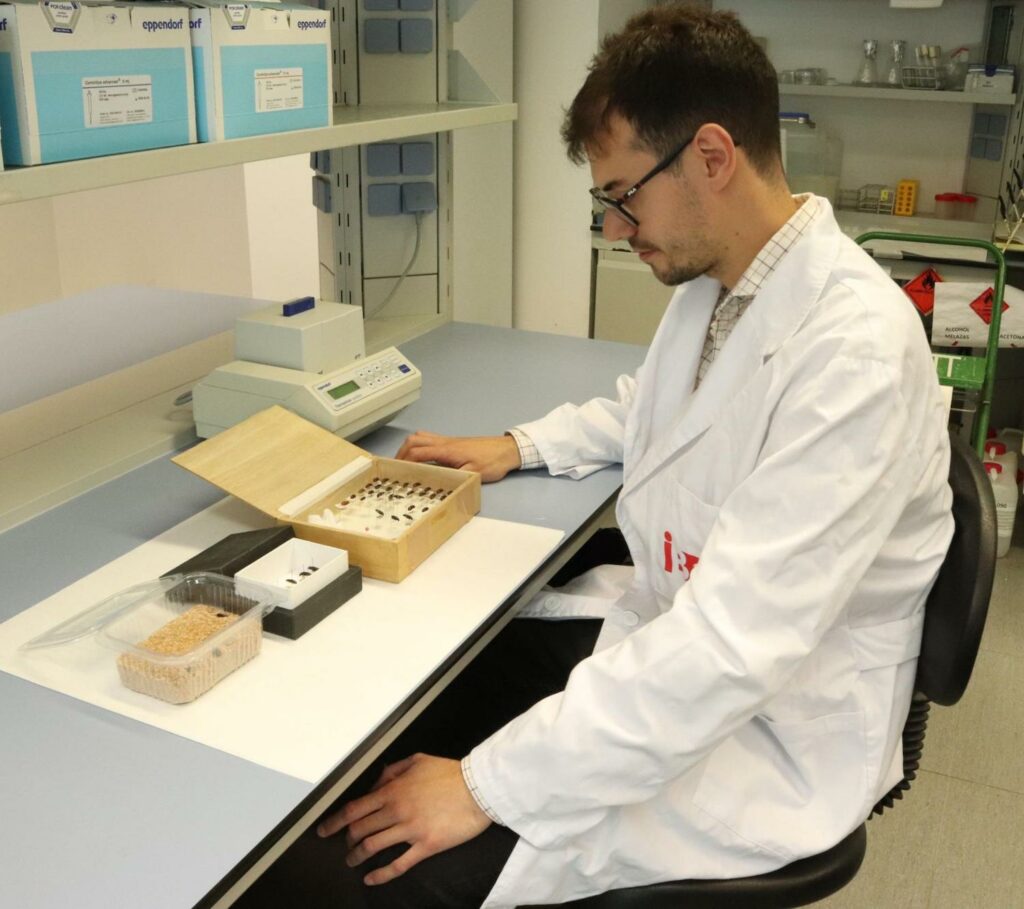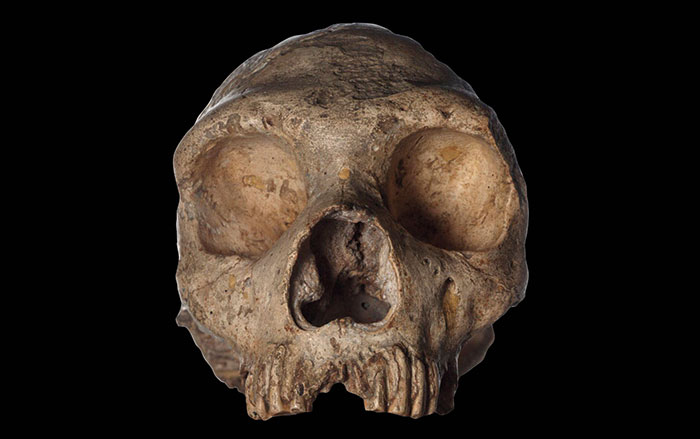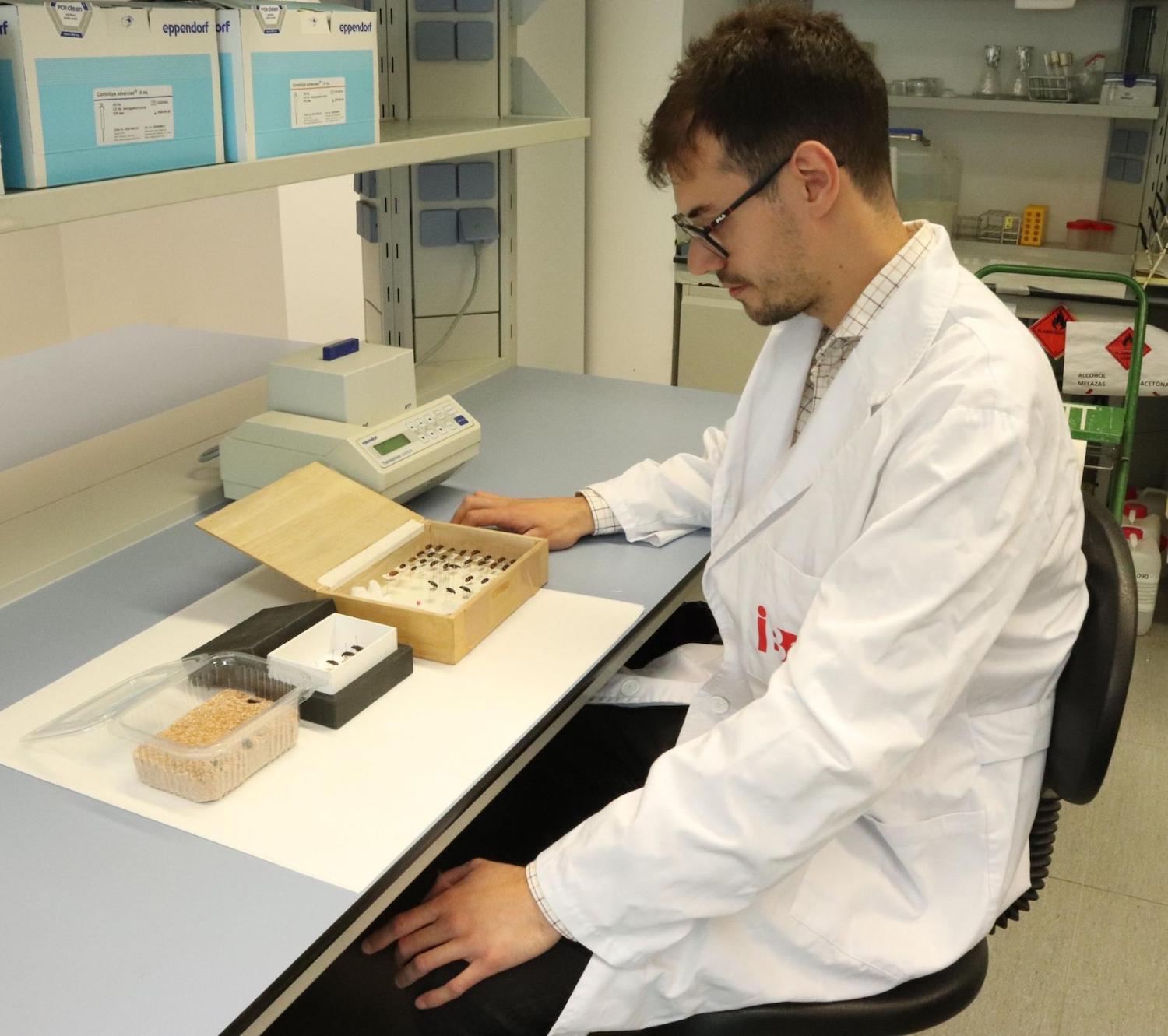
BARCELONA, SPAIN—IFL Science reports that analysis of dental calculus samples taken from 18 Neanderthals, 745 modern humans, and 96 great apes suggests that Neanderthals consumed insects about as frequently as chimpanzees. DNA from flies and mosquitoes identified in the Neanderthal dental calculus may have been consumed with rotting meat laced with maggots or insect eggs. “In this regard, our results may support a recent hypothesis that attributes the elevated values of nitrogen isotopes reported for Neanderthals to their regular consumption of insect larvae in animal corpses,” said Manuel Piñero of the Institute of Evolutionary Biology in Spain. The amount of insect DNA recovered from modern human dental calculus suggests that the ingestion of bugs was likely accidental, Piñero added. He and his colleagues then evaluated more than 1,600 ancient modern human genomes, looking for genetic variants that allow for the production of digestive enzymes that break down chitin, a large component of an insect’s exoskeleton. Modern humans who lived close to the equator were found to be more likely to be able to digest bugs, but this ability decreased among modern humans as the distance from the tropics increased. The study indicates that modern humans in Europe and the colder areas of Asia had lost the ability to digest insects by about 9,000 years ago. “In the tropics, edible insect species can be harvested in large numbers without a lot of effort,” Piñero explained. “Thus, eating insects becomes an advantageous dietary practice, and their digestibility favored by natural selection,” he said. In addition, Neanderthals were found to carry the genes that would allow them to digest chitin, and one Denisovan genome in the study suggests that this human relative was also able to eat bugs. Read the original scholarly article about this research in Science Advances. To read about necklaces from the American Southwest that were crafted from insect exoskeletons, go to "The Beauty of Bugs."