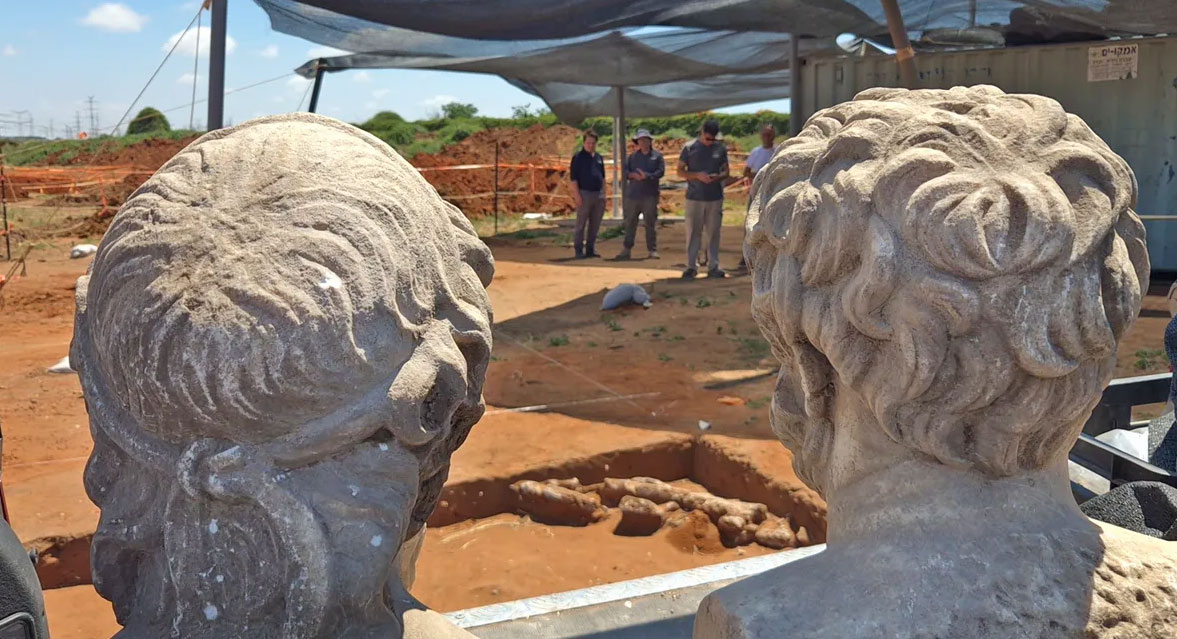
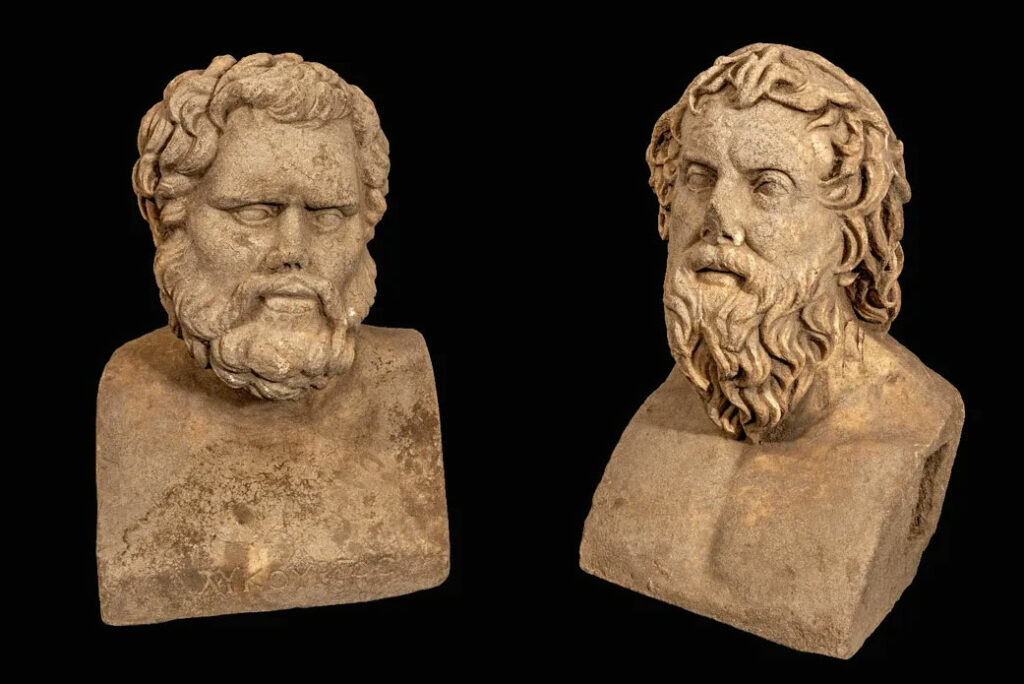
BINYAMINA, ISRAEL—Haaretz reports that two 1,700-year-old marble busts have been discovered in a wine-collection pit at a winepress dated to the Roman and Byzantine periods in northern Israel. One of the busts is inscribed in Greek with the name “Lycurgus,” perhaps referring to the legendary founder of Sparta, or a statesman and orator who lived in Athens in the fourth century B.C. Archaeologists Eliran Oren and Michael Solotskin of the Israel Antiquities Authority said that sculptures may have been buried in the pit to hide them during an invasion. “In the Roman period, statues of this kind were displayed both in public buildings and in the homes of members of the elite, who sought to associate themselves with the cultural and intellectual world of antiquity,” said Peter Gendelman of the Israel Antiquities Authority. The researchers think the statues may have been displayed in a bathhouse that was uncovered nearby, or maybe in the city of Caesarea, which is located about six miles away. “These are not statues that would have stood in a local farmhouse. They must have come from a wealthy place,” Oren explained. The second figure, which has a “wild beard,” has not yet been identified, but may depict a thinker or philosopher, Oren added. To read about another recent Roman-era discovery in Israel, go to "Cave of Swords."