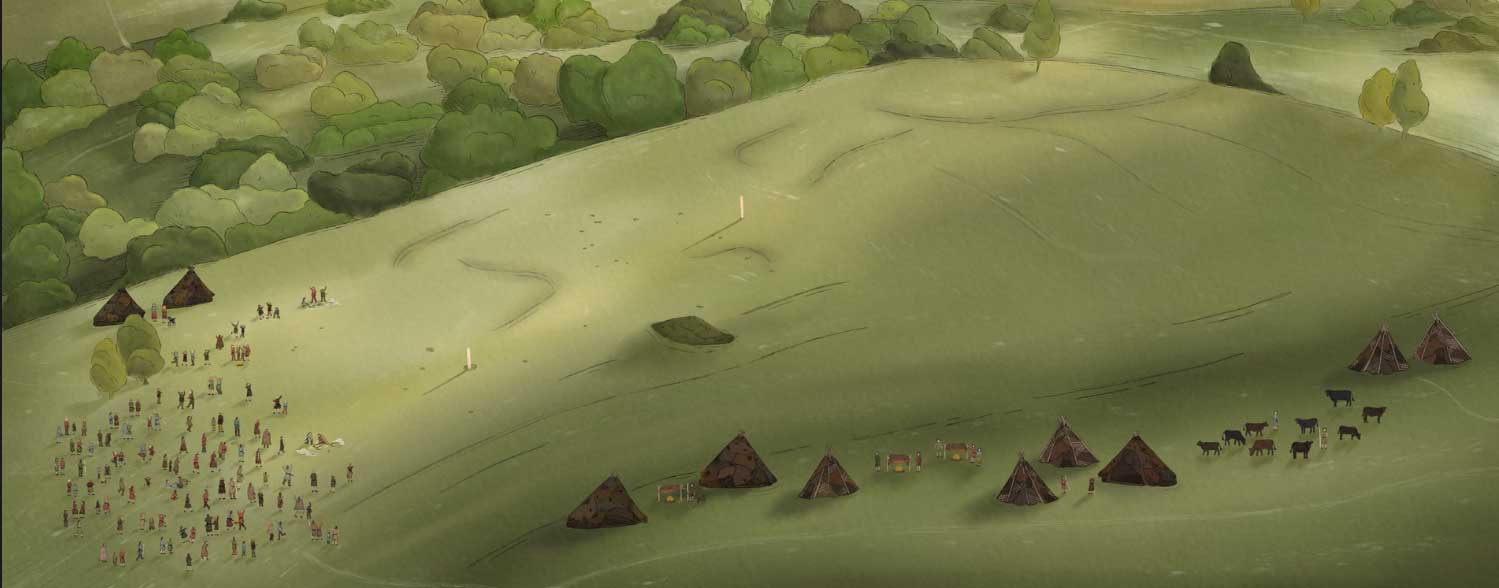

BULFORD, ENGLAND—According to a report in The Guardian, traces of a 5,000-year-old structure aligned with the summer and winter solstices have been discovered in southwestern England, about three miles away from Stonehenge. Construction of the first phase of Stonehenge began at about this time. Phil Harding of Wessex Archaeology was investigating the area ahead of a construction project when he and his colleagues uncovered two postholes set about 390 feet apart. These postholes were surrounded by smaller trash pits. Later, while mapping the site, Harding drew a line to connect the two postholes and realized that they aligned with summer and winter solstices. Based upon the three-foot-depth of the postholes, the researchers think the posts stood between about 10 and 13 feet tall. A disk-shaped flint knife, which may have been intended to represent the sun, was found in a smaller pit aligned with the poles. “We don’t know what the sun meant to them,” said team member Matt Leivers. “We don’t know whether they personified it as a deity. But the amount of effort that’s directed toward marking it and its movements leaves us in no doubt at all that this is a major religious event that’s inscribed over the whole landscape over millennia,” he continued. Leivers also suggests that the people who gathered at the older monument in Bulford would have been aware of the construction of the first phase of Stonehenge, and may have even been involved. To read more about the cosmology of Early Bronze Age people, go to "Stonehenge's Continental Cousin."