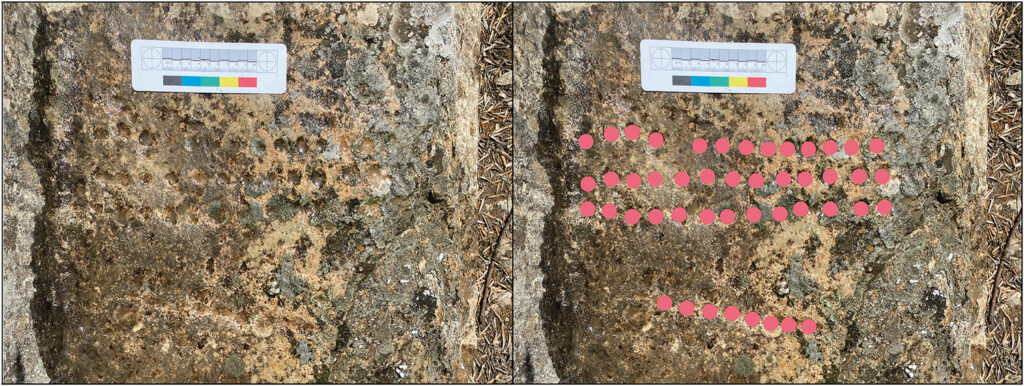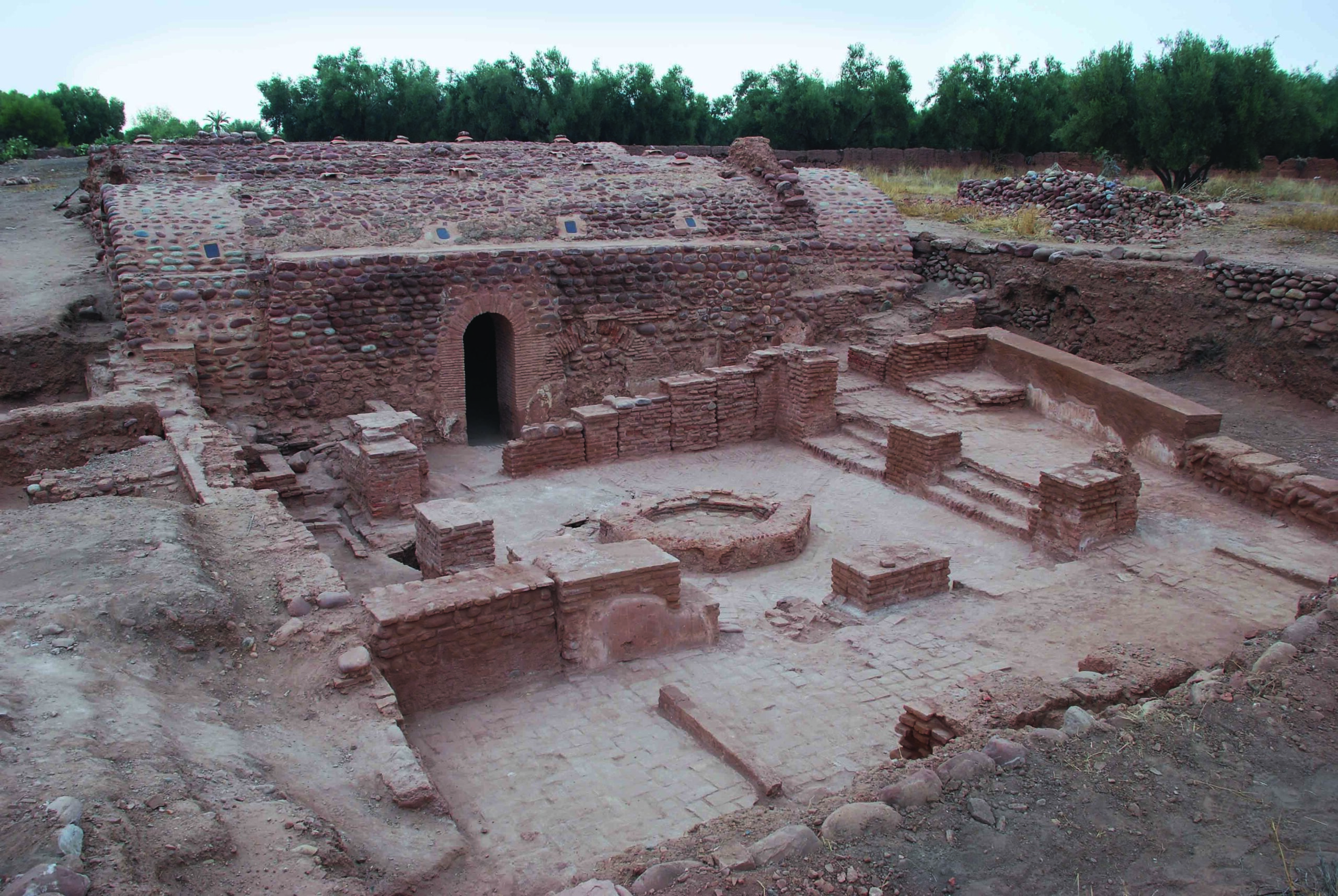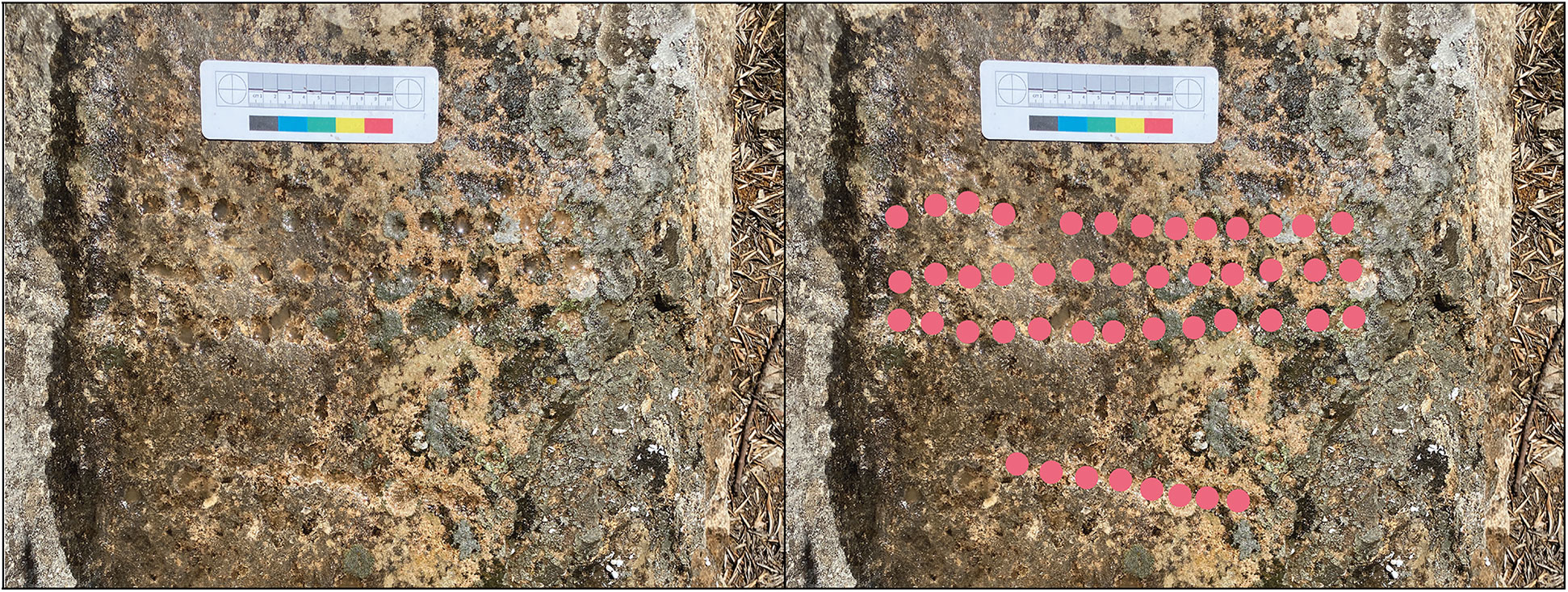
WALĪLA, MOROCCO—According to a Phys.org report, a possible game board has been identified at a medieval hammam, or public bathhouse, in Morocco by Tim Penn of the University of Reading and his colleagues. The hammam is thought to have been built in the late eighth or early ninth century and abandoned by the tenth or eleventh century. The game board measures more than 13 inches long by about four inches wide, and was found on the top step leading into a cold plunge pool. It features three rows of at least 13 small holes. “The board’s design suggests it was used for playing tāb/sig, making it the earliest known evidence of this game in North Africa,” Penn said. Board games were popular in the medieval Islamic world, as recorded in poems and stories and evidenced by game boards found at archaeological sites in Arabia and the Middle East. The position of this game board, where it would have been visible to anyone getting in and out of the water, suggests that playing the game was a regular part of the bathhouse experience, the researchers concluded. Read the original scholarly article about this research in Libyan Studies. To read about excavations of another medieval bathhouse in the region, go to "Letter from Morocco: Splendor at the Edge of the Sahara."