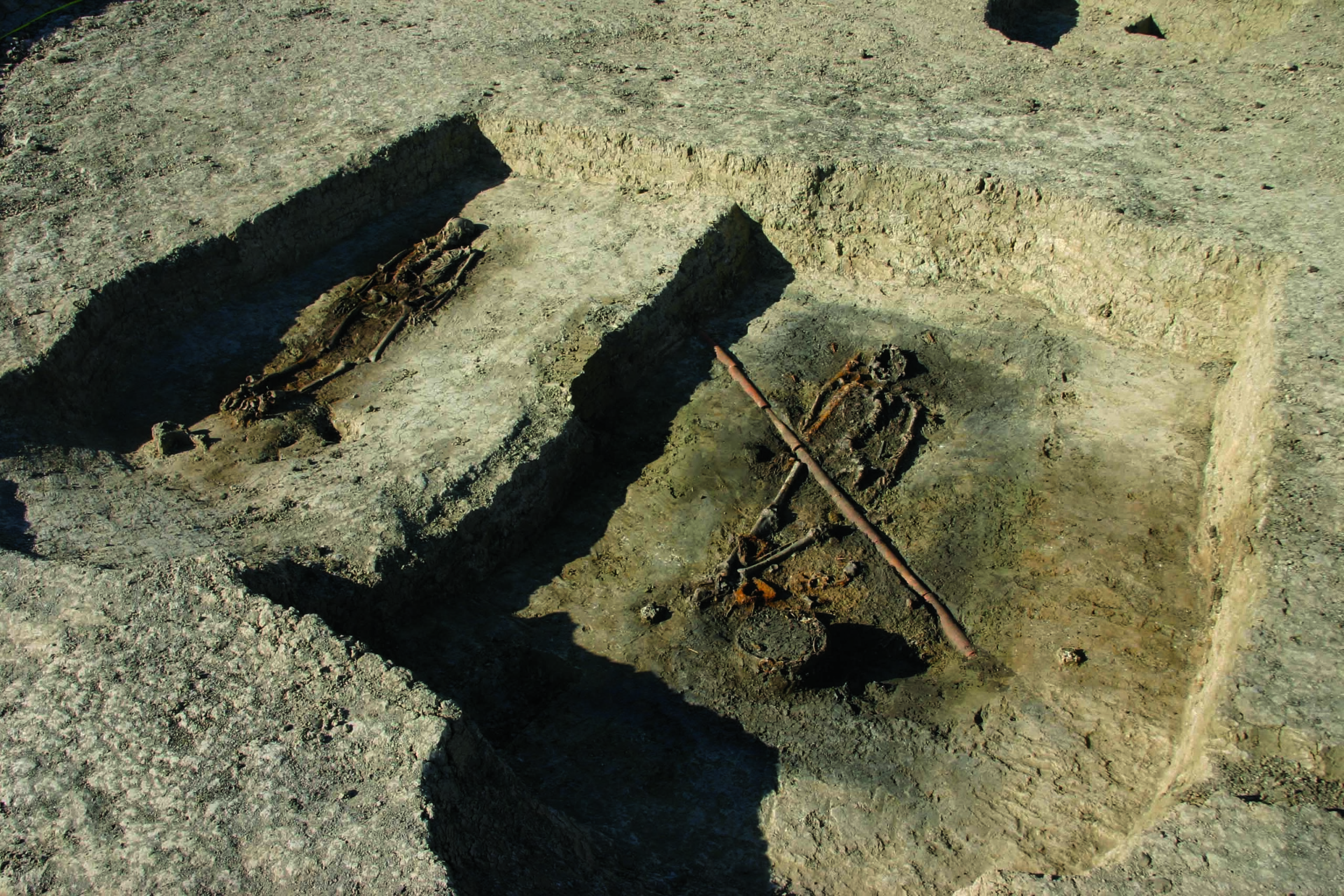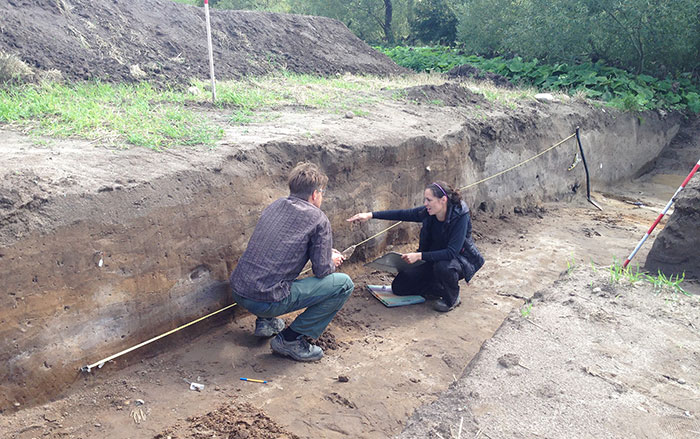
SØFTEN, DENMARK—A Viking textile production site dated to more than 1,000 years ago has been discovered in eastern Jutland, according to an Associated Press report. Archaeologist Liv Stidsing Reher-Langberg of the Moesgaard Museum said that the site features an area where flax may have been processed and more than 80 pit houses where spindle whorls and loom weights have been uncovered. “We have a clear focus on textile production, which makes this settlement different from other kinds of settlements of this period,” she said. Silver coins, glass beads, and pottery have also been recovered. Pollen analysis and carbon dating will be used to date the site and possibly identify plants that were processed. One residence, Reher-Langberg added, is thought to have been inhabited by a person who oversaw resources and production. Textiles produced at the site were likely sent to the international Viking trade center of Aros, now the city of Aarhus, located some six miles to the south. “When you have a production site of this scale, it cannot be only because of the local area,” explained historian Kasper Andersen of the Moesgaard Museum. “It needs to be understood as part of a greater network, a much bigger international perspective,” he said. To read about pieces of silk recovered from Viking Age sites, go to "Viking Finery."