What is it?
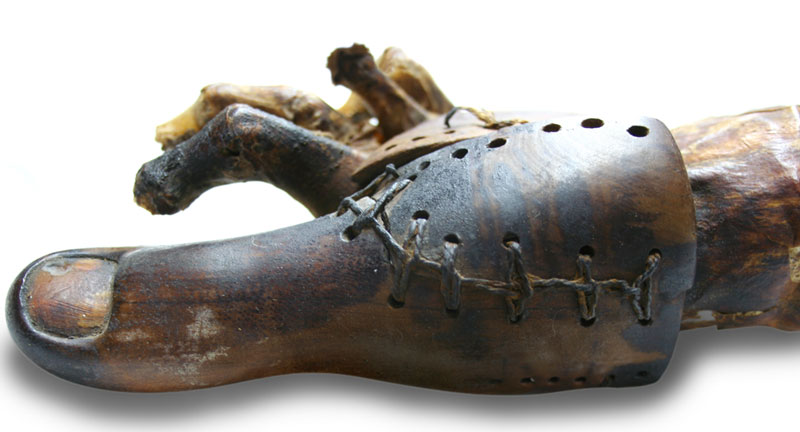
An artificial toe
Culture
Egyptian
Date
950-710 B.C.
Material
Wood and leather
Found
2000, tomb of Tabeketenmut in necropolis of Thebes, near Luxor
Dimensions
4.7 inches, from tip of toe to point of attachment
Currently Located
Egyptian Museum, Cairo
Egyptians appear to have taken great pains to have the bodies of their dead buried intact. Some mummified remains are found with makeshift limbs and false eyes to replace missing parts. This artificial toe, attached to the right foot of a priest's daughter, is so well made, however, it's unlikely it was only intended to prepare her for the afterlife.
The dense hardwood used in the toe's construction is robust enough to withstand bodily forces—while walking, a big toe must bear up to 40 percent of a person's body weight. It also has a beveled edge at its attachment point, indicating it was deliberately designed to maximize comfort, says Jacqueline Finch, a visiting scientist at the University of Manchester's KNH Centre for Biomedical Egyptology. She recruited two volunteers who are missing their right big toes to wear a reproduction of this device along with replica Egyptian sandals. Both reported that it was comfortable and assisted them in walking.
Until now, an artificial leg made of bronze and wood and found buried with a Roman aristocrat in southern Italy dating to 300 B.C. was thought to be the first prosthesis. Finch's work suggests, however, that the Egyptians be credited with pioneering prosthetic medicine.