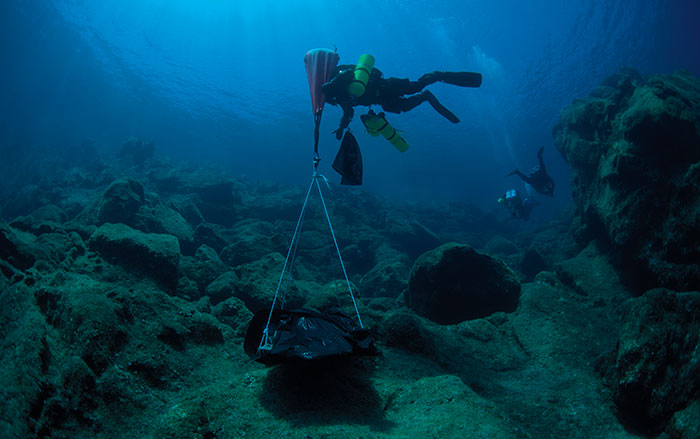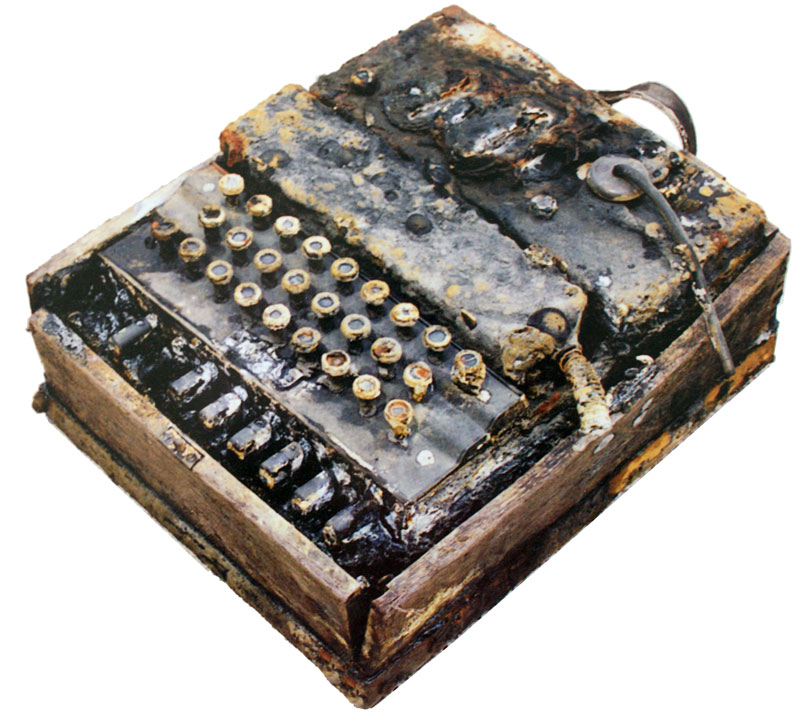
(Courtesy Graveyard of the Atlantic Museum)
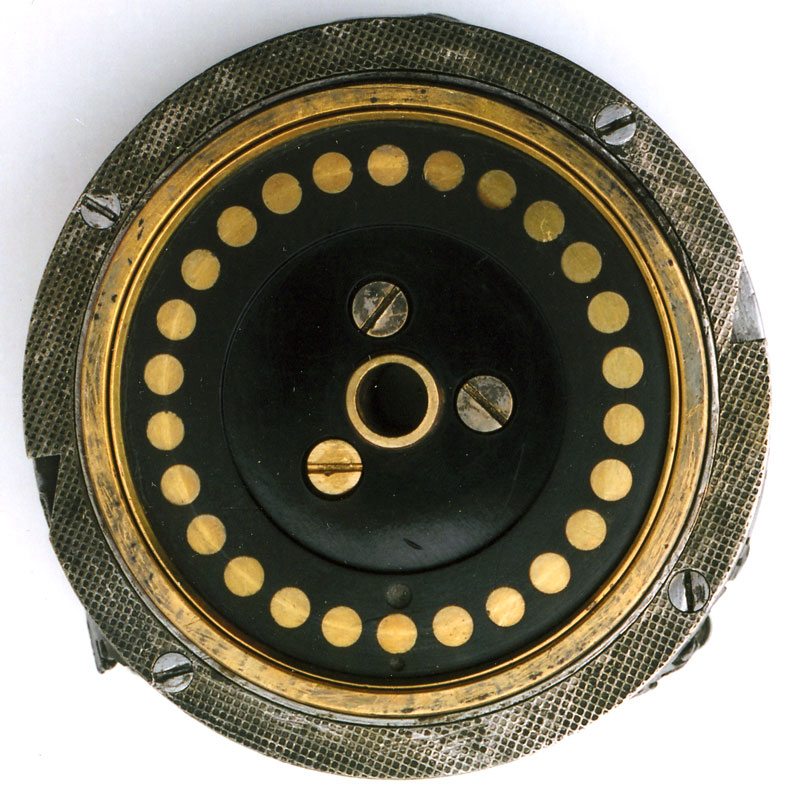
(Courtesy Eric Nordgren/Graveyard of the Atlantic Museum)
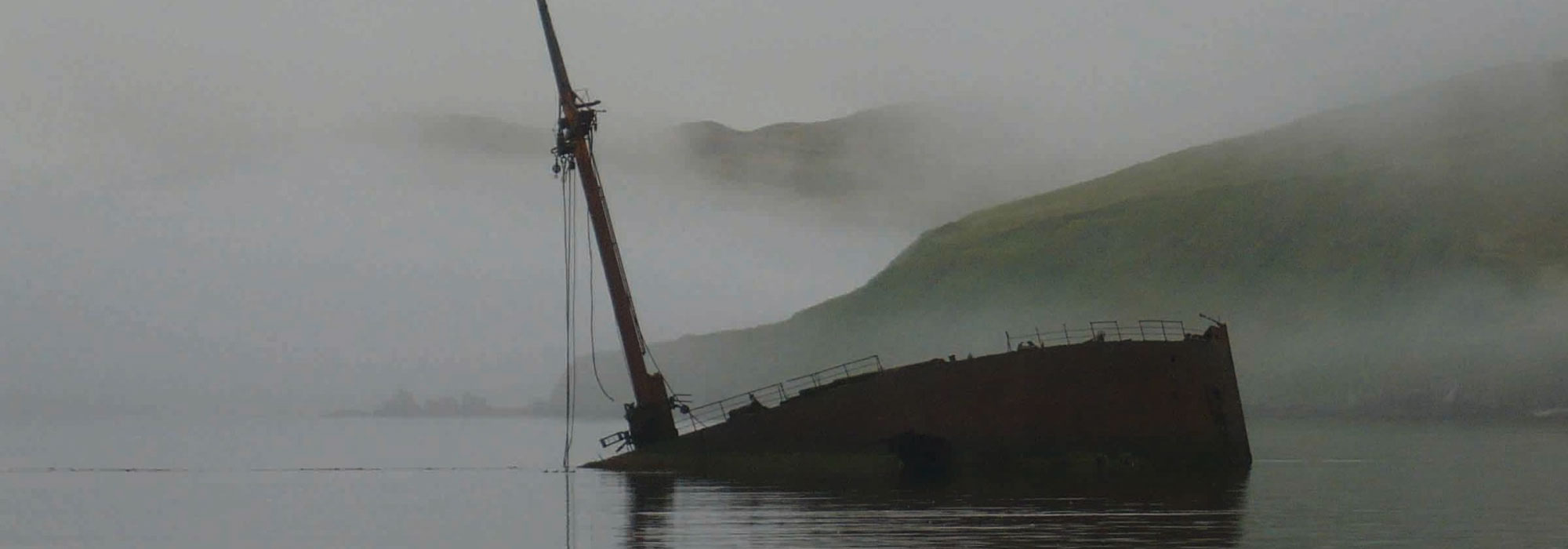
Originally used to encode business transactions and ward off corporate espionage, during WWII the Enigma machine became a powerful and widely used weapon employed by the Nazis for encryption and decryption of military secrets. In July 2001, off the Outer Banks of North Carolina, recreational divers recovered an Enigma from the sunken German sub U-85. The machine was immediately turned over to the Graveyard of the Atlantic Museum and an agreement was reached with the German government to put it on permanent display. It was soon discovered that this was a very early example of an advanced, four-wheeled marine Enigma, still in its original wood box, that had almost certainly been made in January 1942, just a month before U-85 left Germany for the U.S. coast. At this time, only U-boats and the German Naval High Command had four-wheeled Enigmas. These allowed for greater coding possibilities than their predecessors, which already had hundreds of trillions of code options. This particular machine was responsible for the greatest convoy loss in WWII, in which 19 Canadian and British ships went down when U-85's commander was able to send a coded message indicating their whereabouts and send for other U-boats in the area.
For close to a decade, archaeological conservator Eric Nordgren has worked on the U-85 Enigma. "This is a complex artifact made of many different kinds of materials—nickel-plated brass, Bakelite, steel, wood, and zinc alloy. From a conservator's point of view, this makes it really challenging," says Nordgren. In fact, no one has ever tried to conserve an Enigma before. "When you document an artifact like this, it's an opportunity to learn a lot about it," he adds. "It's amazing to see the complexity and sophistication of this machine, the sheer number of possibilities it could create, and the daunting task the Allied cryptographers had of breaking this code."