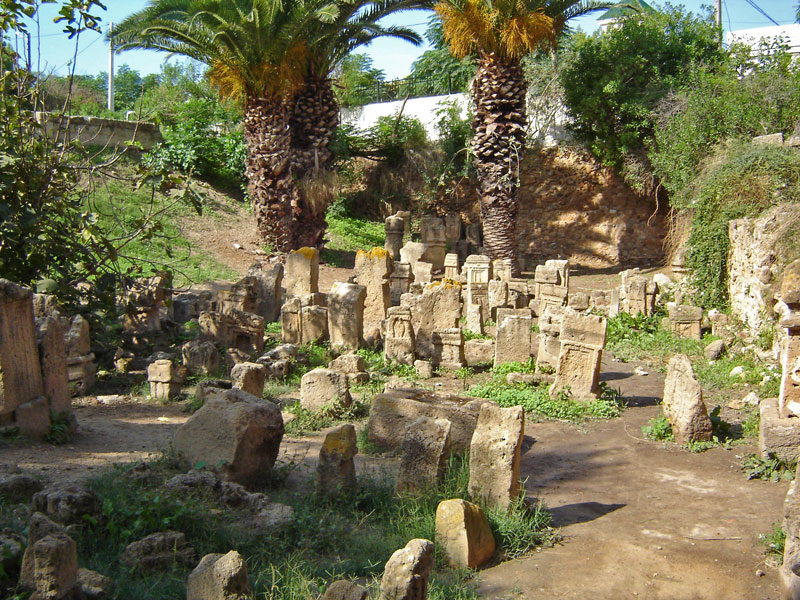
A team led by University of Pittsburgh physical anthropologist Jeffrey Schwartz has refuted the long-held claim that the Carthaginians carried out large-scale child sacrifice from the eighth to second centuries B.C. The researchers announced their results this year after spending decades examining the cremated remains of 540 children from 348 burial urns excavated in the Tophet, a cemetery outside Carthage's main burial ground.
Schwartz determined that about half the children were prenatal or would not have survived more than a few days beyond birth, and the rest died between one month and several years after birth. Only a very few children were between five and six years old, the age at which they begin to be buried in the main cemetery. The mortality rates represented in the cemetery are consistent with prenatal and infant mortality figures found in present-day societies. "There is a credible medically and biologically consistent explanation of the Tophet burials that offers an alternative to sacrifice," says Schwartz. "While it is possible that the Carthaginians may have occasionally sacrificed humans, as did their contemporaries, the extreme youth of the Tophet burials suggests [the cemetery] was not only for the sacrificed, but also for the unborn and very young, however they died. And since at least 20 percent of them weren't even born when they were buried, they clearly weren't sacrificed."
Schwartz also has another type of evidence to support his claim that the Tophet children died of natural causes. "In many societies newborns and very young children are not treated as individuals as older children and adults are," he says, suggesting that they wouldn't be considered appropriate for sacrifice. A clue that the Carthaginians didn't view these children as distinct entities comes from Schwartz's analysis, which shows that in many urns, there are remains of several different individuals. "There can be four or five of the same right or left cranial bone in the same urn, but there would not be enough other bones to reconstruct the same number of individuals," says Schwartz. "The remains of multiple children were gathered up, perhaps even from different cremations, and sometimes mixed in with charcoal from the small branches of olive trees used for the funeral pyre."