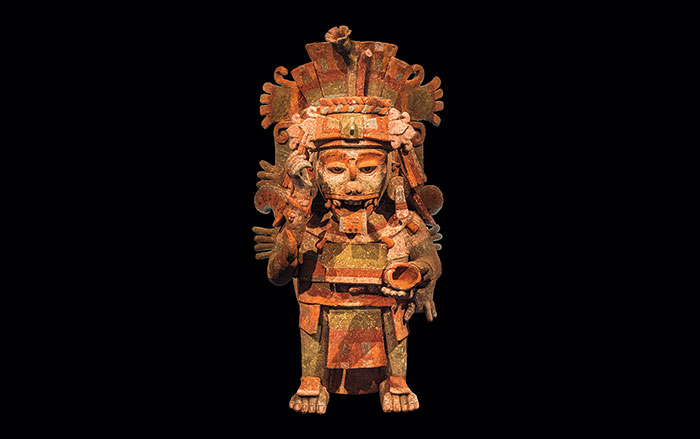
MONTREAL, CANADA—Phys.org reports that Yasmine Flynn-Arajdal of the University of Montreal conducted a review of Maya artwork from the Classic period (A.D. 250–900) and Postclassic period (ca. A.D. 900–1519), as well as other written sources, and found that the ears of Maya children were pierced as an important rite of passage. Ear ornaments, she explained, were considered to be extensions of ik’, an individual’s life breath, one of 13 components of the Maya soul. Removal of ear ornaments, shown in scenes of captivity, was equated with stripping away humanity and social identity, she added. Flynn-Arajdal analyzed 83 images of Maya children and determined that all of them between one and four years old wore ear ornaments. The youngest children depicted with ear ornaments were between just three and four months of age. It is not yet known if the ears of Maya children were pierced by a specialist during a ceremony, as was the case for Aztec children. “I suspect it was similar for the Maya children,” Flynn-Arajdal said. “Members of the [Maya] elite performed blood-letting ceremonies on themselves, but these ceremonies were often overseen by priests or religious figures. The piercing of the ears could be seen as a blood-letting ceremony of sorts, so these religious figures might have been the ones to perform them,” she surmised. Stretching this ear hole was then conducted gradually with jade, other stones, ceramics, and possibly wood, rope, or cords, Flynn-Arajdal concluded. For more, go to "From Head to Toe in the Ancient Maya World: Earrings."