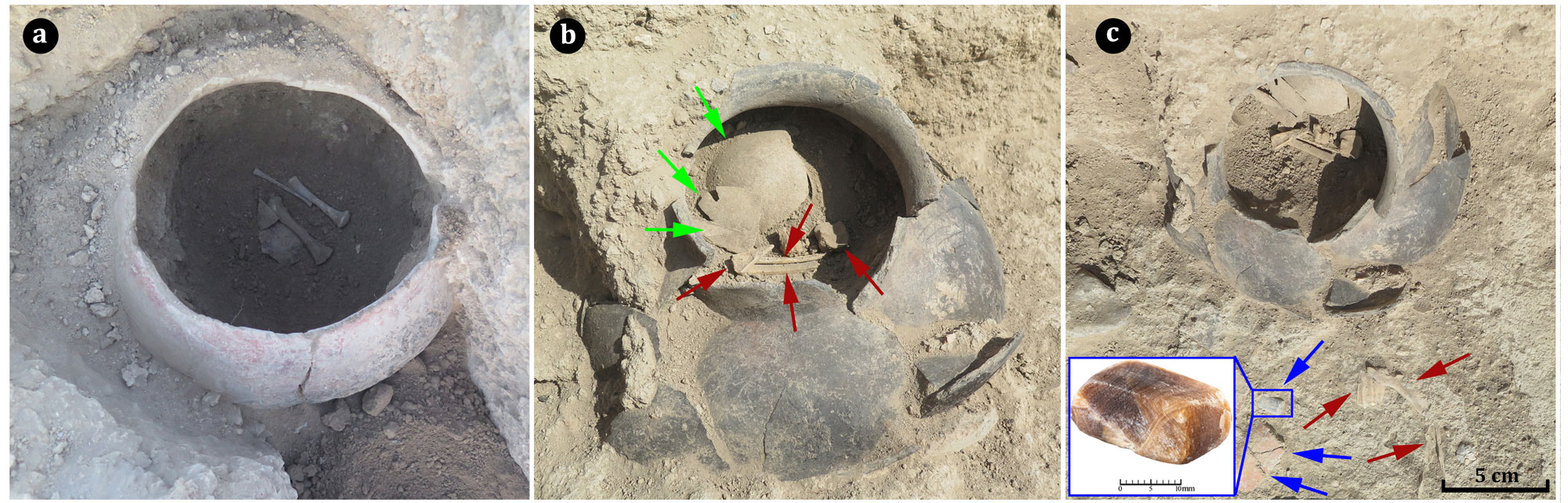
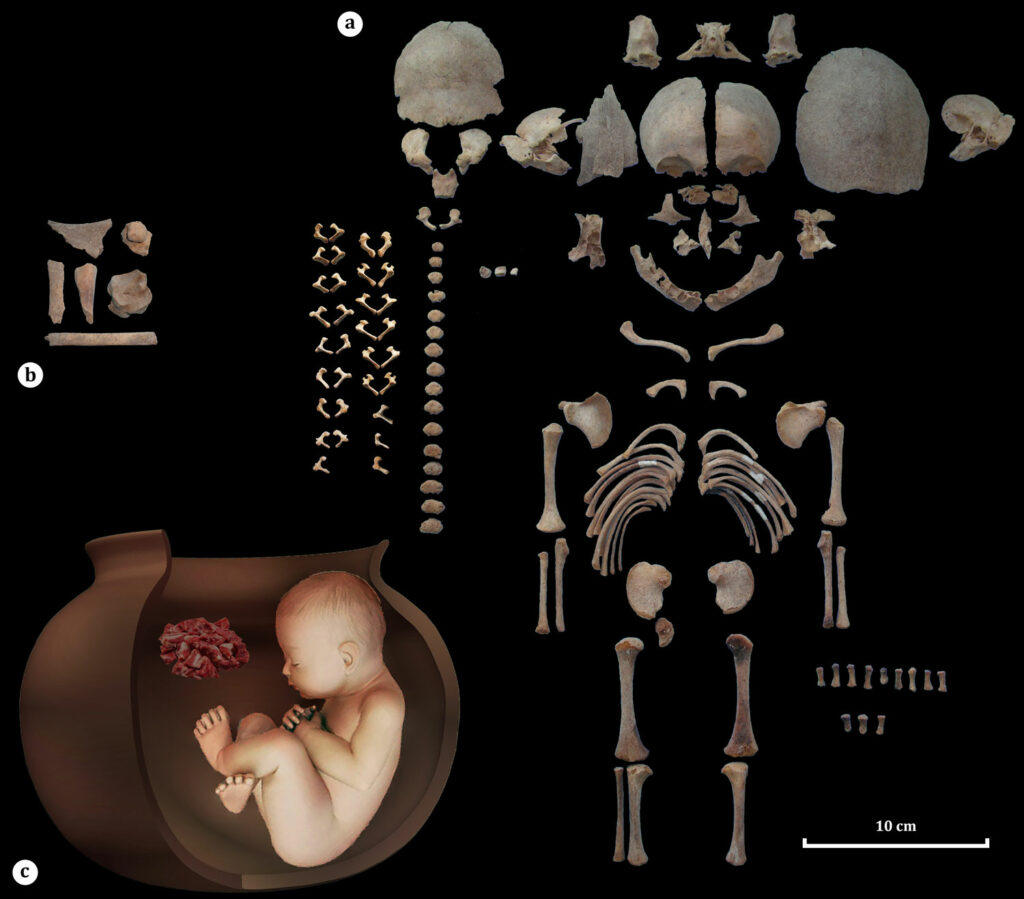
CHAPARABAD, IRAN—Two well-preserved fetal vessel burials dated to about 6,500 years ago were discovered about 10 feet apart in the remains of a structure in northwestern Iran's site of Chaparabad, according to a Phys.org report. Archaeologists Mahdi Alirezazadeh of Tarbiat Modares University and Hanan Bahranipoor of the Iranian Center for Archaeological Research said that one of the vessels was buried in an area of the building thought to be a kitchen, while the second came from a possible storage space. Both vessels were identified as having been made by the Dalma culture. “The burial vessels appear to have been previously used for everyday domestic activities,” Alirezazadeh said. Smoke stains on the first vessel suggest that it had previously been used for cooking, he explained. Examination of both sets of remains suggests that the fetuses died between 36 and 38 weeks of gestational age. Yet the vessel found in the kitchen had been buried with the remains of sheep or goats, which had been placed in the vessel and underneath it. This burial was also accompanied by a piece of worked stone. The vessel found in the storage room was found without any grave goods, however. “Variability in infant burial practices is well documented during the Dalma and Pisdeli (Chalcolithic) periods: some infants were buried with grave goods, while others were not,” Alirezazadeh said. The researchers plan to analyze DNA and the chemical composition of the human remains for more information about the two burials. To read about burials uncovered at a necropolis in the desert of northern Iran, go to "On Her Own Two Feet."