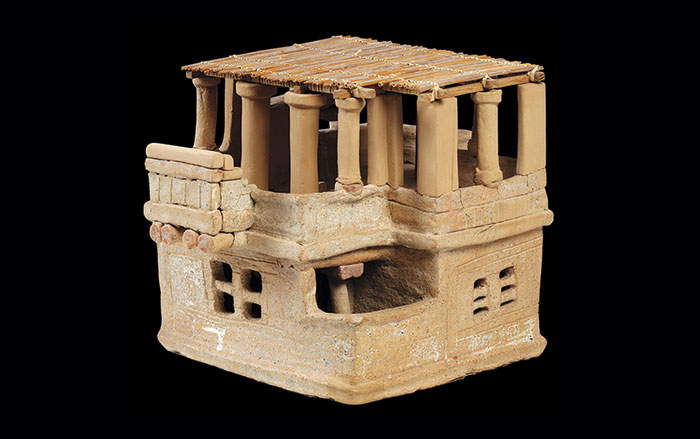

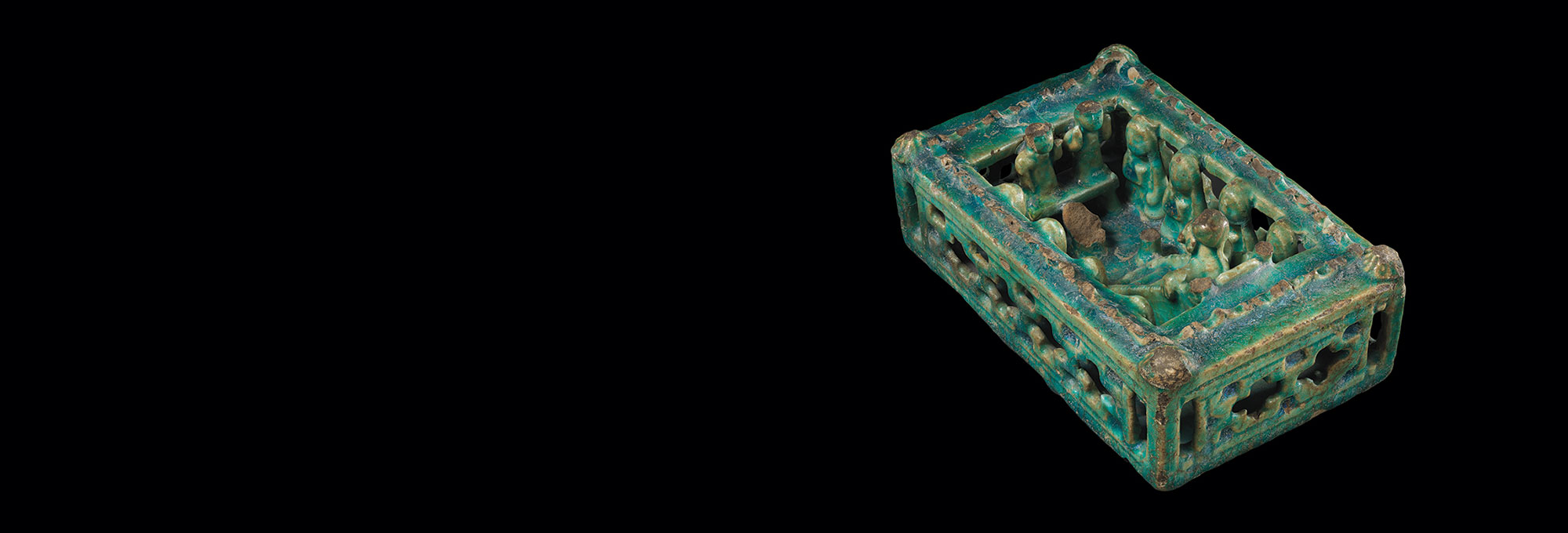
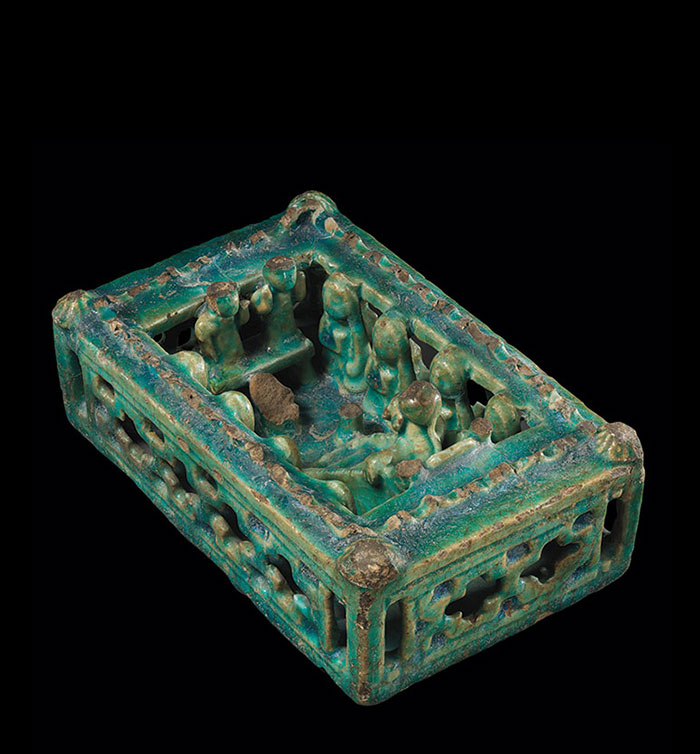
Under the Turkic Seljuk dynasty of the twelfth and thirteenth centuries, the markets of Persia were hives of activity. During this era, cities grew, a mercantile class began to form, and artisans experimented with innovative ways of representing human figures in ceramics. Among the distinctive earthenware objects that date to the period are glazed models of courtyards that feature people drinking, playing musical instruments, and dancing. Archaeologists have unearthed only the foundations of Seljuk houses, thus these festive models are the best evidence scholars have of the home life of prosperous medieval Persians.
Some scholars have speculated that the models contained liquid or were toys. But art historian Margaret Graves of Brown University notes that most of the models have openings that would have made holding fluids impossible, and that it’s unlikely the models’ immovable ceramic figures held any appeal as playthings. “You almost have to have never been a child to think these were toys,” she says. Instead, Graves suspects the courtyard models were given as gifts to celebrate the sort of occasions they depict—a wedding or the new year, for instance.