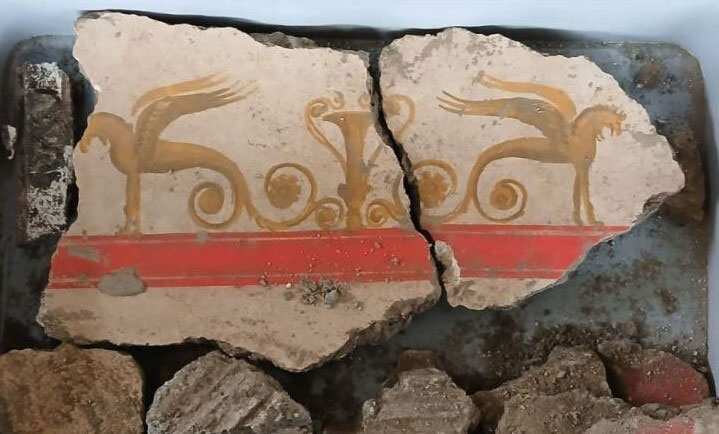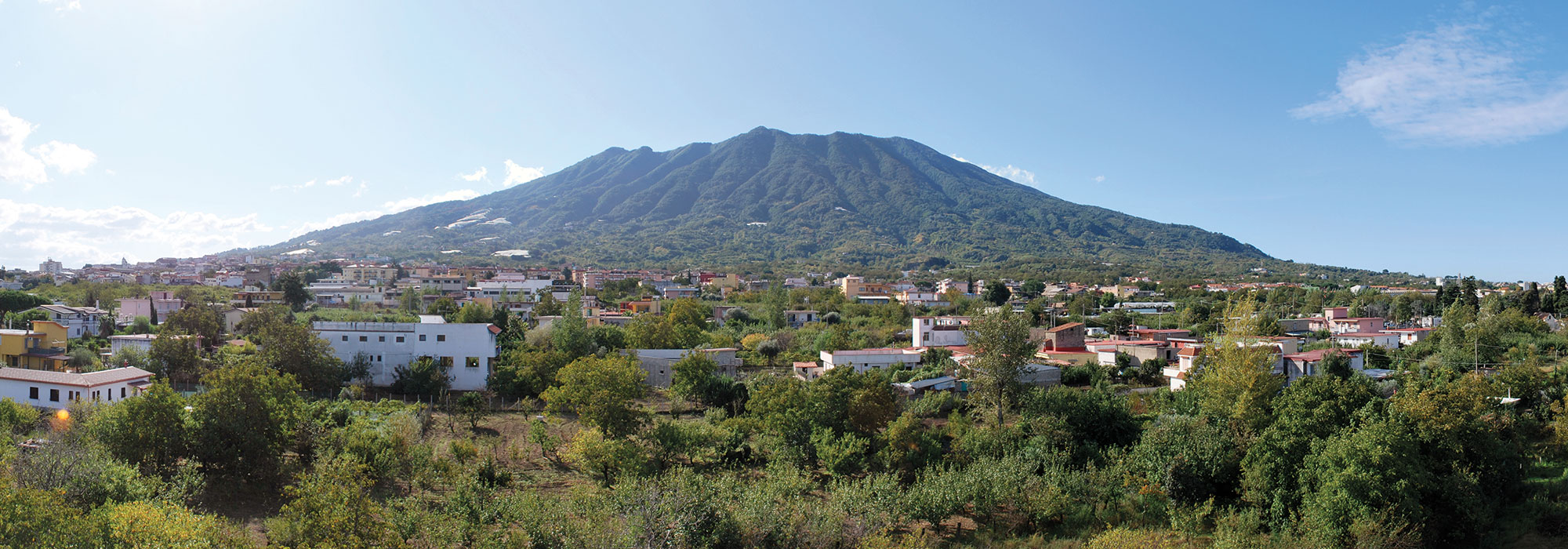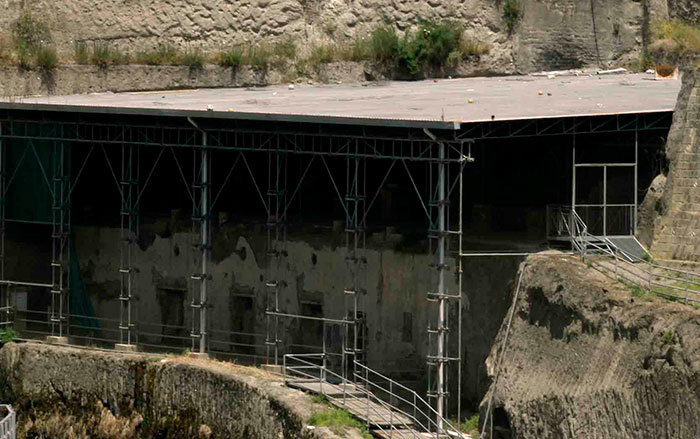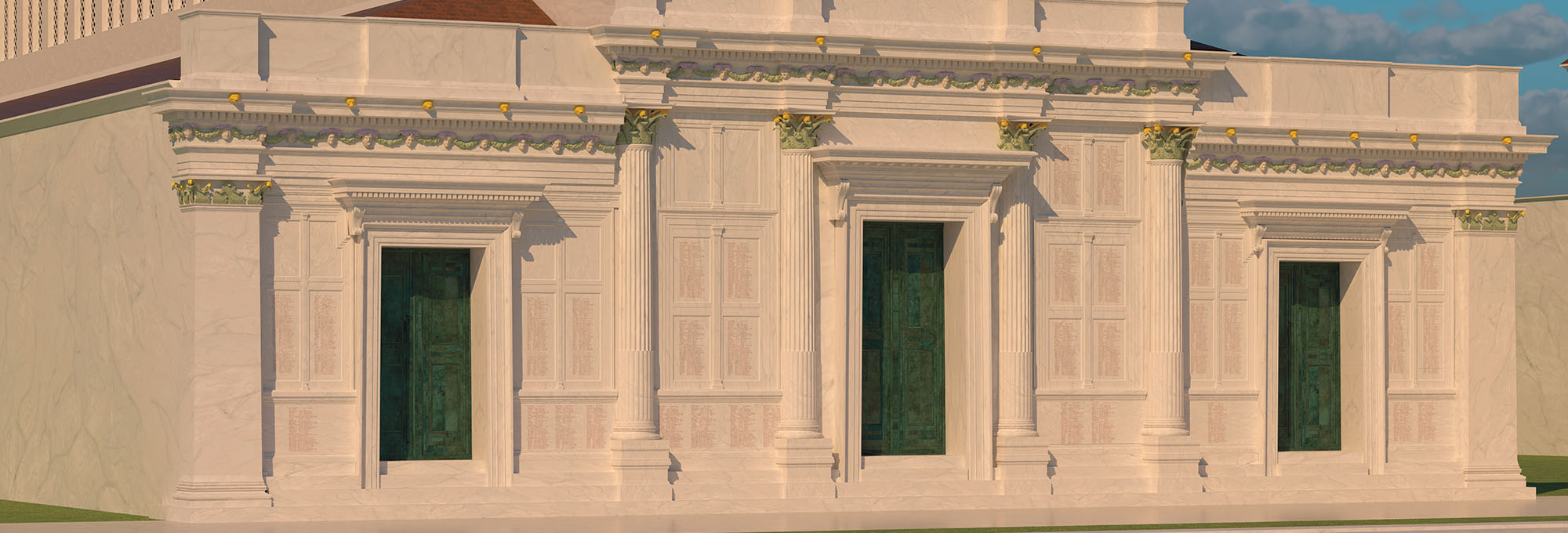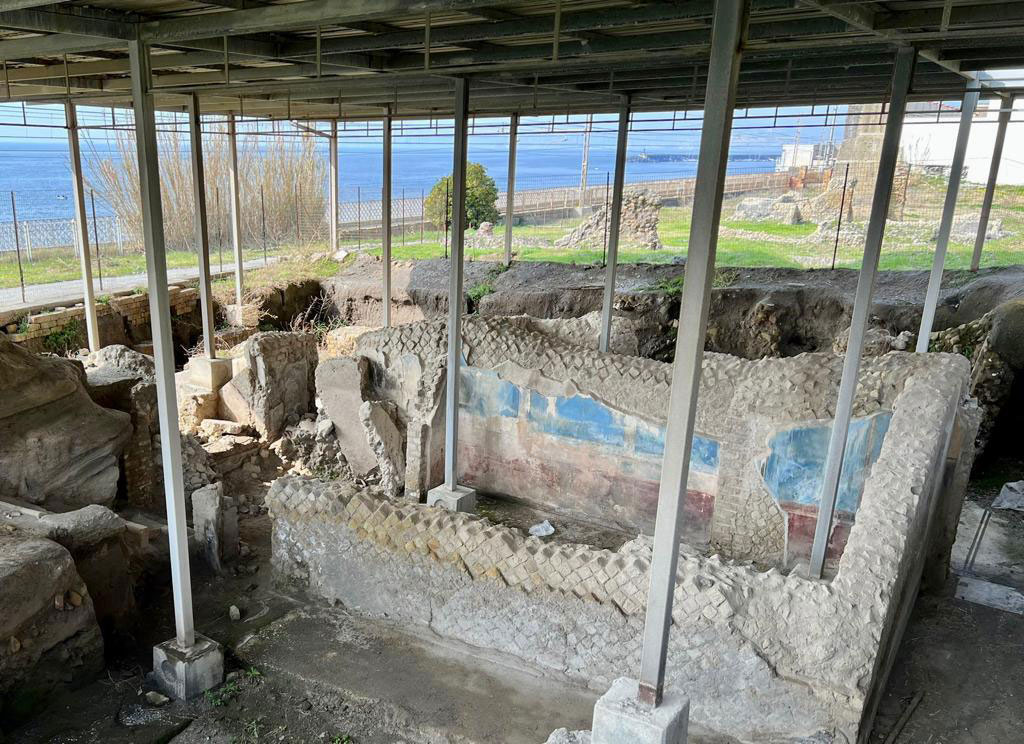
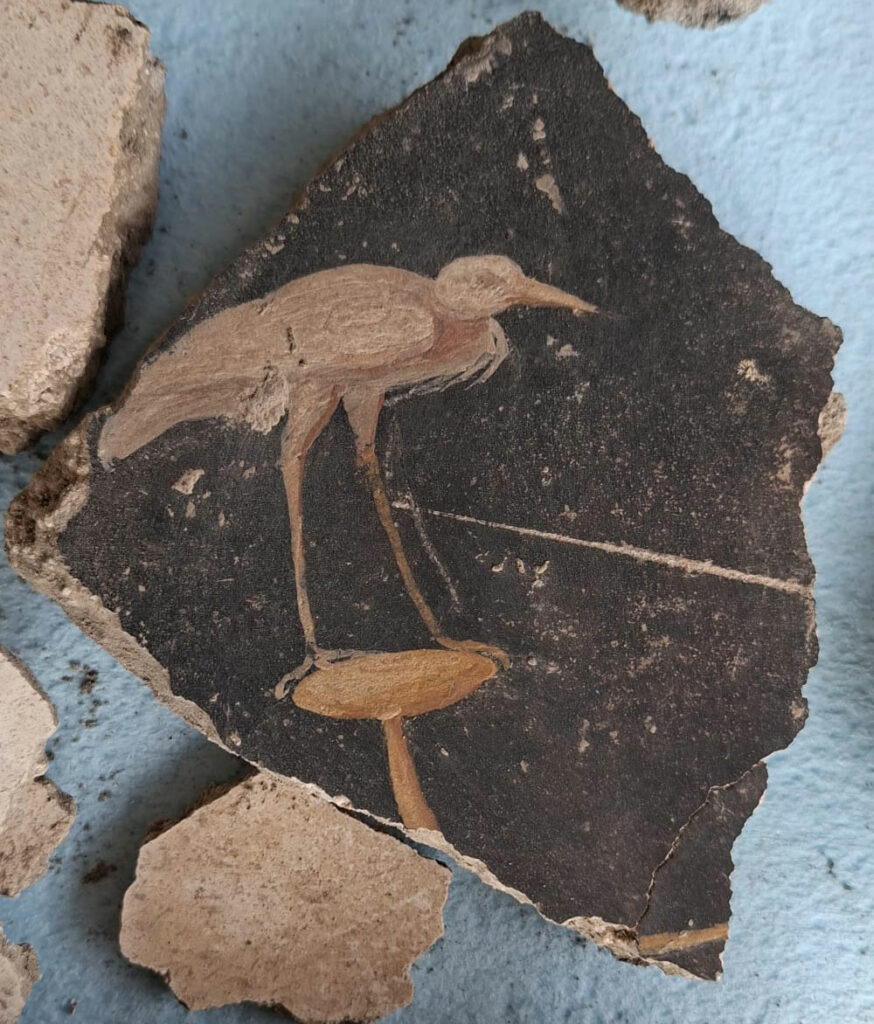
TORRE DEL GRECO, ITALY—Archaeologists from the Herculaneum Archaeological Park have completed new investigations at the ancient Villa Sora on the Bay of Naples more than 30 years after the last systematic excavations at the site, Finestre sull'Arte reports. Constructed in the mid-first century b.c., the villa stretched nearly 500 feet along the sea, just a few miles southeast of the ancient city of Herculaneum. It seems to have undergone several renovations before it was buried by the eruption of Mount Vesuvius in a.d. 79. At the front of the residence, researchers unearthed an approximately 100-square-foot room whose walls were painted black and red, with depictions of herons and candelabra. Frescoes featuring mythological figures such as griffins and a centaur once adorned the light-colored ceiling. Decorated lead cists and other marble architectural elements found in the room, including finely chiseled column capitals, suggest that the space was being used for storage or as a workshop. These finds also indicate that the villa was undergoing another renovation at the time of its destruction. The room's stratigraphy preserves the sequence of forceful pyroclastic flows that caused the ceiling and sections of the walls to collapse. To read about technology that has enabled researchers to view new details of Herculaneum's damaged frescoes, go to "Putting on a New Face."