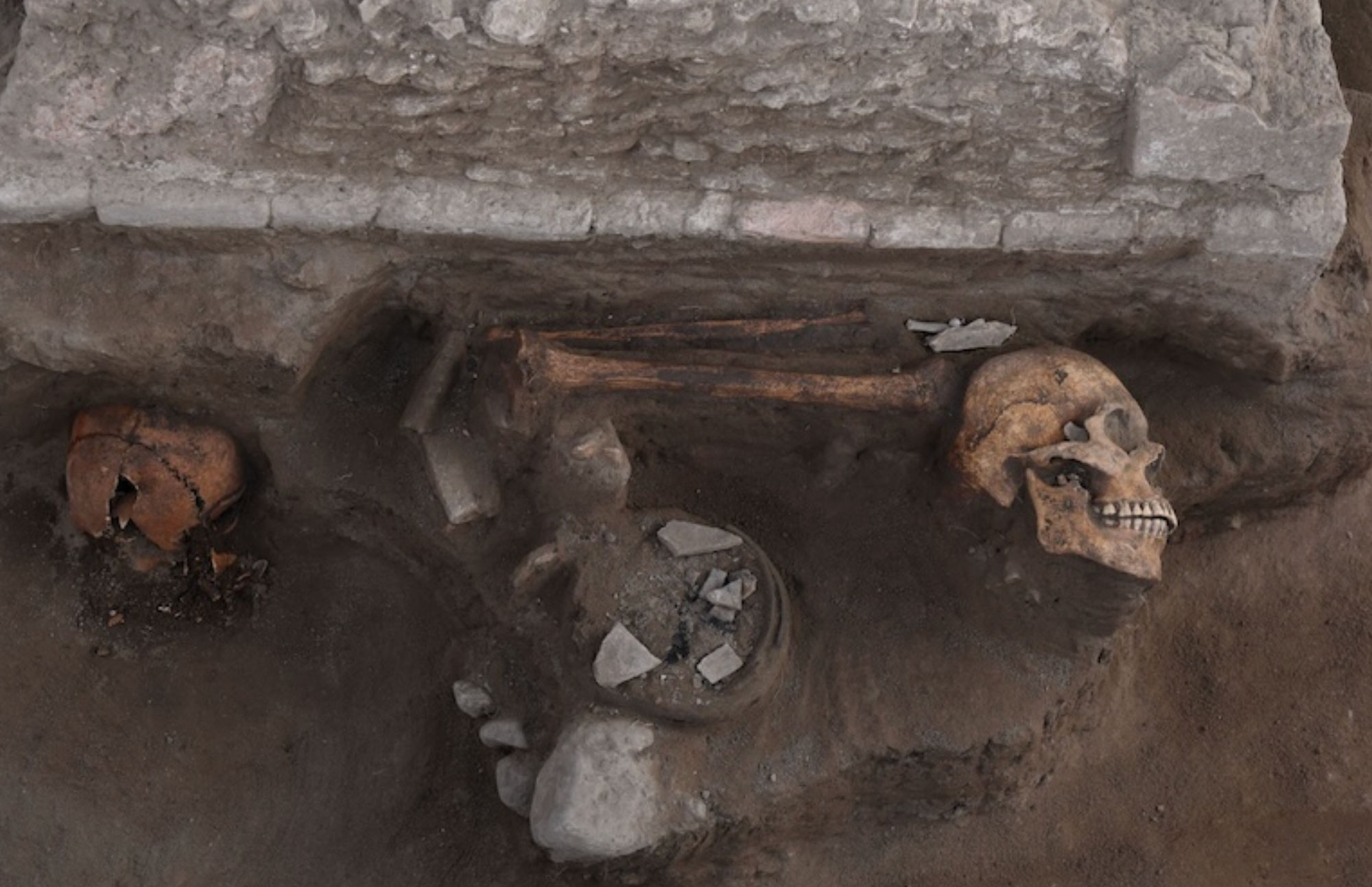
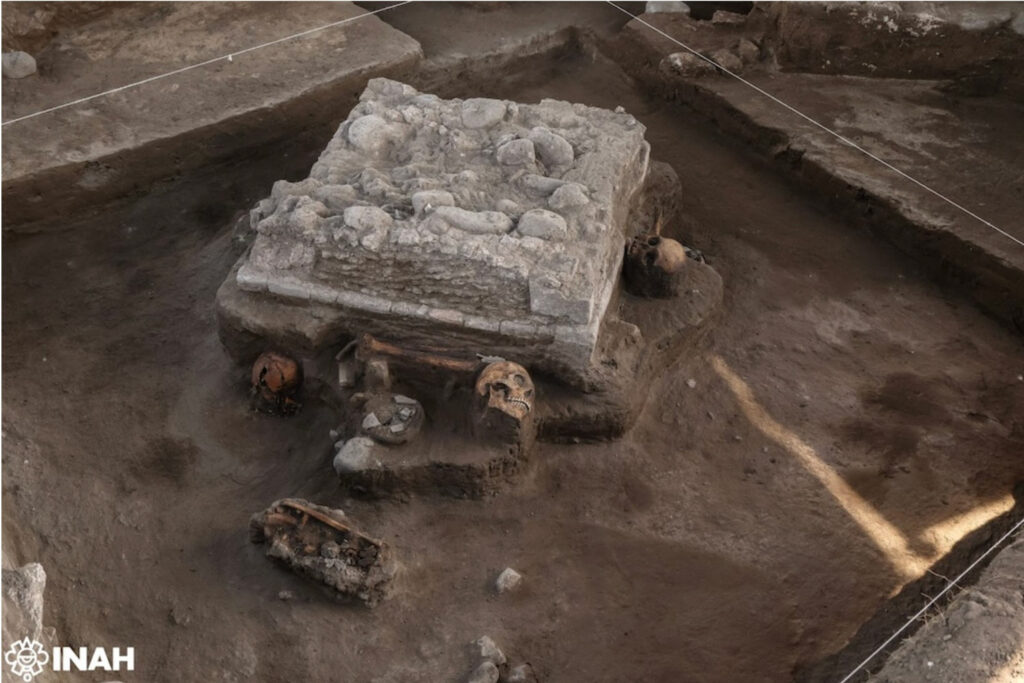
HIDALGO, MEXICO—La Brújula Verde reports that work along the route of a passenger train uncovered an altar, or momoztli, in central Mexico near the site of Tula, the ancient Toltec capital. The momoztli has been dated to between A.D. 900 and 1150. Archaeologist Víctor Francisco Heredia Guillén of Mexico’s National Institute of Anthropology and History said that the structure had at least three tiers. The first tier is a stone base thought to be made of andesite, a type of volcanic rock. These blocks are each about four inches long. The next tier consists of slabs made of the same material, while the upper tier features several rounded stones and basalt rock. Two skulls were uncovered near the altar’s base. Beneath the skulls, the researchers found a compacted stucco surface, under which they discovered another two skulls and several large bones. A black bowl containing another vessel, other ceramic vessels, and obsidian fragments and blades were also unearthed. Heredia Guillén said that the bones will be analyzed for age, sex, and health status at the time of death. Scientists will also look for any cut marks or evidence of decapitation on the bones. The excavation of the altar also revealed evidence of a larger structure surrounding it, suggesting that the altar may have been placed in a courtyard. “We suppose these were either rooms or an elite context, or groups of higher hierarchy, remains of palaces that may have existed at the site. We know that at the edges of Tula there were neighborhoods of upper and middle classes, and much farther away, those of common people,” Heredia Guillén concluded. To read more about Tula, go to "Mexico's Butterfly Warriors."