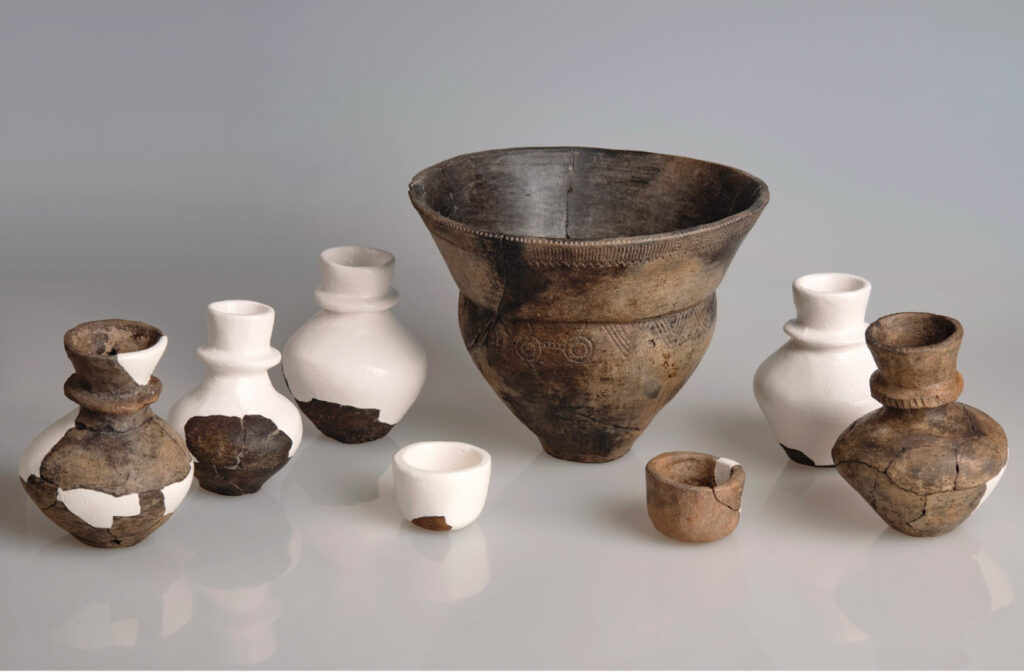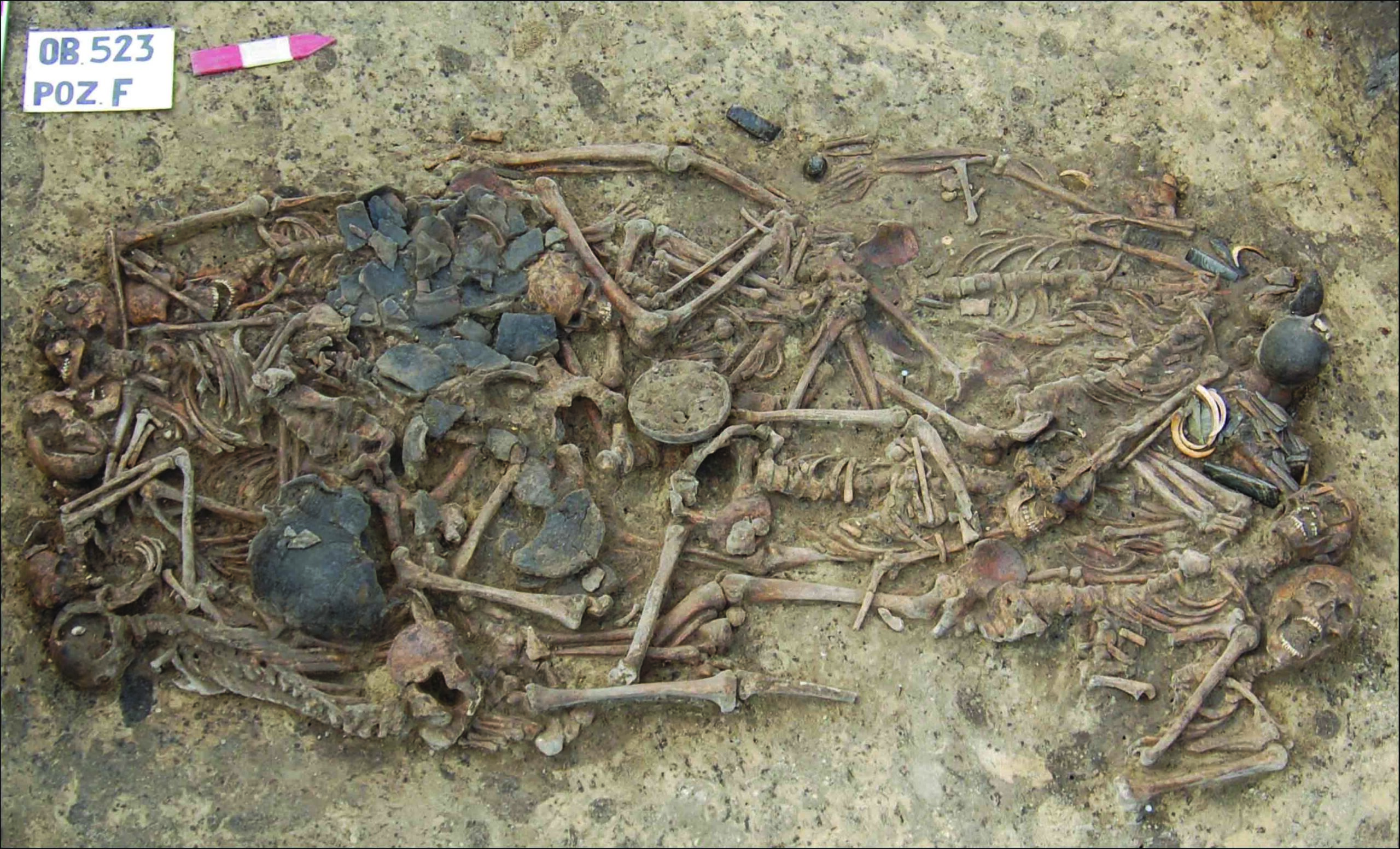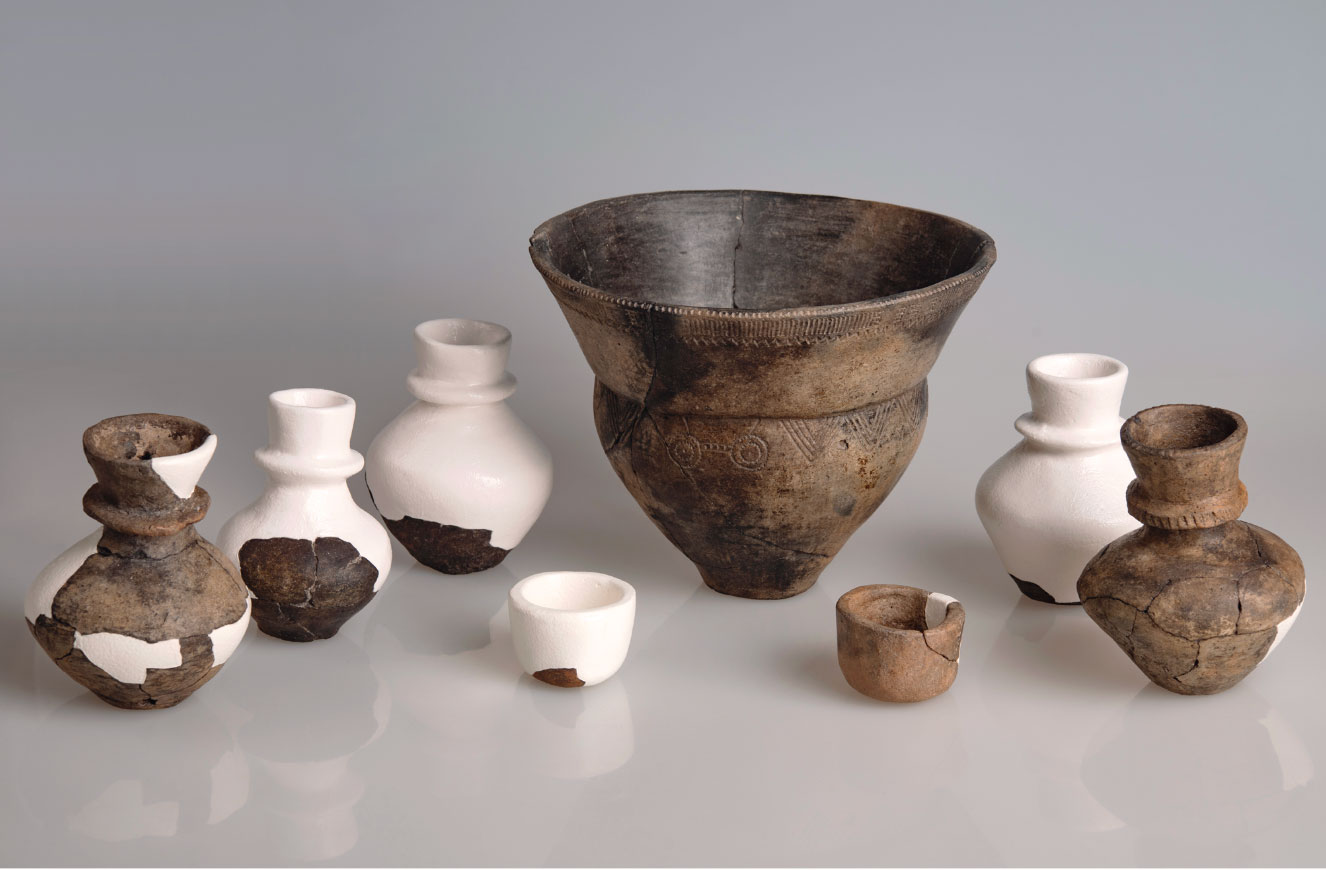
TORUŃ, POLAND—Residues of milk beverages with reduced lactose have been found on 5,500-year-old pottery fragments unearthed at the Neolithic site of Sławęcinek, which is located in north-central Poland, according to a Science in Poland report. Among the more than 6,000 pieces of pottery made by members of the Funnelbeaker culture that were recovered, the researchers were able to identify a set of libation vessels including a large funnel-shaped beaker, five collared flasks, and two small cups. “We identified proteins derived from both cow’s milk and sheep’s or goat’s milk,” said Łukasz Kowalski of Nicolaus Copernicus University. “These products were likely produced using a process similar to cheese or whey production,” he added. Because most people who lived during the Neolithic period were lactose intolerant, processing milk into products with a lower lactose content would have aided the early farmers in digesting this valuable source of nutrition. The bones of many cattle and pigs were found near the vessels, suggesting that the foods were consumed during communal feasts. Burial sites uncovered near the feasting remains were found to contain only the remains of women. Kowalski and his colleagues believe this might indicate that milk beverages could have been consumed during feasts held by women in honor of motherhood, fertility, and health. Read the original scholarly article about this research in Praehistorische Zeitschrift. To read more about milk and cheese production in Neolithic Europe, go to "When Things Got Cheesy."