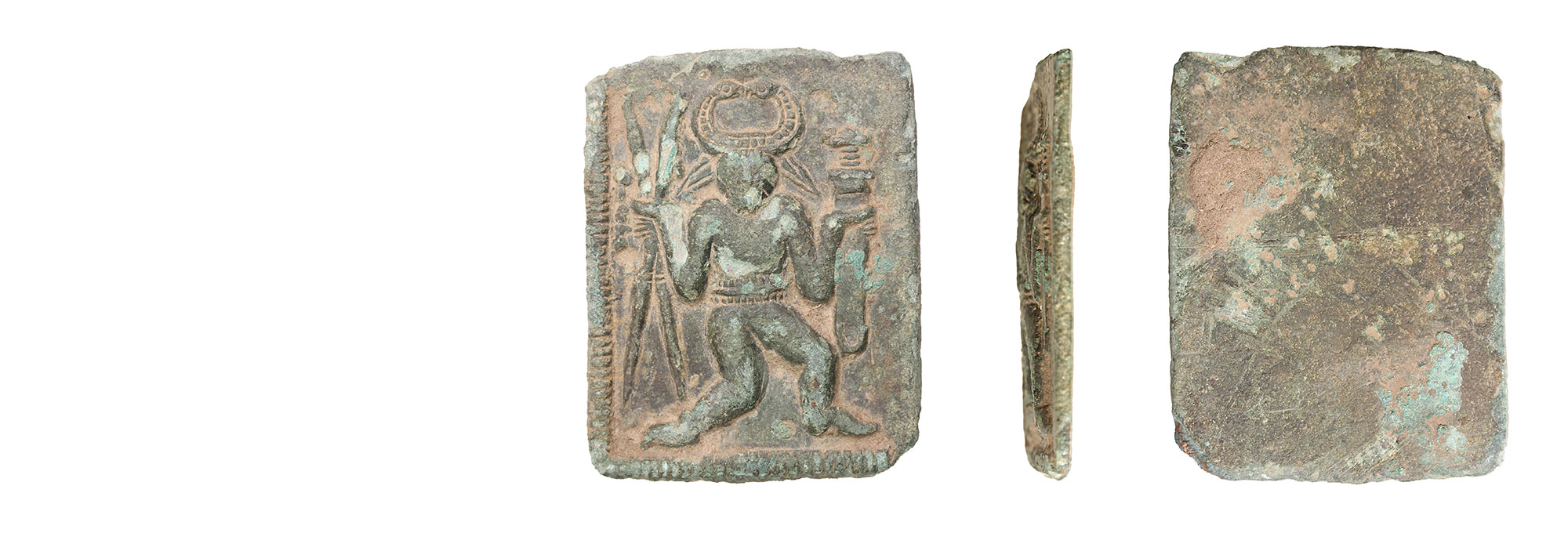

KENT, ENGLAND—ArtNet News reports that a copper-alloy die stamp discovered by a metal detectorist in southeastern England may have been used to create decorative foils for armor in the late sixth or early seventh century a.d. It is the first such die to be found in England. It had been previously thought that Anglo-Saxon armor, such as the Sutton Hoo helmet, had been made in Scandinavia. “This small but remarkable find provides important evidence that helmets like the Sutton Hoo example could have been made in Kent,” said Andrew Richardson, Finds Liaison Officer for Kent County Council and Kent Officer for the Portable Antiquities Scheme. “It highlights the skill and connections of early medieval craftworkers in the county,” he explained. Some scholars have suggested that the Sutton Hoo helmet, which was discovered in a ship burial in southern England in the late 1930s, was made in Tåsinge, an island in southern Denmark where a copper-alloy stamp bearing an image of a warrior wearing equipment similar to the Sutton Hoo helmet was discovered. For more, go to "The Ongoing Saga of Sutton Hoo."