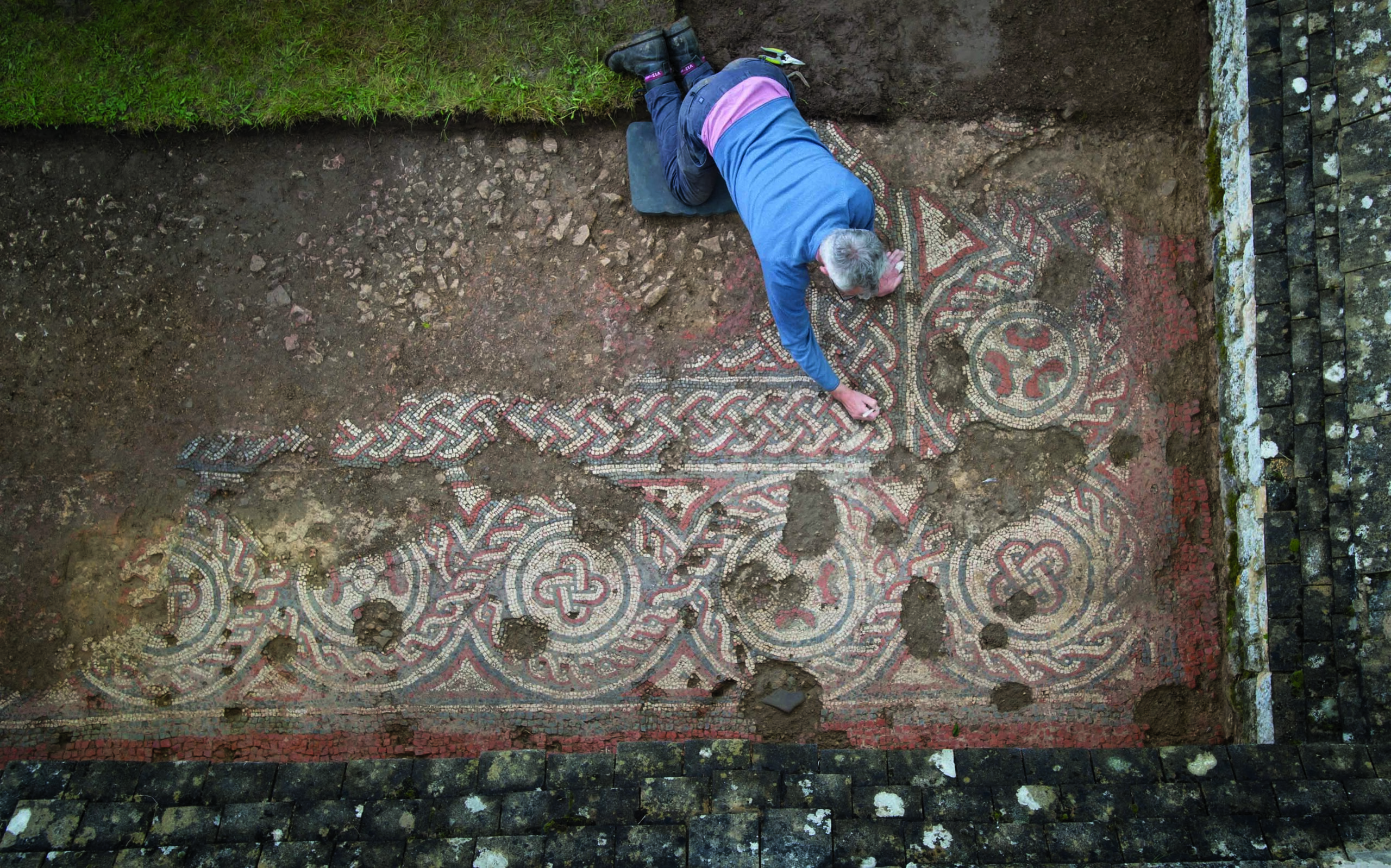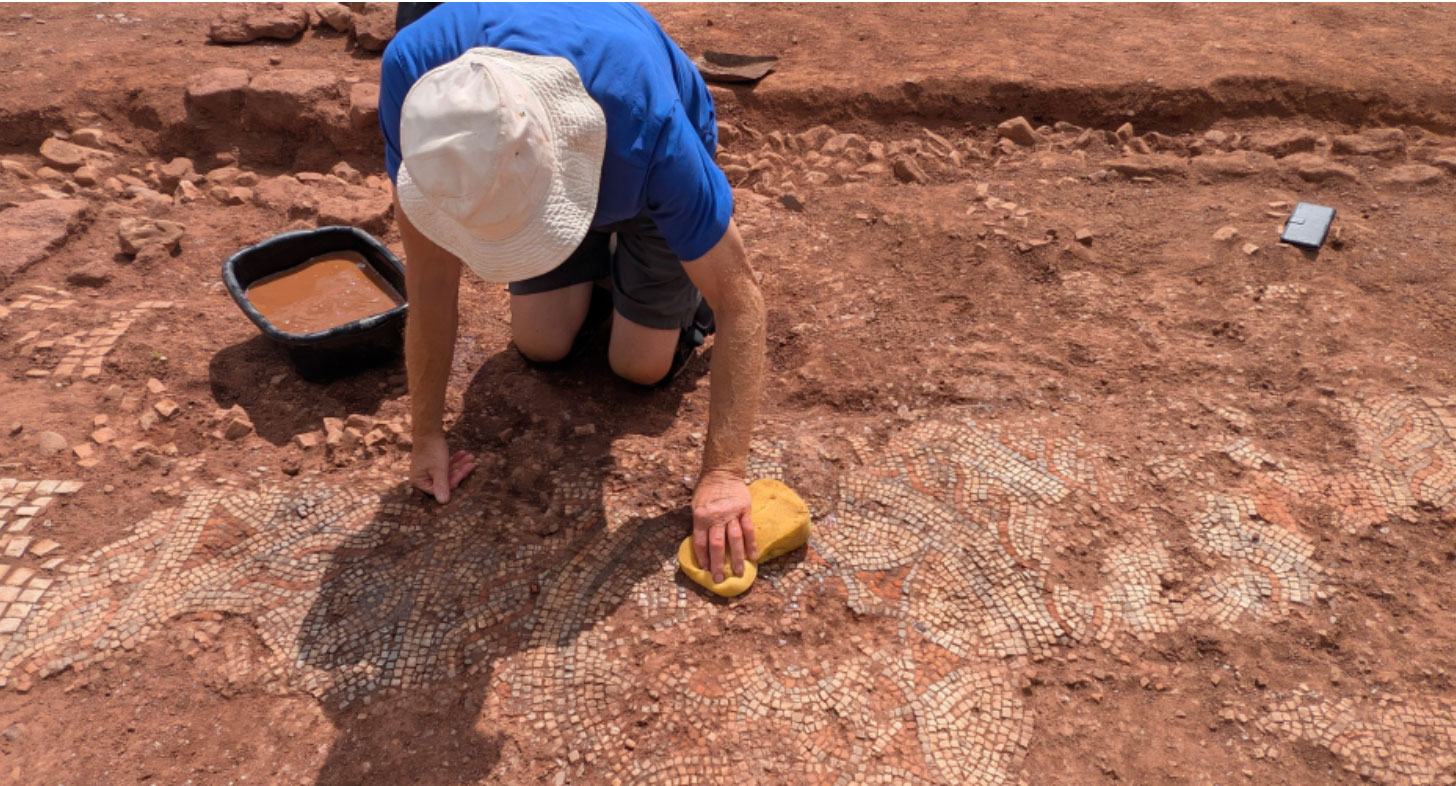
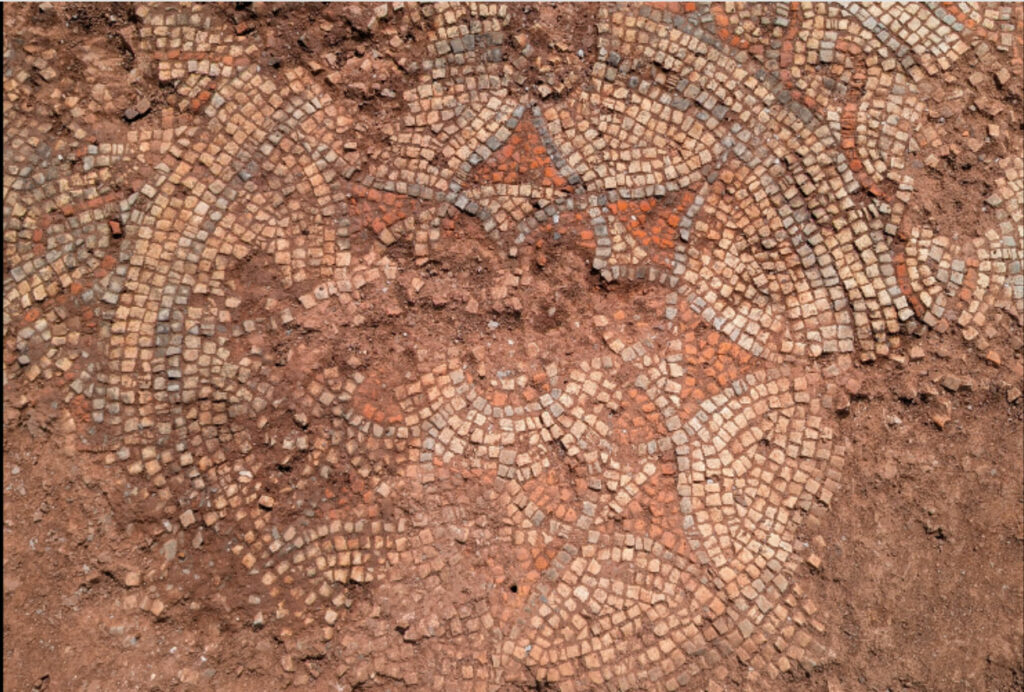
DEVON, ENGLAND—According to a statement released by the University of Exeter, a Roman villa with a mosaic floor dated to the fourth century A.D. has been discovered in southwestern England. Made up of red, white, and dark blue-gray tesserae, the floor covers some 129 square feet of what may have been a dining or reception room. The center of the floor features a roundel containing a stylized flower with overlapping petals. Archaeologist Bill Horner of Devon County Council said that the mosaic is the westernmost example to be found in a villa in Roman Britain. A blue glass intaglio carved with an image of the goddess Victory was recovered from the villa, in addition to a copper alloy bangle. “This and the other trappings of Roman civilization and evidence of affluence that have been found show how much even this far-flung part of the province had been integrated into the Roman Empire,” he explained. A bathhouse with at least two plunge pools and painted plaster walls has also been uncovered at the site. “We did not expect to find such an elaborate bathhouse,” said Susan Greaney of the University of Exeter. A third large building at the site is thought to have been used for agricultural purposes. “This villa was undoubtedly home to people of wealth and high standing,” Greaney concluded. To read about a Roman villa uncovered in Wiltshire, go to "A Villa Under the Garden."