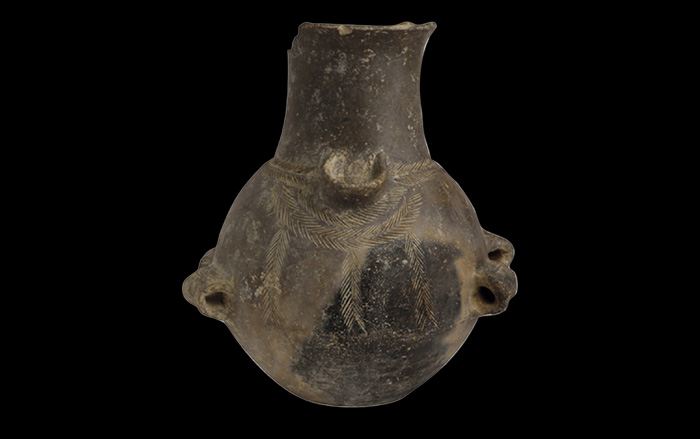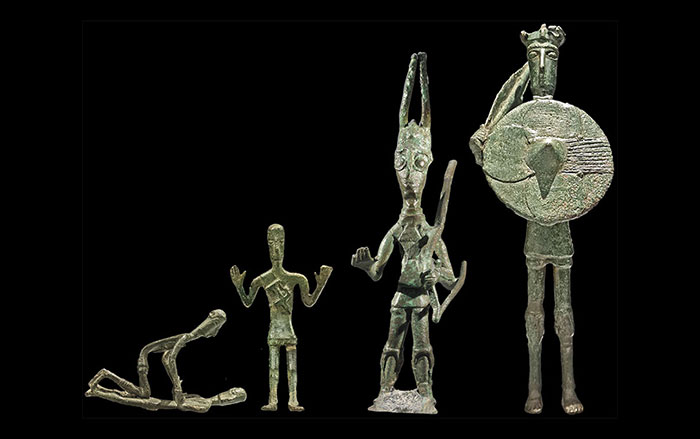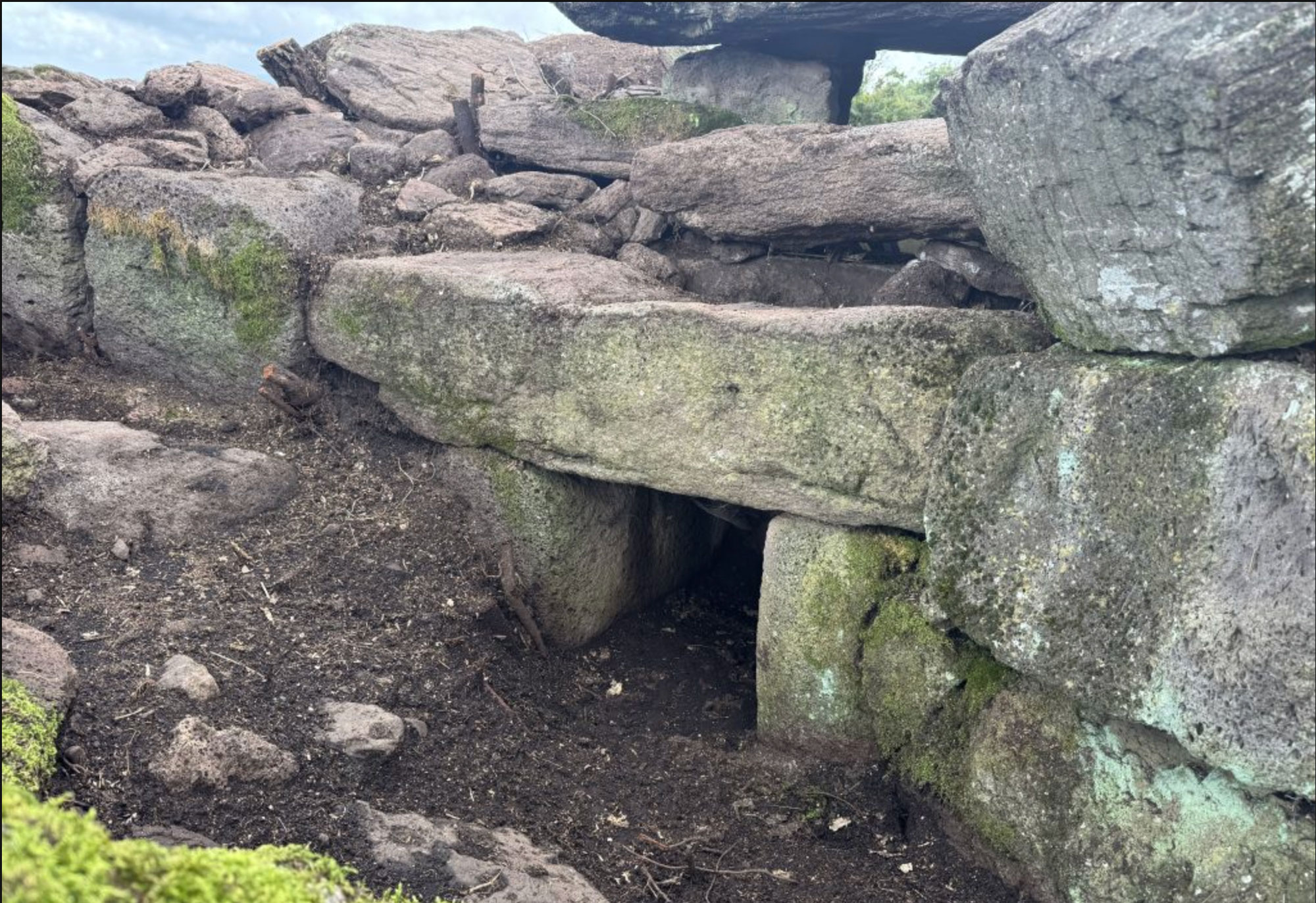
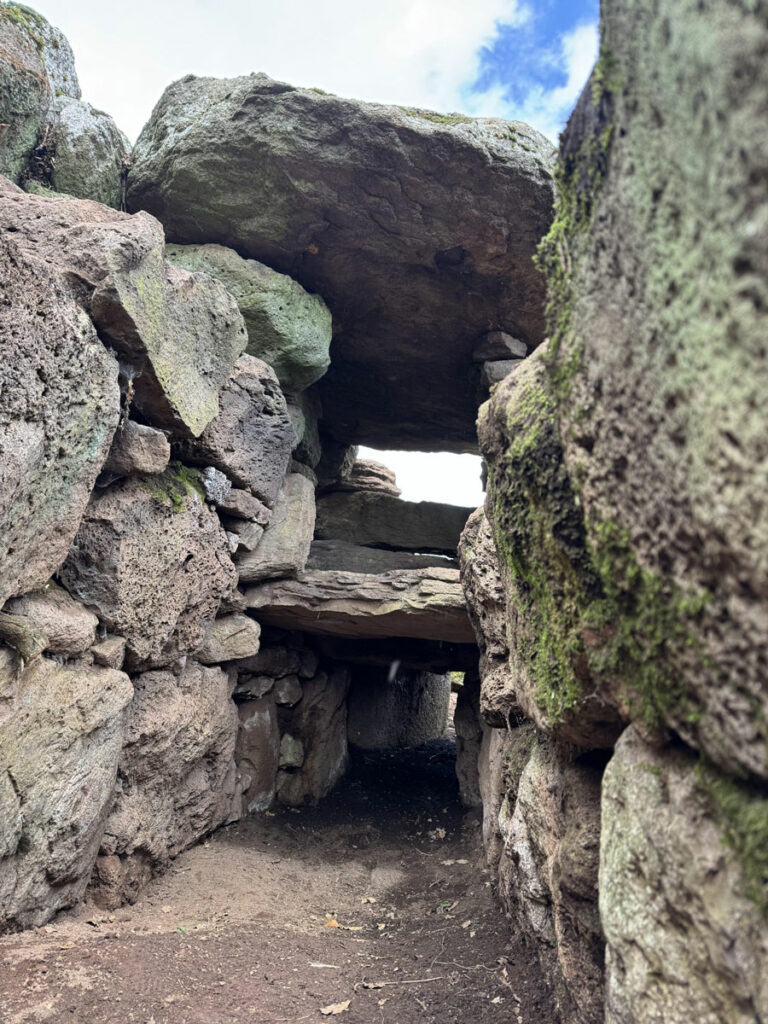
BORTIGALI, SARDINIA—Finestre Sull’Arte reports that an archaeological survey conducted by Italian authorities located a previously unknown monumental tomb at Carrarzu Iddia in central-western Sardinia. The megalithic structure belongs to a group of enigmatic Bronze Age burial complexes on the island known as Giants’ Tombs. These were built by the Nuragic civilization as collective burials beginning around 1800 b.c. The vast site features two protonuraghi, or large stone platforms, a residential settlement, a sacred well, and an extensive burial ground. The newly discovered funerary monument had escaped the attention of archaeologists until now because it was heavily shrouded in vegetation. The tomb was constructed from large trachyte blocks and contains a spacious, semicircular exedra in front of the entrance, where Nuragic people conducted ceremonies to worship their deceased ancestors. The interior burial chamber was subdivided into two levels, an architectural characteristic that is only rarely seen in similar Giants’ Tombs. Archaeologists hope that the monument’s exceptional state of preservation, its rare two-level layout, and the ceramic artifacts they found will provide new insights into construction methods, the evolution of funerary practices, and the chronology of the early phases of Nuragic civilization. To read about votive deposits uncovered at a Nuragic complex of stone towers, go to "Sardinian Ritual Summit."