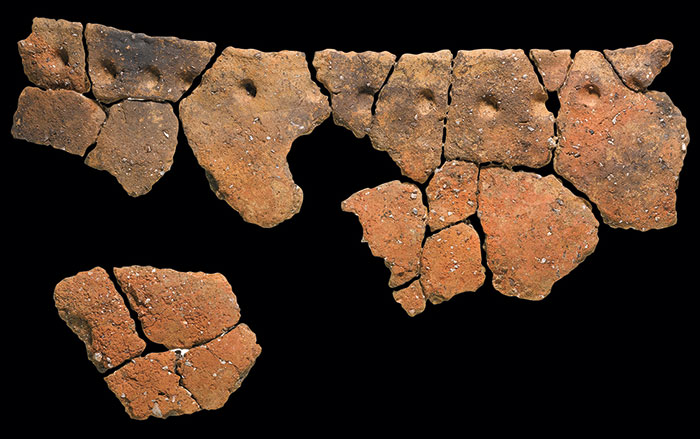
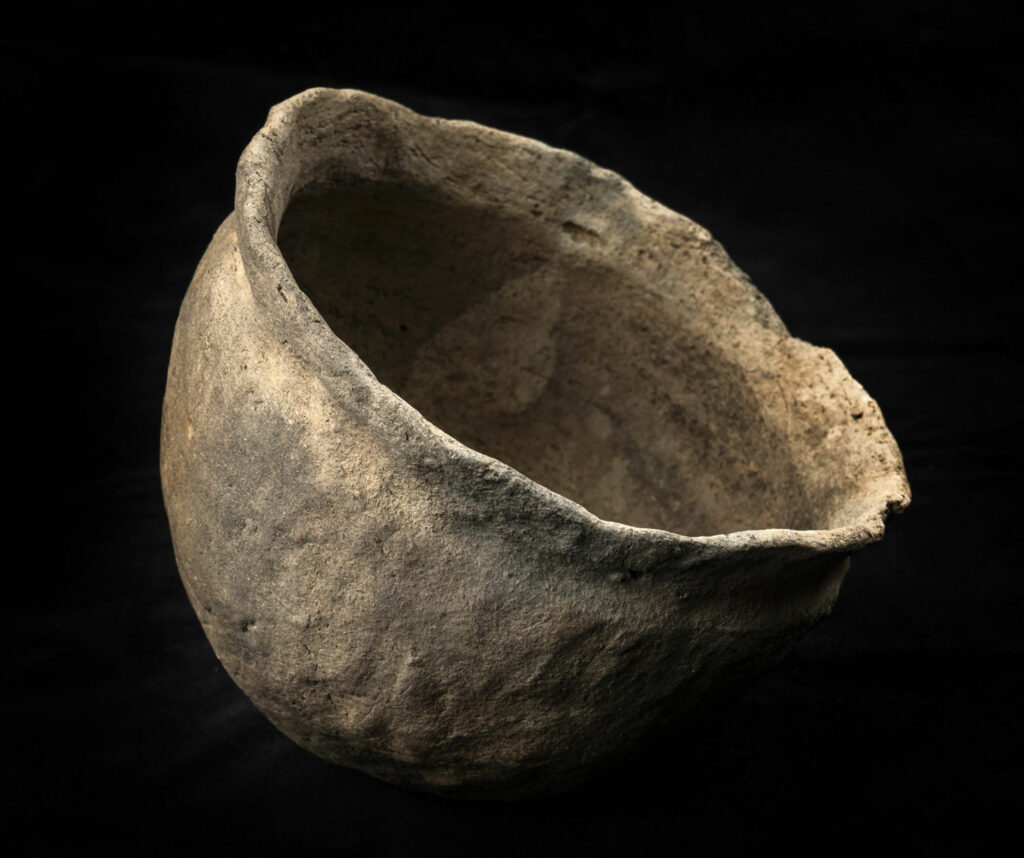
GAINESVILLE, FLORIDA—According to a statement released by the Florida Museum of Natural History, archaeology students uncovered an exceedingly rare, fully intact Native American pottery vessel at the site of a former Spanish mission located in northwest Gainesville. “It’s very unique. Typically, we find things that were broken and discarded,” said Gifford Waters, collections manager at the Florida Museum of Natural History. “You don’t leave things behind that you can still use, so why was this purposefully put into a pit?” The small, bowl-shaped pot, which fits into the palm of a hand, is the only one of its kind among the 7,000 artifacts that have been recovered by archaeologists during the museum’s past excavations at the site. Experts, though, are still unsure what its purpose was or why it was buried within a Spanish-made structure. The site was founded around 1585 by Potano people who Spanish troops had pushed out of their previous home in northern Florida. In 1606, the Spanish government sent a friar to the village to establish a mission, which became known as Mission San Francisco de Potano. At its height, the village was home to several hundred Potano and, at times, a small contingent of Spanish soldiers, before being abandoned in 1706. To read about the empire of the Indigenous Calusa in southern Florida, go to "Searching for the Fisher Kings."