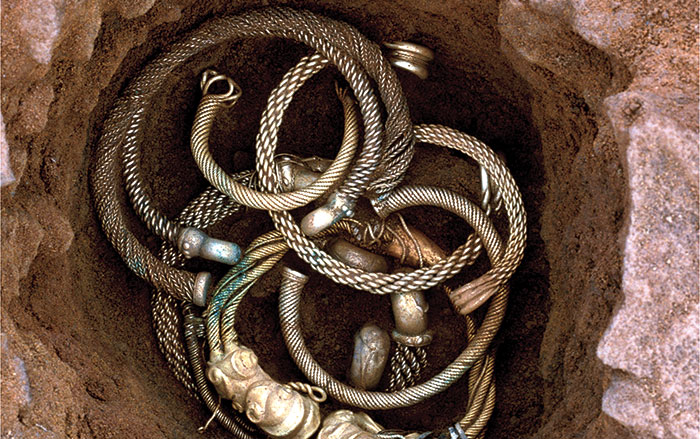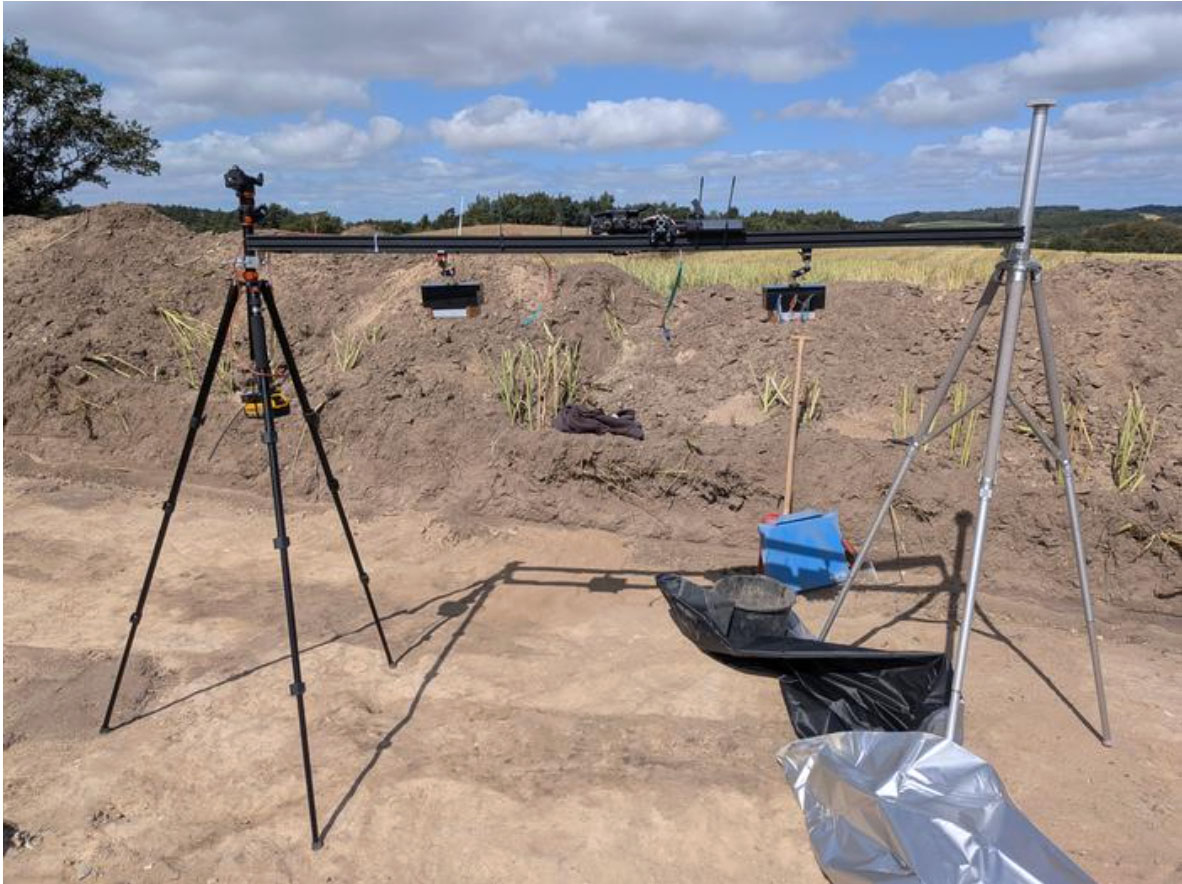
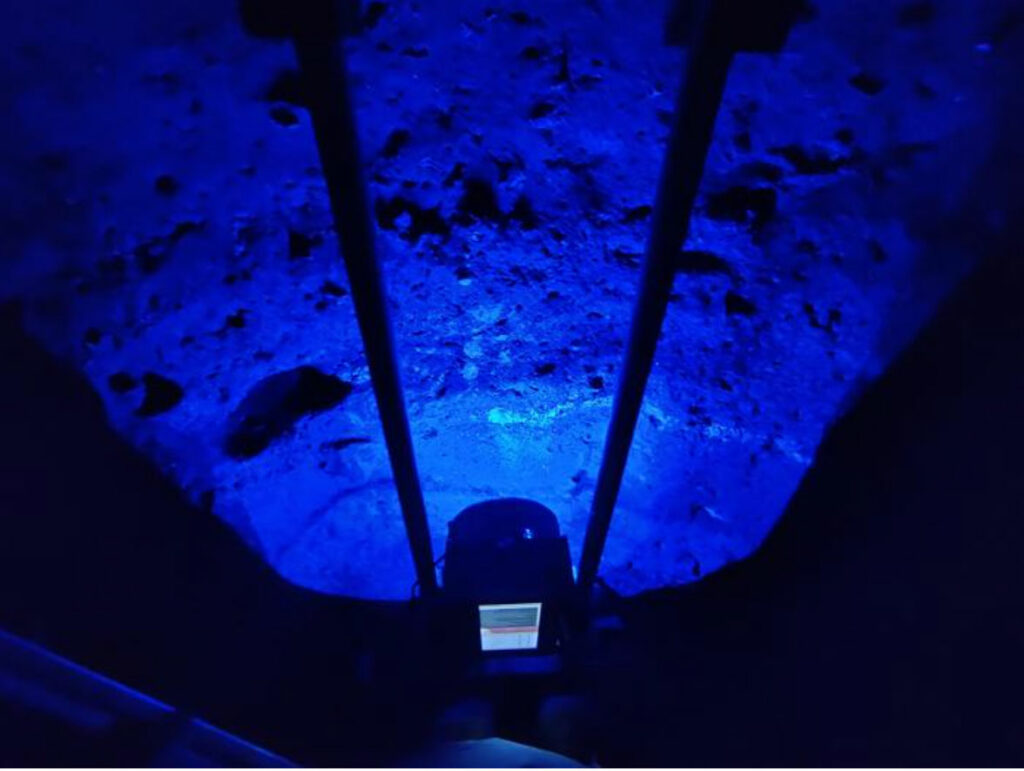
AARHUS, DENMARK—According to a statement released by Aarhus University, a team of researchers has developed an LED multispectral imaging system (LEDMSI) that can be used in the field to examine a site before excavating it. The system uses 16 LED lights with 16 different wavelengths, including visible light, near ultraviolet light, and near-infrared light. Because different materials absorb and reflect light differently, the lighting system can reveal things that may not otherwise be visible to the eye. The team members, including Søren Munch Kristiansen of Aarhus University and David Stott of the Moesgaard Museum, first tested the system at the Iron Age site of Sorte Muld, or “Black Soil,” which is located on the Danish island of Bornholm. “The images looked almost psychedelic when we took them, and we only really saw what we had when we analyzed them back at the computer,” Kristiansen said. “Then we could see new layers and changes in the fill that we simply could not see with the naked eye,” he added. For example, the LEDMSI system revealed a change in the ground surface that could mark a break in activity at the site. Excavation will be used to test if this is the case. In addition, small bone fragments fluoresced under ultraviolet light. Previous research has linked fluorescence in bones at archaeological sites to the presence of collagen, which can be useful for DNA and protein analysis. The team is continuing to develop and test the LEDMSI system. To read about another application of multispectral imaging to assess how an artifact was made, go to "World's Oldest Book," one of ARCHAEOLOGY's Top 10 Discoveries of 2023.