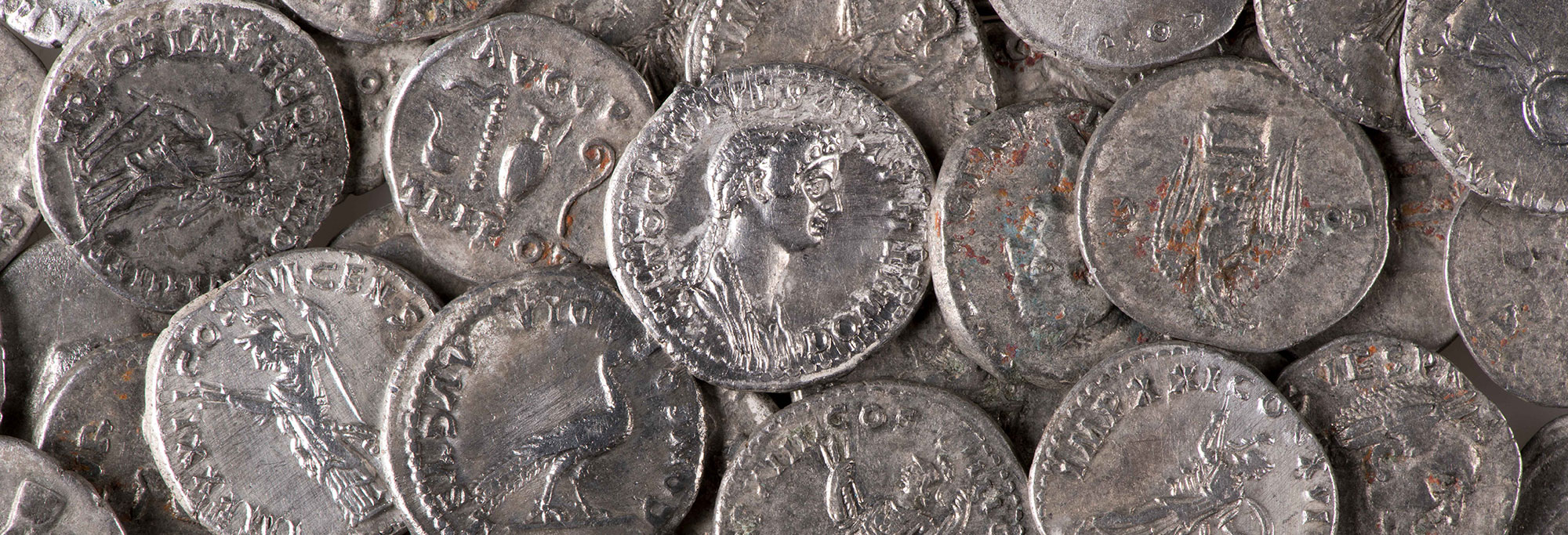
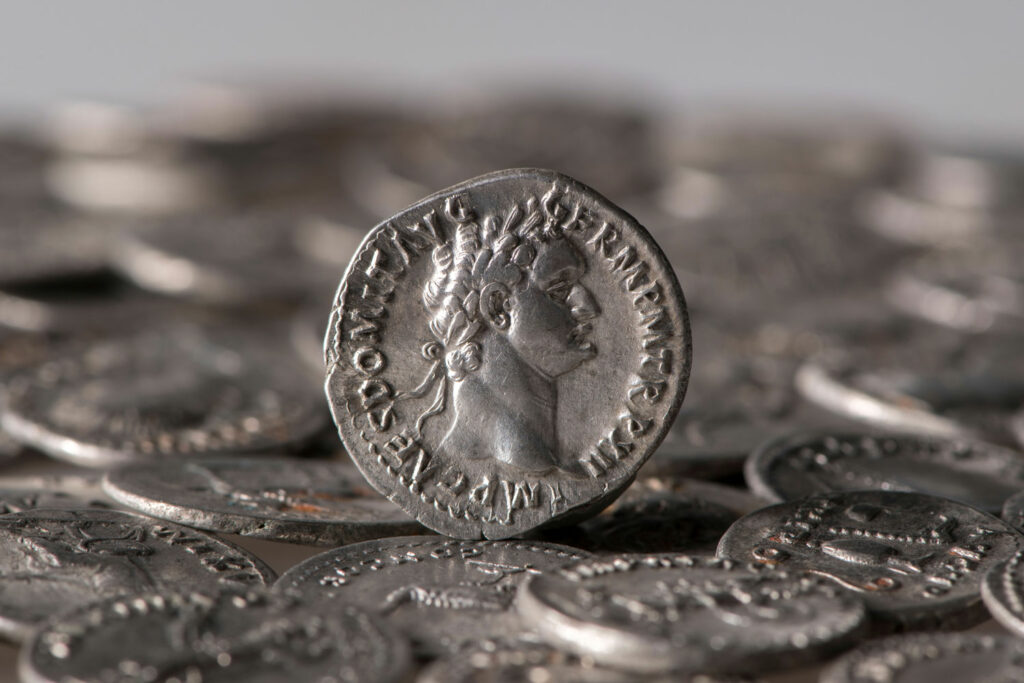
WESSELING, GERMANY—A metal detectorist in western Germany has discovered a hoard of more than 900 Roman silver coins, the Associated Press reports. He called authorities to the site near Wesseling, which is located in an area that was under Roman control from about 39 B.C. to A.D. 459, after his metal detector continued signaling after he recovered several of the coins. North Rhine-Westphalia state archaeologist Erich Classen said that the denarii date to the second century A.D. “Of course, we can only speculate about the motives, but it’s very likely that someone wanted to keep this money safe,” he said, adding that the owner may have died before passing on the knowledge of where the coins were hidden. “At that time, an ordinary soldier in the legion earned 300 denarii a year,” explained archaeologist Rahel Otte. “However, about half of that was withheld for food and equipment. A legionary would therefore have had to save all of his disposable income for about six years to amass the Wesseling hoard,” she concluded. For more on Germany's Roman history, go to "The Road Almost Taken."