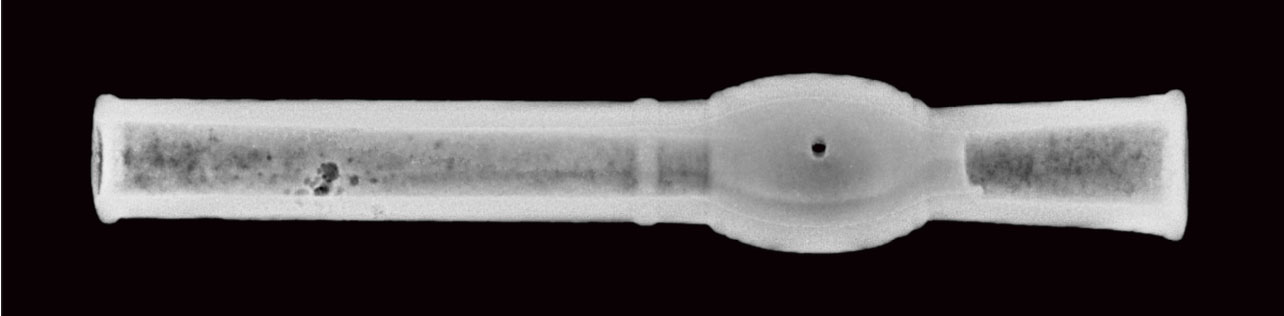
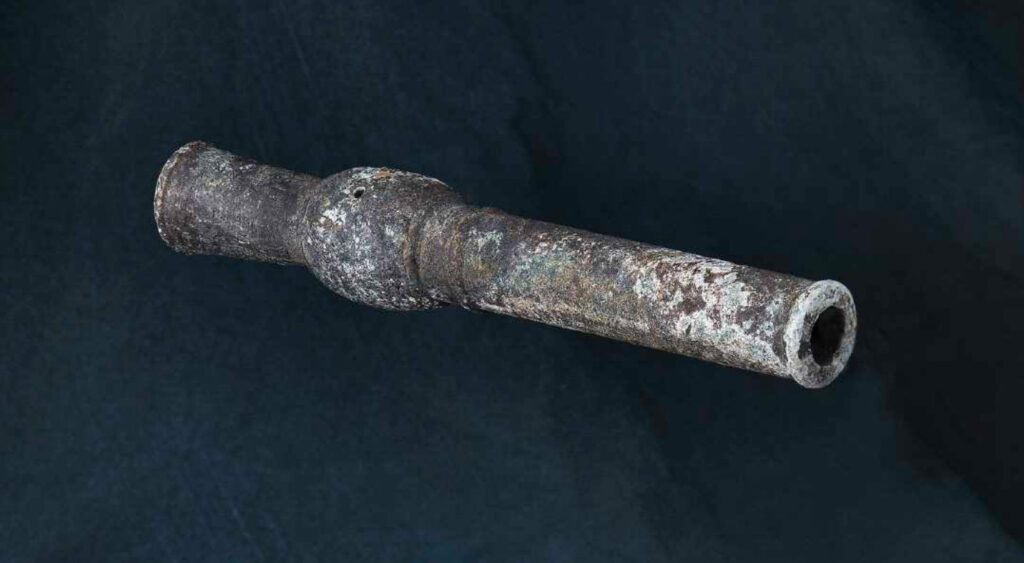
NAJU, SOUTH KOREA—A weapon discovered in 2023 on Mount Geumseong in southwestern South Korea has been identified by researchers from the Naju National Research Institute of Cultural Heritage as a Hwangja Hwatong, a handheld gunpowder weapon that fired arrows or pellets, ZME Science reports. The 600-year-old bronze weapon measures about nine inches long and weighs about two pounds. Engravings on the handle record the weapon’s name, weight, manufacturing supervisor, craftsman, and an incomplete date. When researchers compared the inscription with historic records of firearm production, they determined that this weapon was made in either 1377 or 1437. “It comes from a crucial transitional period between the late Goryeo and early Joseon dynasties, when physical artifacts of firearms are exceptionally rare,” said Cho Mi-soon of the Naju National Research Institute. Another character on the muzzle is thought to have been an inventory or production number—evidence of state-organized firearm production. To read about early guns from China, go to "Weapons of the Ancient World: Fire Lances and Cannons."