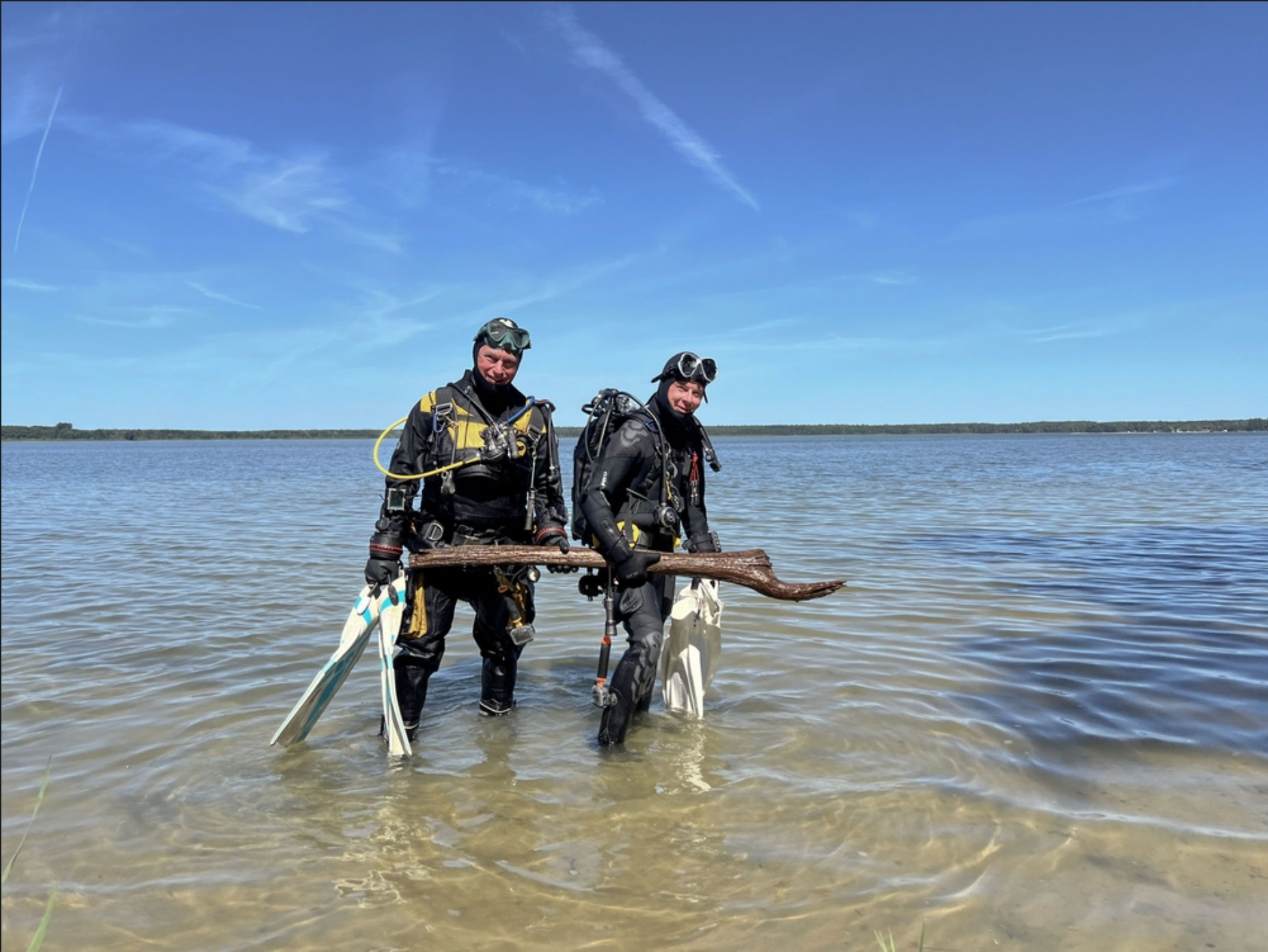
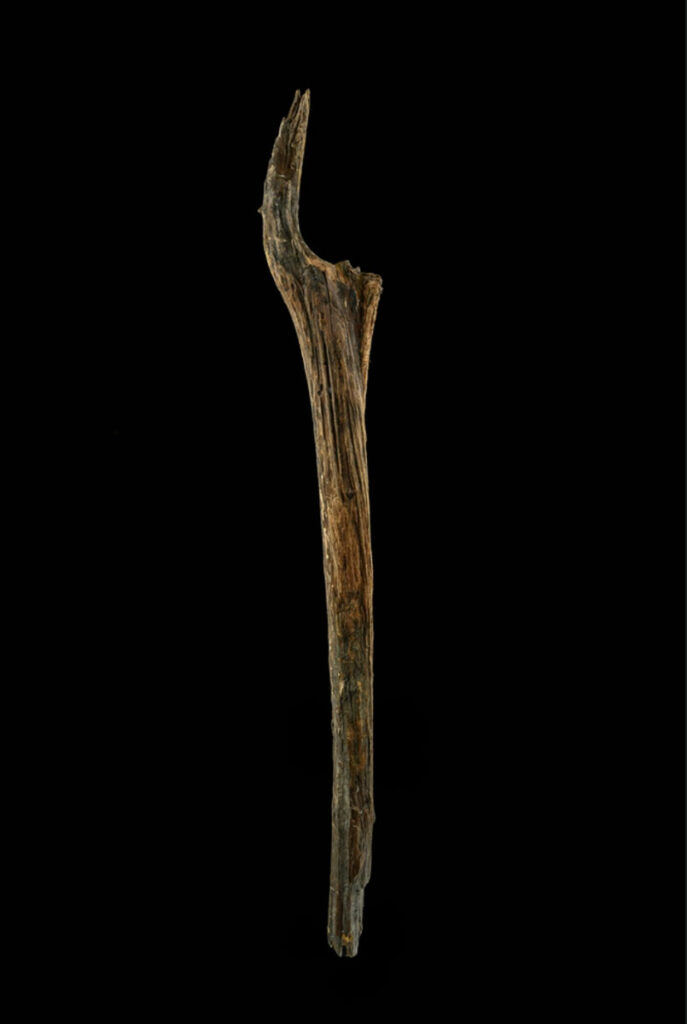
SAXONY-ANHALT, GERMANY—According to a statement released by the State Office for Heritage Management and Archaeology (LDA) Saxony-Anhalt, pieces of worked wood dated to some 10,500 years ago have been recovered from sediments in central Germany’s Lake Arendsee. “The finds shed a completely new light on the Mesolithic period, for which traces of buildings in central Germany have so far only been known in the form of soil discolorations,” said state archaeologist Harald Meller. The pieces of wood include a five-foot post bearing felling marks, and split boards measuring up to about four feet long. It is not yet known if the wood was used to build huts or an unknown structure. “If permanent buildings or intensively cultivated living spaces already existed 10,500 years ago—that is, 3,000 years before the arrival of the first farmers with their longhouses in Central Europe—this would have far-reaching consequences not only for our understanding of hunter-gatherers, but also for the origins of modern cultural landscapes,” explained Marcel Weiß of LDA Saxony-Anhalt. The researchers, working with Fraunhofer IOSB-AST, are now documenting the lake’s ancient shoreline with high-resolution sonar scanning in order to plan additional underwater investigations. For more on Germany's Mesolithic hunter-gatherers, go to "A Surprising Encounter."