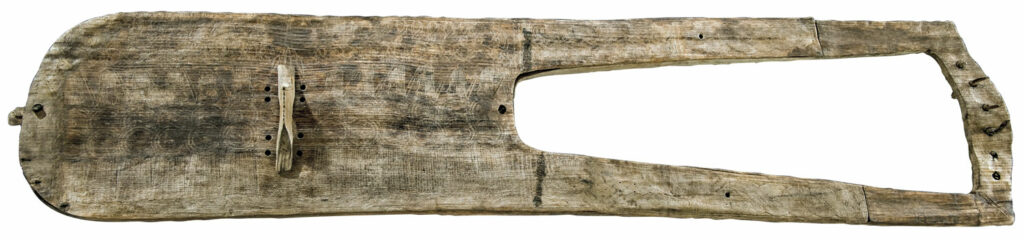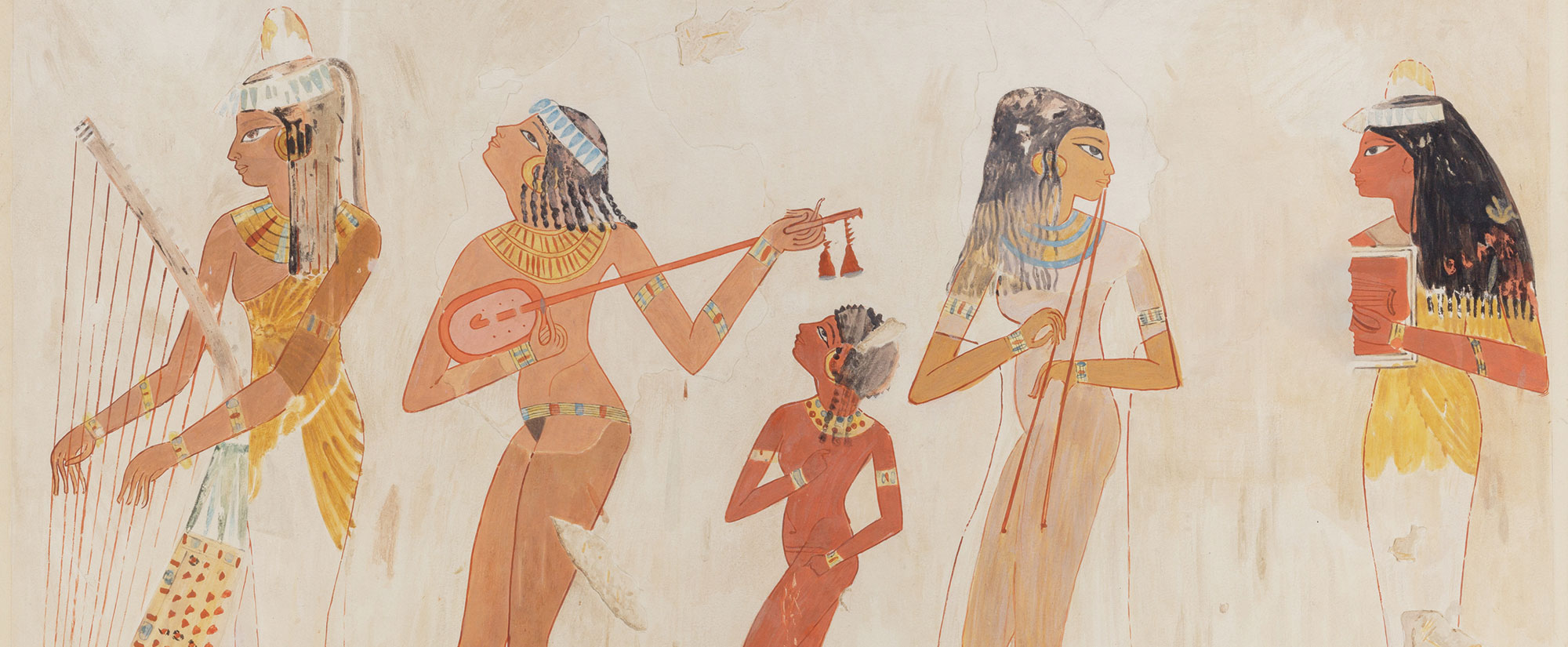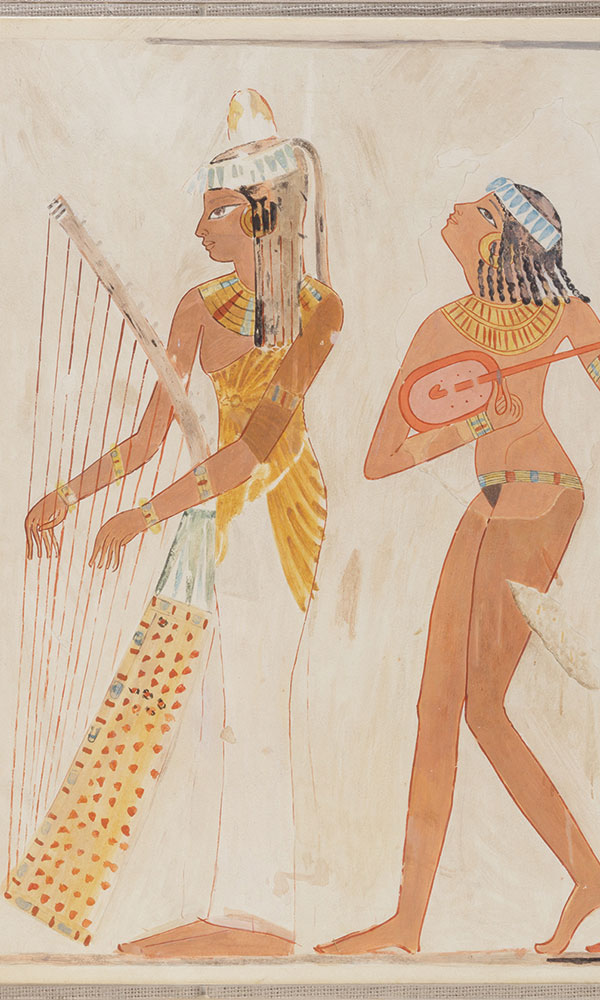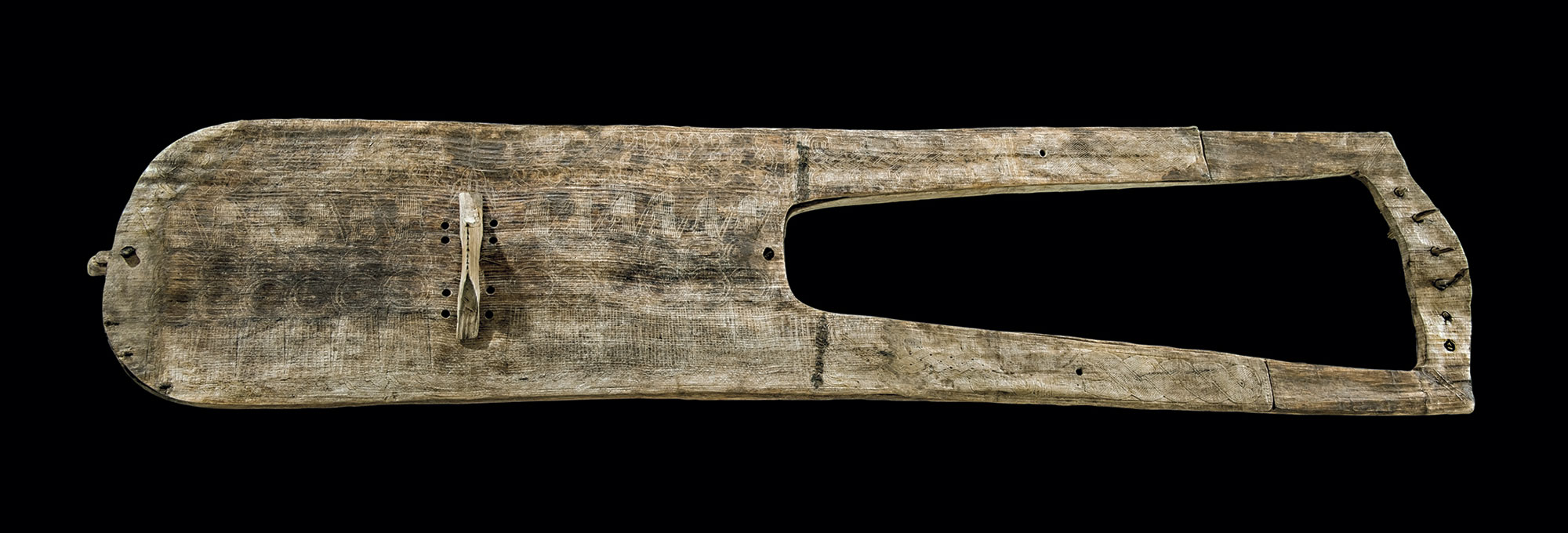
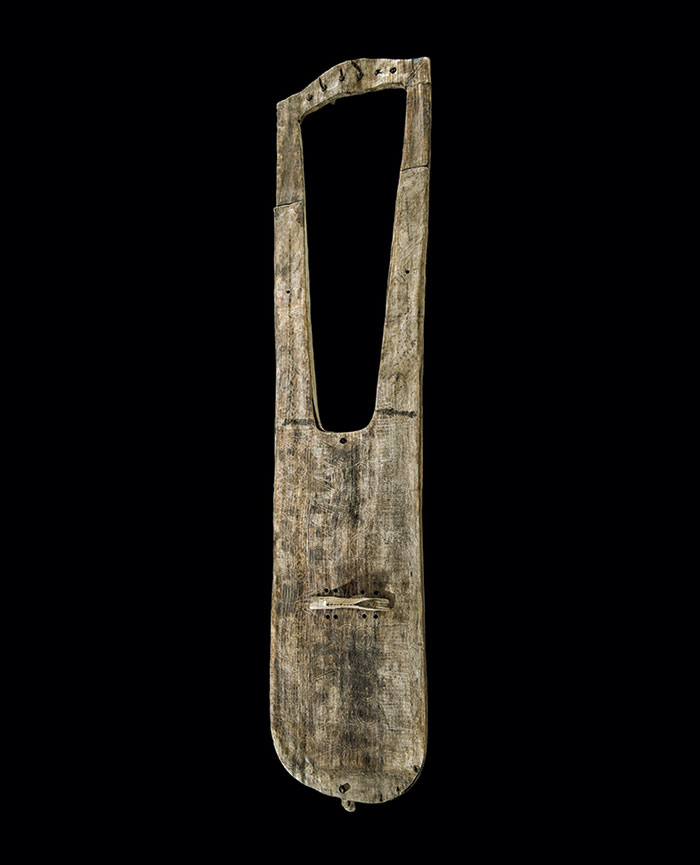
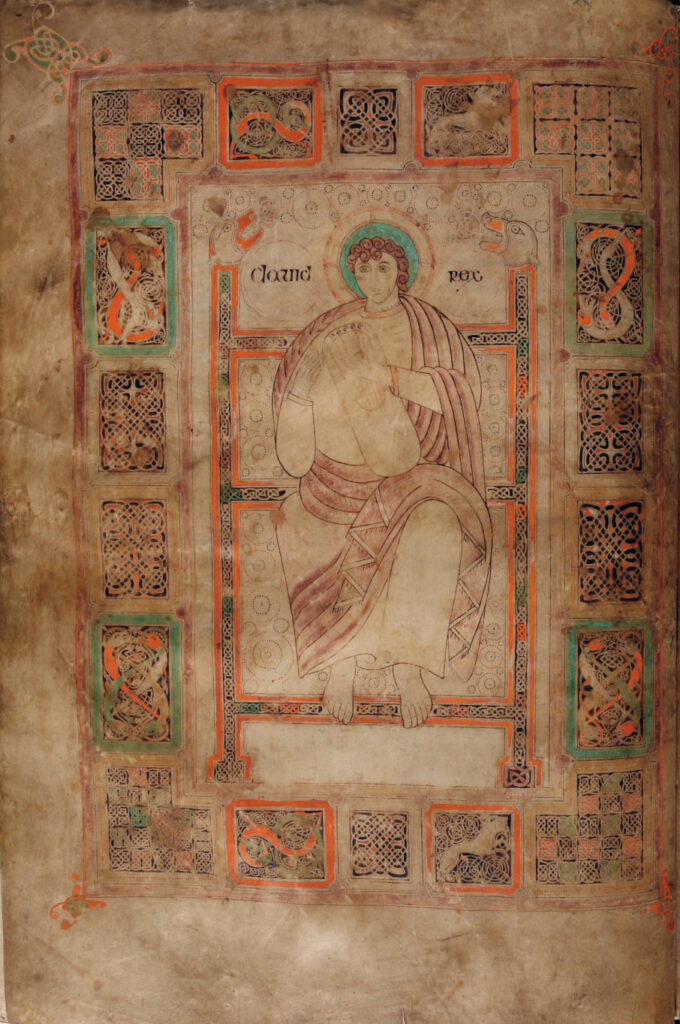
Dubbed Music City, the town of Trossingen in southwestern Germany is home to the 169-year-old Hohner musical instrument company. Although most famous for its harmonicas and accordions, Hohner once manufactured a model of guitar favored by recording legend Prince. In 2001, on the grounds of a former Hohner factory, a team led by archaeologist Barbara Theune-Grosskopf, then of the Archaeological State Museum of Baden-Württemberg, made a remarkable discovery. In a sixth-century A.D. cemetery, they unearthed the grave of a nobleman who was buried cradling a lyre in his left arm. With six tuning pegs and an intact willow bridge, the maple lyre bears marks suggesting it was well-loved. An illustration in an eighth-century A.D. illuminated manuscript produced in the English kingdom of Northumbria shows the biblical King David playing just such an instrument.
The Trossingen lyre is one of at least 13 lyres to have been discovered in early medieval burials in Britain, Scandinavia, and Germany. Three of these instruments were found in royal Anglo- Saxon burials in England and seem to have been included as prestigious grave goods. Another three Anglo-Saxon lyres were unearthed in modest burials and may have belonged to scops, or bards, who performed in royal mead halls. The instruments from Scandinavia and Germany were found accompanying noblemen who were also buried with weapons. The Trossingen prince, for instance, held a sword on his right side. His lyre is decorated with a scene of 12 standing warriors flanking a lance, likely swearing an oath to their leader.
Theune-Grosskopf suspects these Scandinavian and Germanic noblemen were prominent warlords who were also accomplished bards, or were at least capable of strumming a lyre and carrying a tune for a captive audience in their mead halls. These lyre-wielding strongmen likely performed heroic epics similar to the earliest known Germanic poetic text, the ninth-century A.D. Song of Hildebrand, a tale of a father and son facing each other on the battlefield. Or perhaps they improvised ditties enumerating their latest achievements. In a largely illiterate society, performing songs could have been an important way for warrior princes to communicate with their subjects. “With songs, the leader could set himself among heroes to secure his position, or boast of his last successful raid,” says Theune-Grosskopf. “One could pass on all kinds of information through song that would then circulate deeply into society.”