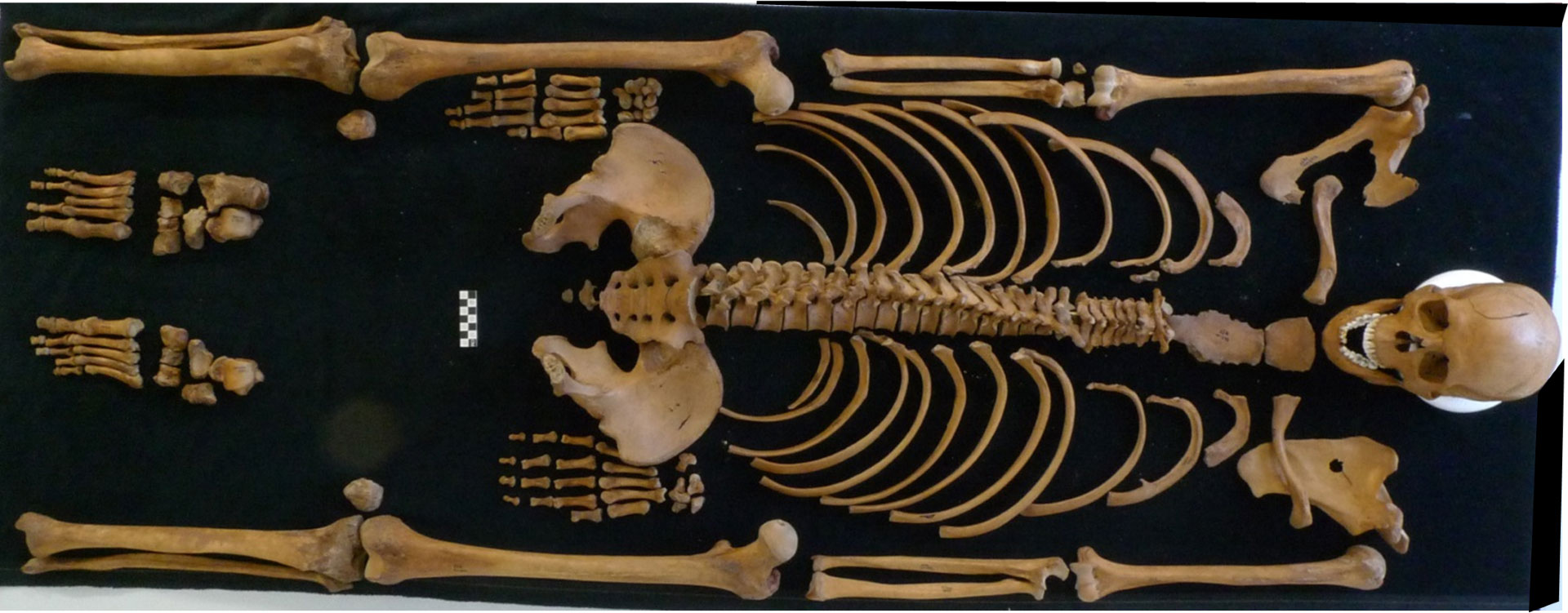
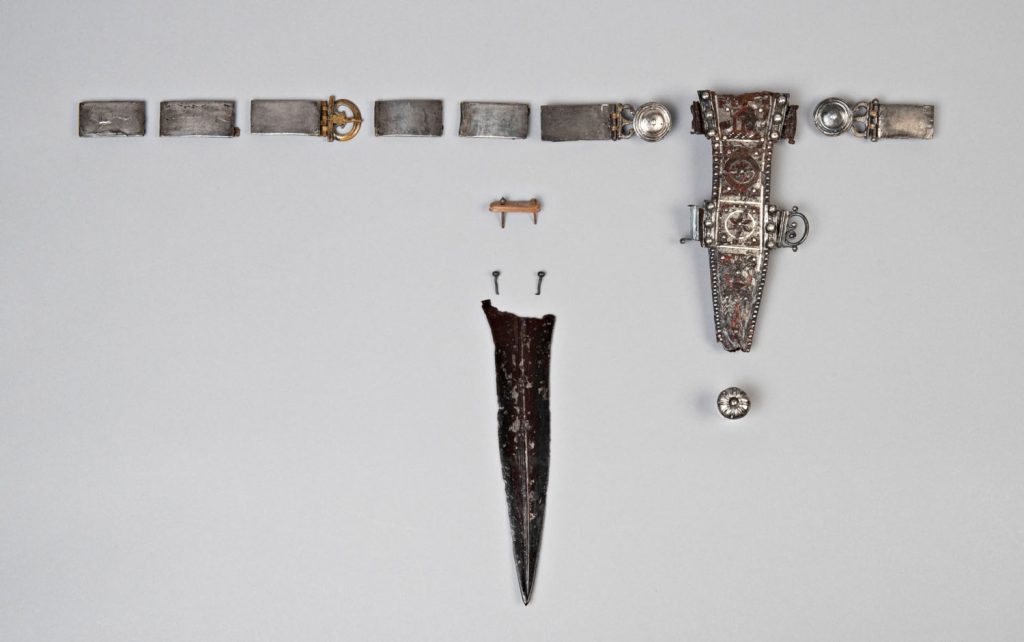
LEIDEN, THE NETHERLANDS—Mark Driessen and Carol van Driel-Murray of the University of Leiden have reexamined the remains of a man discovered in a well at the Roman fort of Velsen on the coast of North Holland in 1977, according to a La Brújula Verde report. A military belt, a dagger, a ring, a fibula, and a sandal with a studded sole were also recovered from the well. Previous research suggested that the man had been killed in A.D. 28, during a rebellion by the local Frisians over taxes, as recorded by the Roman historian Tacitus in his Annals. Driessen, Driel-Murray, and their colleagues proposed additional possible reasons for the man’s death. First, examination of the bones identified multiple stab wounds, including on the inside of the ribcage and the pelvis, indicating that the man had been brutally murdered. 3D models of the wounds show that they were probably made with a Roman military dagger, or pugio, perhaps the weapon found in the well next to the remains. This pugio had a nine-inch-long blade, as well as a new iron sheath decorated with silver and red and yellow enamel. The study also suggests that the murdered man stood more than six feet tall and was very muscular. He is thought to have been a soldier and not an officer, since the dagger was worn and his belt had been put together with mismatched pieces. He wore an iron ring with a glass-paste stone depicting either the god Mars or perhaps Alexander the Great. The initial study of the bones in the 1970s suggested that the large man may have been a local Frisian, but an isotope study of his tooth enamel has now revealed that he spent his childhood in southern Europe. Driessen and Driel-Murray concluded that the man may have been killed by the Frisians during an attack on the fort, as described by Tacitus. The researchers also think that he could have been a deserter who was executed by Roman military officials, or that he might have been murdered by locals in an act of revenge. To read about artifacts recovered from a military sanctuary on the Roman Empire’s northern edge, go to “Romans Go Dutch.”