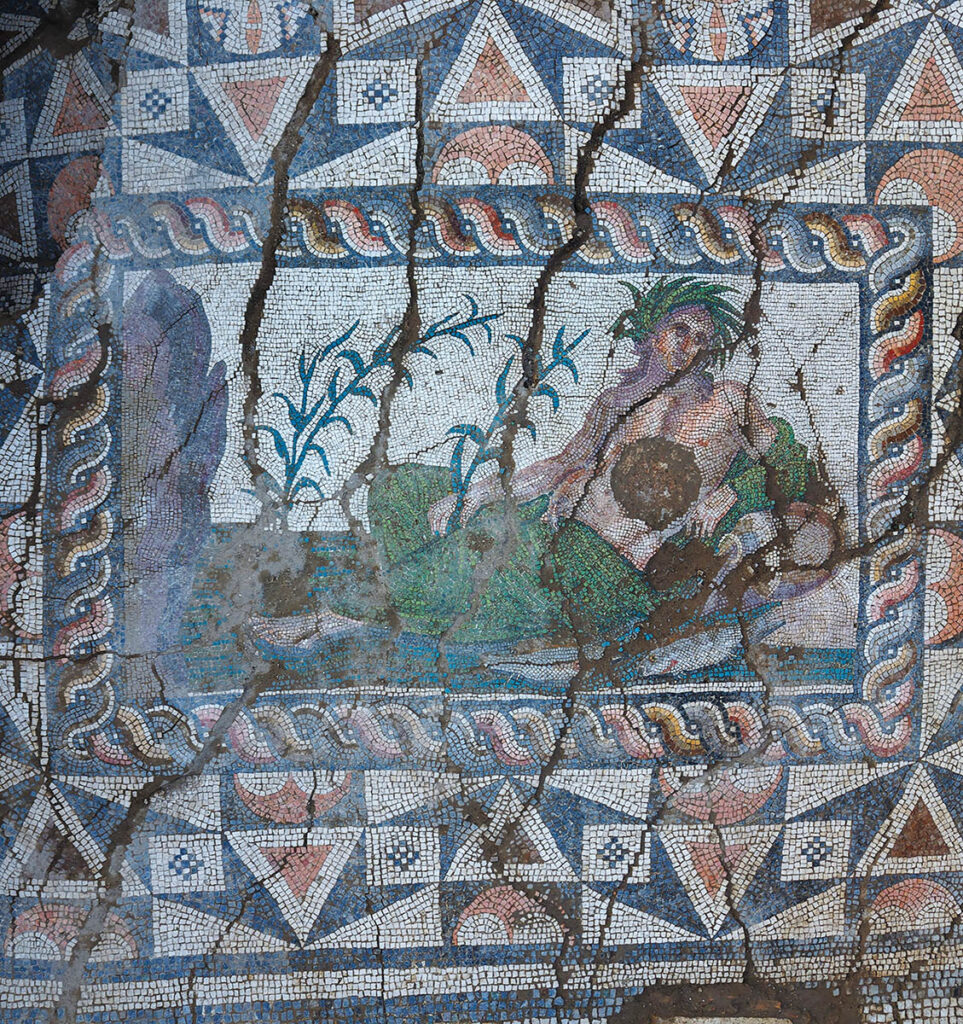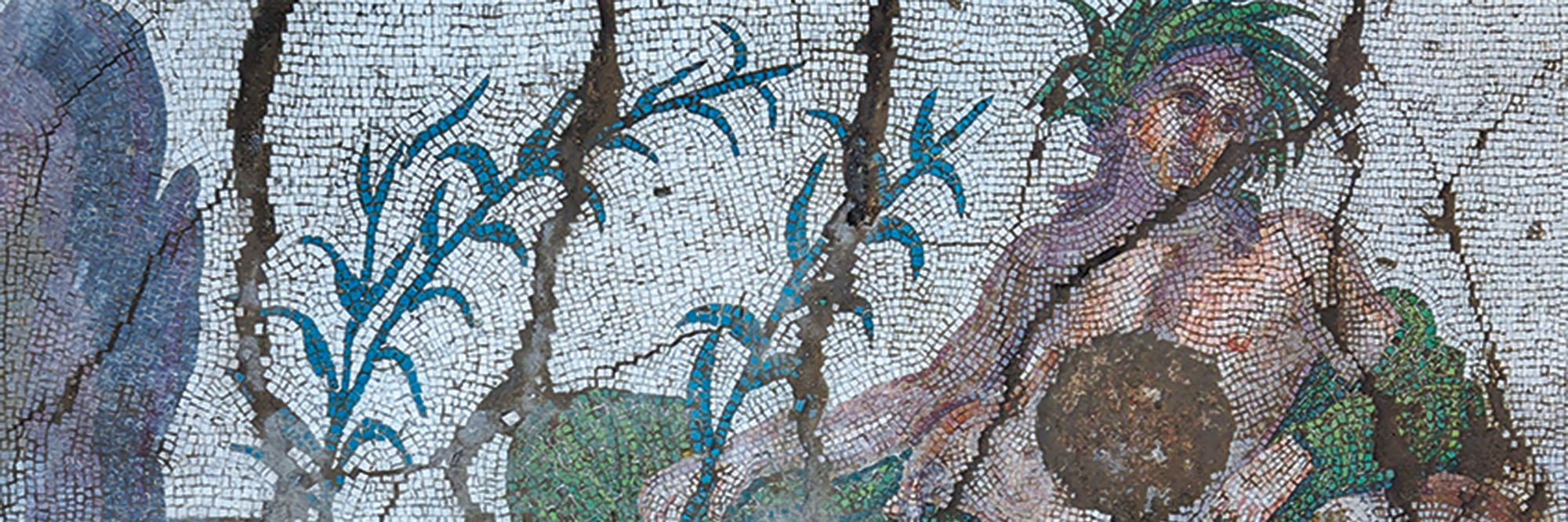
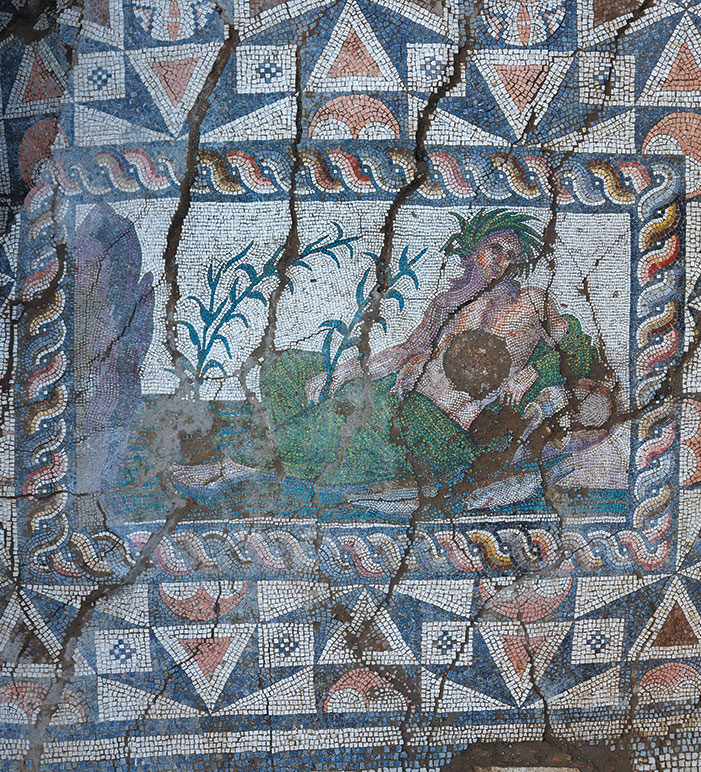
Archaeologists have discovered a vibrant mosaic dating to the third century a.d. in the ancient city of Aspendos in southwestern Turkey. Aspendos is renowned for being the site of a battle in 466 b.c. during which the Athenian general Cimon defeated the Persians as well as for being home to the world’s best-preserved Roman theater. The mosaic’s tesserae form a decorative carpet-like border composed of geometric shapes. This border surrounds a personification of the nearby Eurymedon River, known today as the Köprüçay, which provided water for irrigation and facilitated the transport of goods to and from the Mediterranean coast. “The Eurymedon became a vital element connecting Aspendos to its production zones and regional trade routes,” says archaeologist Mustafa Bilgin of Afyon Kocatepe University. “The mosaic’s composition suggests that the people of Aspendos perceived the river, which brought economic vitality and agricultural abundance to the city, as a sacred and protective force.”