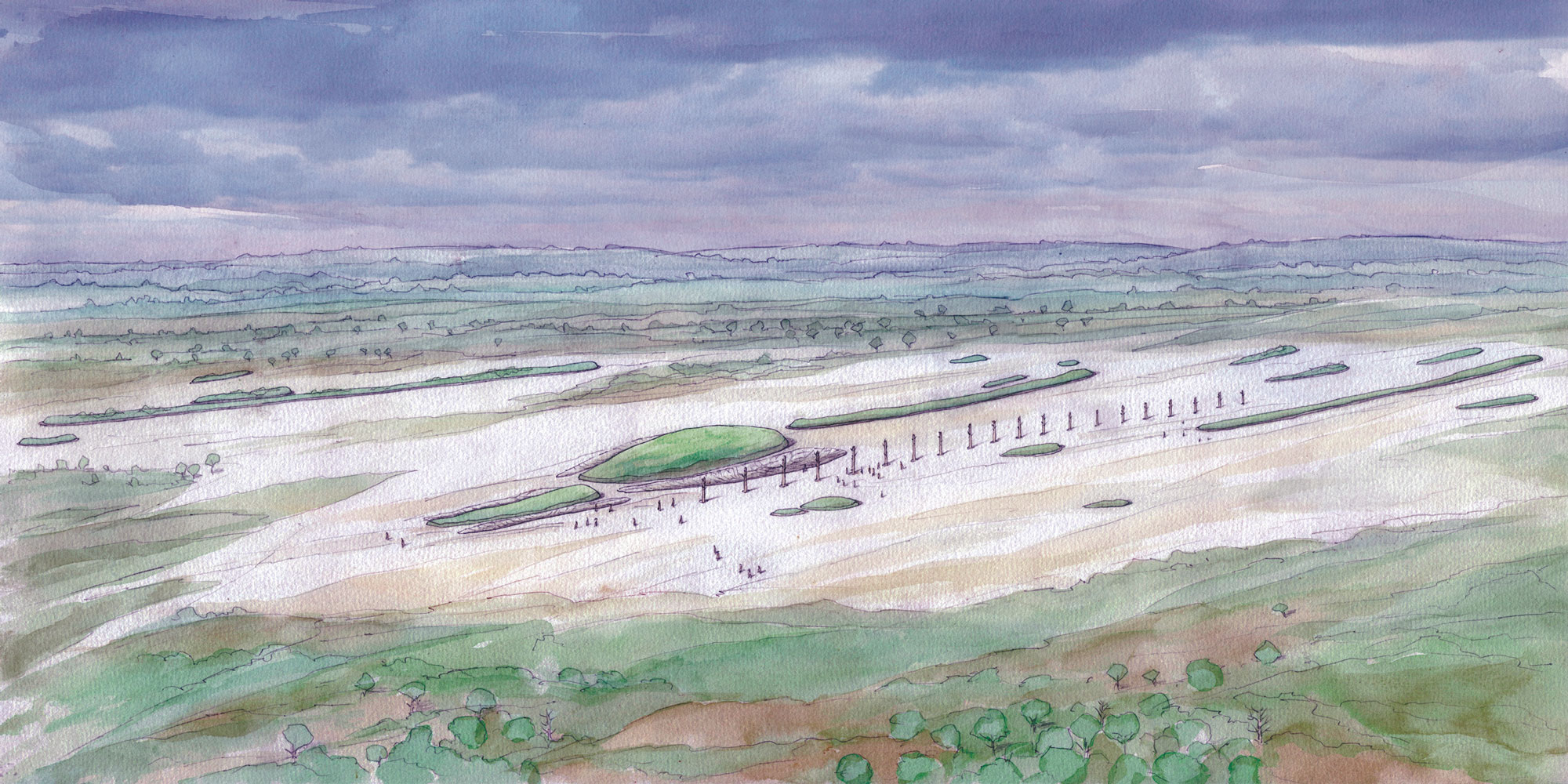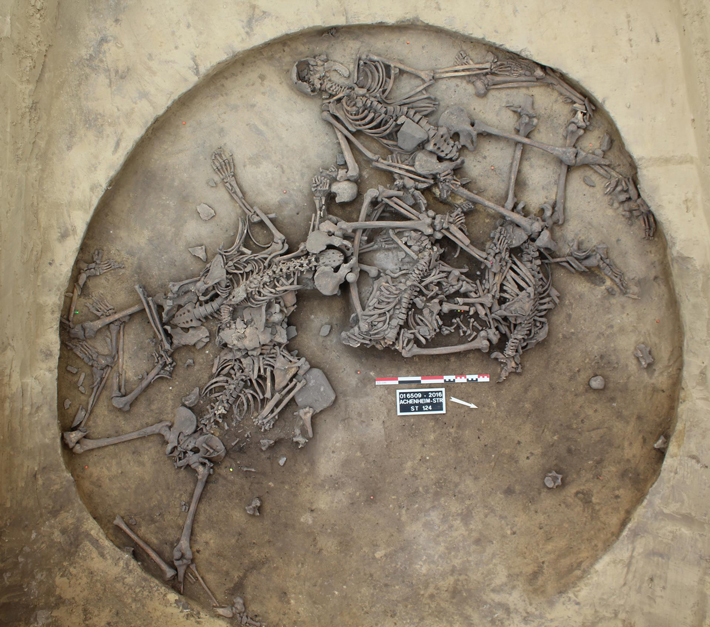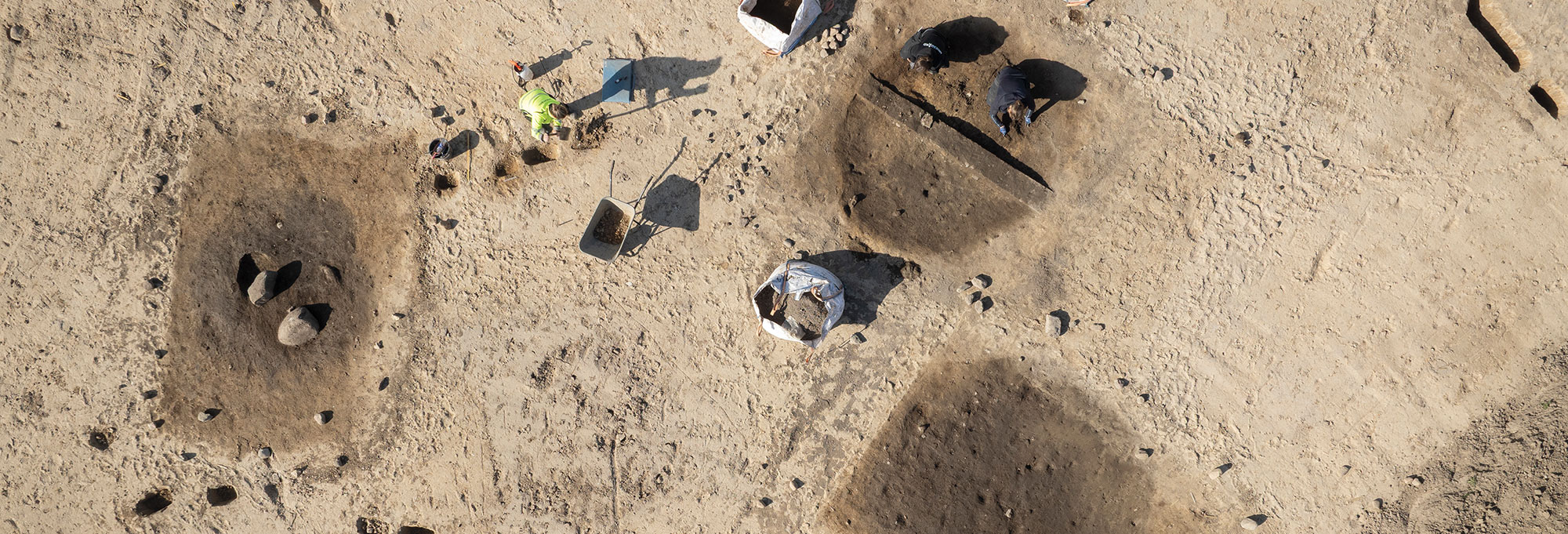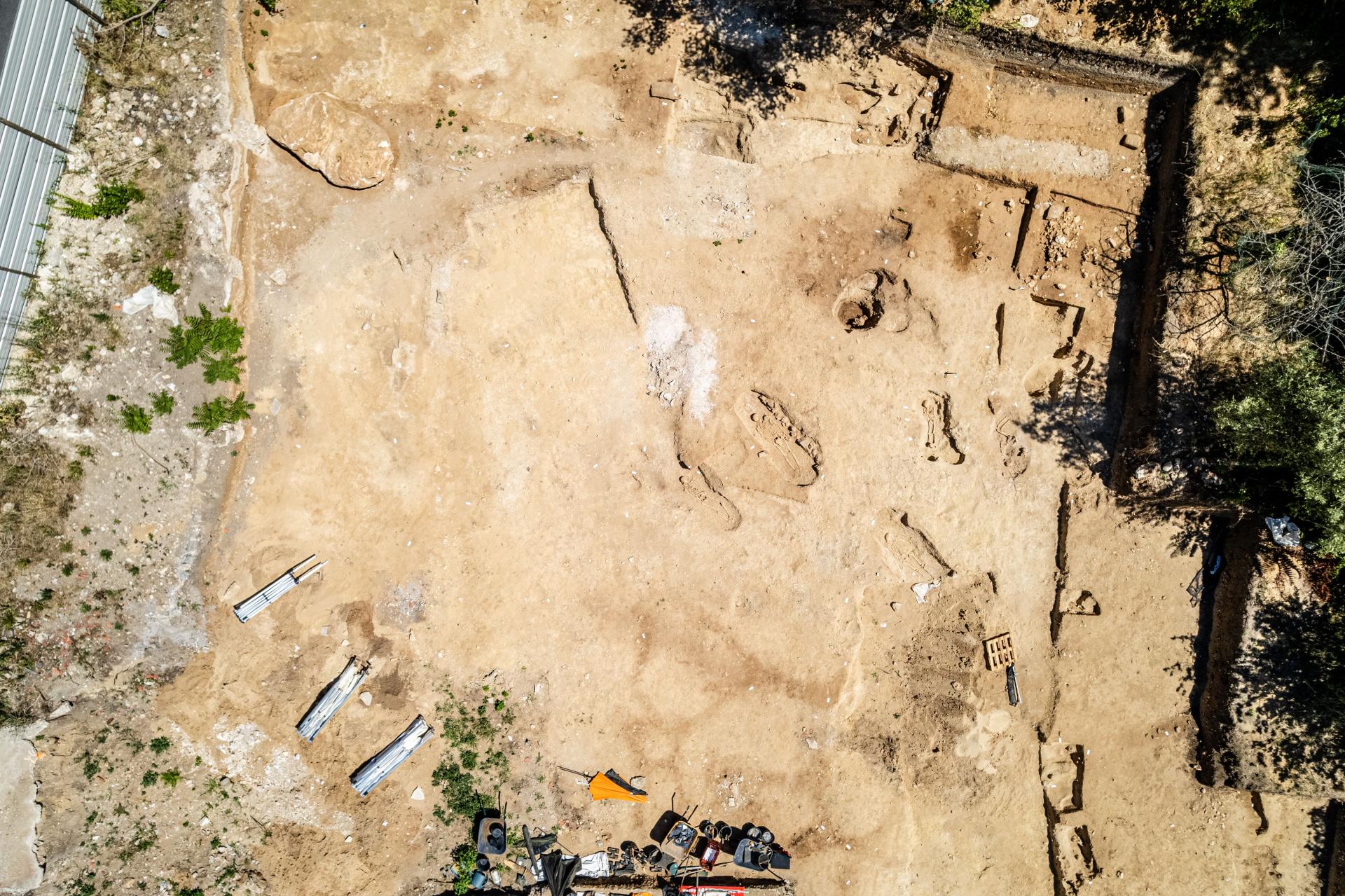
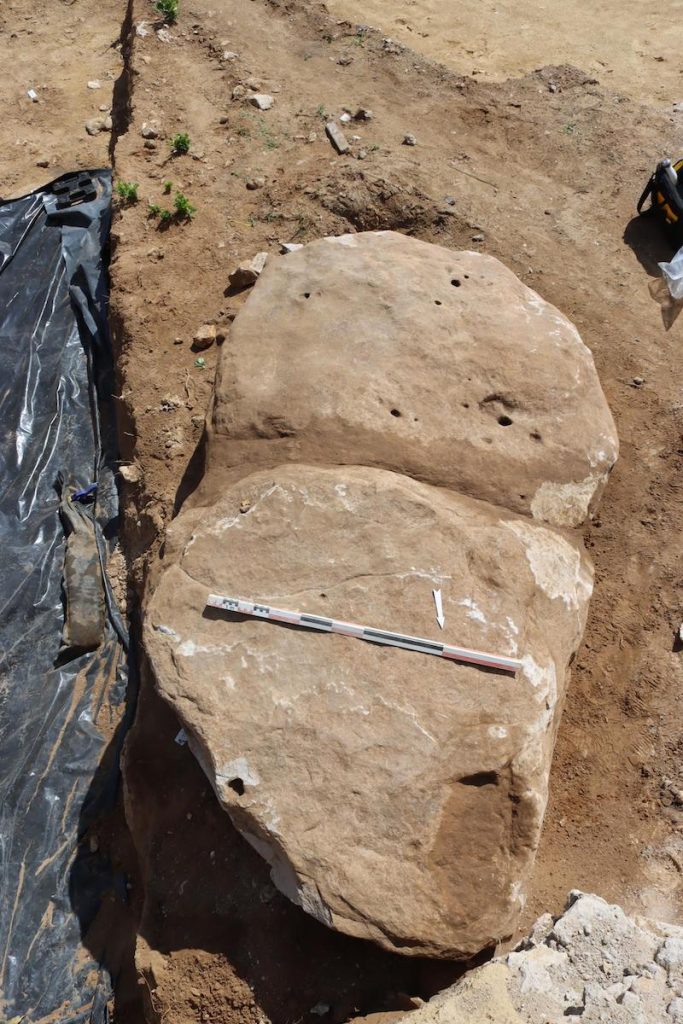
CHAMPIGNY, FRANCE—La Brújula Verde reports that a 6,500-year-old cemetery has been discovered in northern France near the Marne River by archaeologists from the French National Institute of Preventive Archaeological Research. The site consists of 11 graves, 30 megaliths, a human-shaped monolith called a menhir that weighs more than 20,000 pounds, and traces of wooden posts. The menhir was found lying on its side in the pit, where it once stood more than 10 feet tall. Examination of this standing stone’s surface shows that it was first covered with pock marks through repeated blows to the surface. A belt and a series of cupules spread out in an arc were then carved into the surface. The researchers also found white and black stains, perhaps made by pigments, in the upper left corner of the stone, suggesting that the statue may have been painted. Two smaller sandstone blocks found near the menhir are thought to have also stood upright. Most of the skeletal remains at the site were found lying in graves. A posthole was found near each head, likely to mark the site of each burial. Three graves were found around the menhir, but these burials had been disturbed by modern construction. Flint blades, points, a sandstone ax, and bone tools were recovered from the burials. Yet one of the graves consisted of a narrow circular pit holding the remains of a seated adult. The lower legs and feet of the skeleton were trapped in calcite, formed by lime-rich water. In another area of the cemetery, the researchers uncovered a mound topped with a small stele that had broken in two. This mound contained pits and trenches with postholes that formed a palisade. The researchers also note that the people who built the cemetery mixed local sand and silt rich in calcium compounds, gravel, and water to create a substance that hardened as it dried. This mixture was found on the edges of the graves and in the pits where the menhir and the other blocks were unearthed. To read about a megalithic site at Veyre-Monton in central France, go to “Megalithic Mystery.”