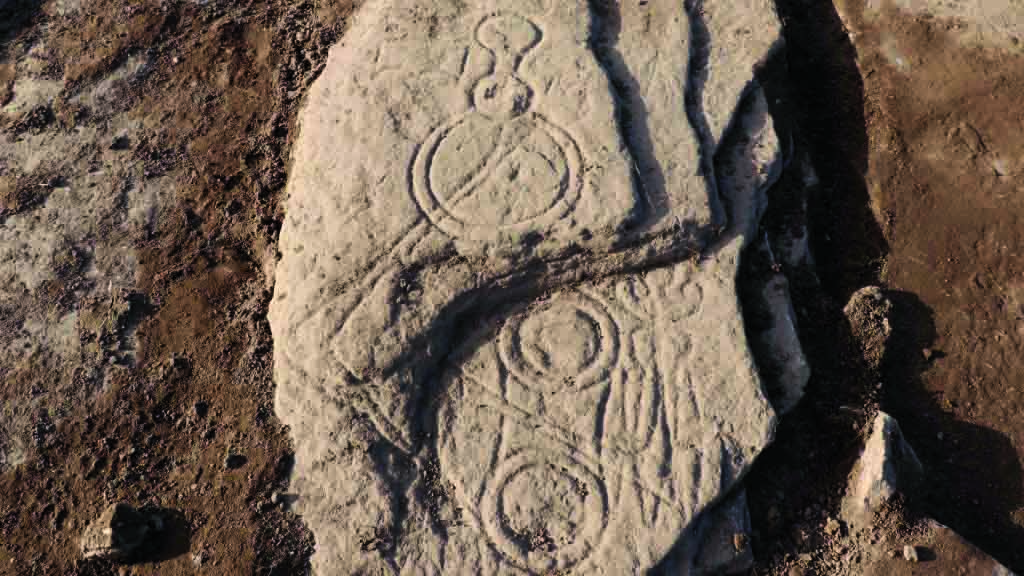

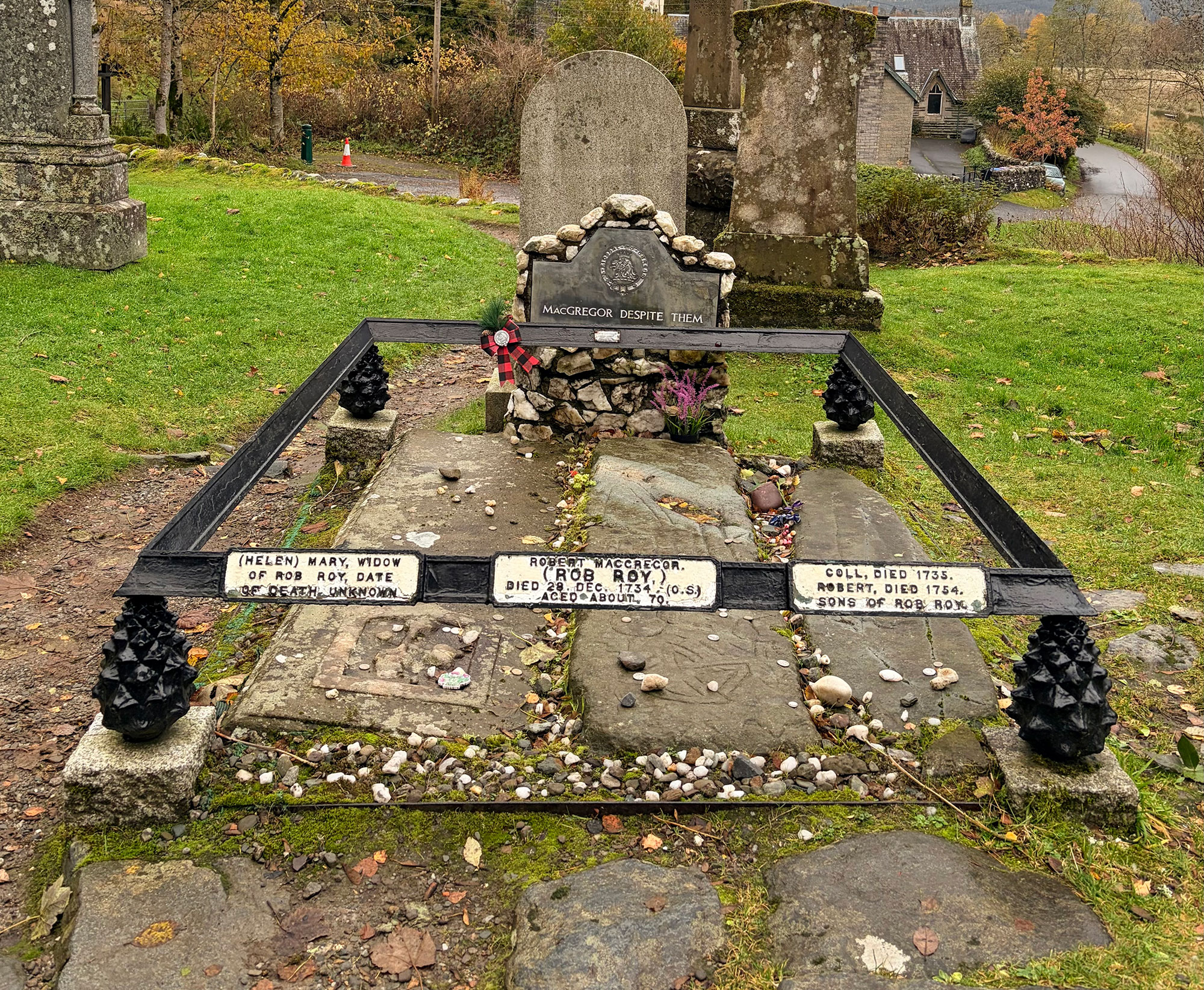
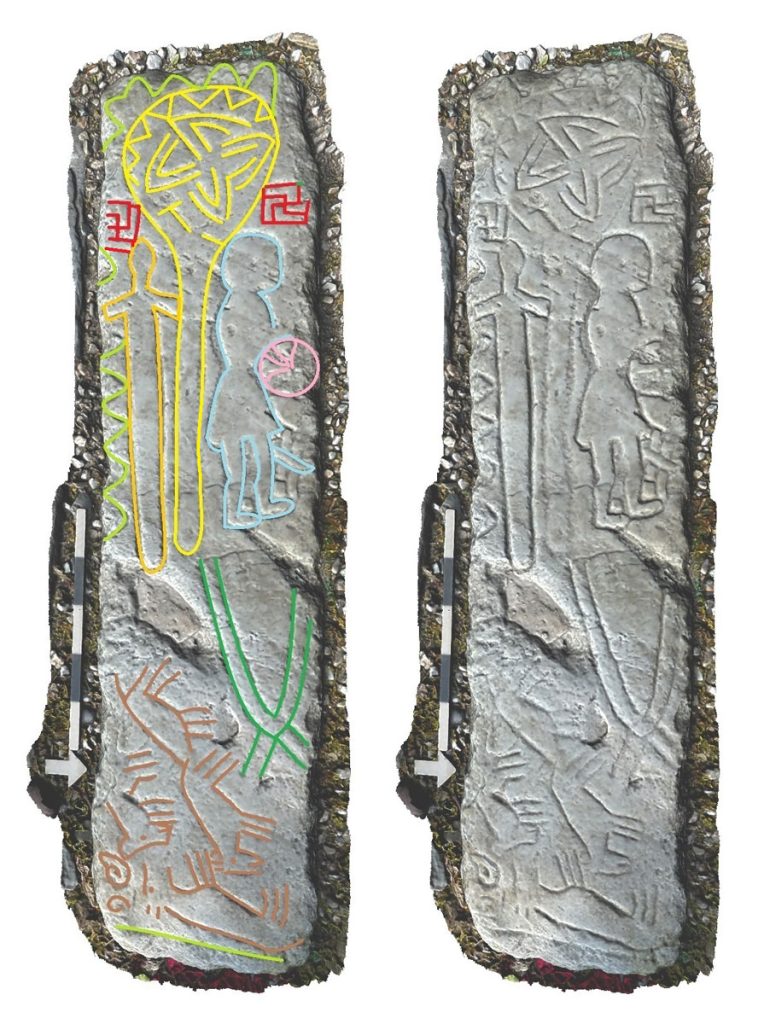
BALQUHIDDER, SCOTLAND—The National reports that new archaeological analysis of the tombstone belonging to Scottish outlaw Rob Roy has revealed that its initial creation predates his death by as much as 1,000 years. Robert “Rob Roy” MacGregor was a prominent seventeenth- and eighteenth-century folk hero who was later immortalized in Sir Walter Scott’s 1818 novel. When he died in 1734, he was laid to rest at Balquhidder Parish Church, where his grave is marked by an elaborately carved stone slab. Recent 3D imaging of the object revealed an unusual cross-like shape that stylistically dates to the early Christian period. This seems to depict a flabellum, a ceremonial fan used in Catholic liturgy. It is flanked by two smaller crosses that were carved using a technique called pocking and smoothing, which is also characteristic of early Christian sculpture. These elements suggest that the gravestone was originally created for an important cleric in the early medieval church. Sometime in the fifteenth or sixteenth century, a sword, tongs, and a hunting or herding scene was added. “The carvings on this amazing stone have a story to tell that spans more than a thousand years,” said Elaine Black of the Balquhidder Graveyard Claymore Project. “I suspect the Highland Rogue would have loved it if he had been alive today.” For more on seventeenth-century Scottish history, go to “After the Battle.”