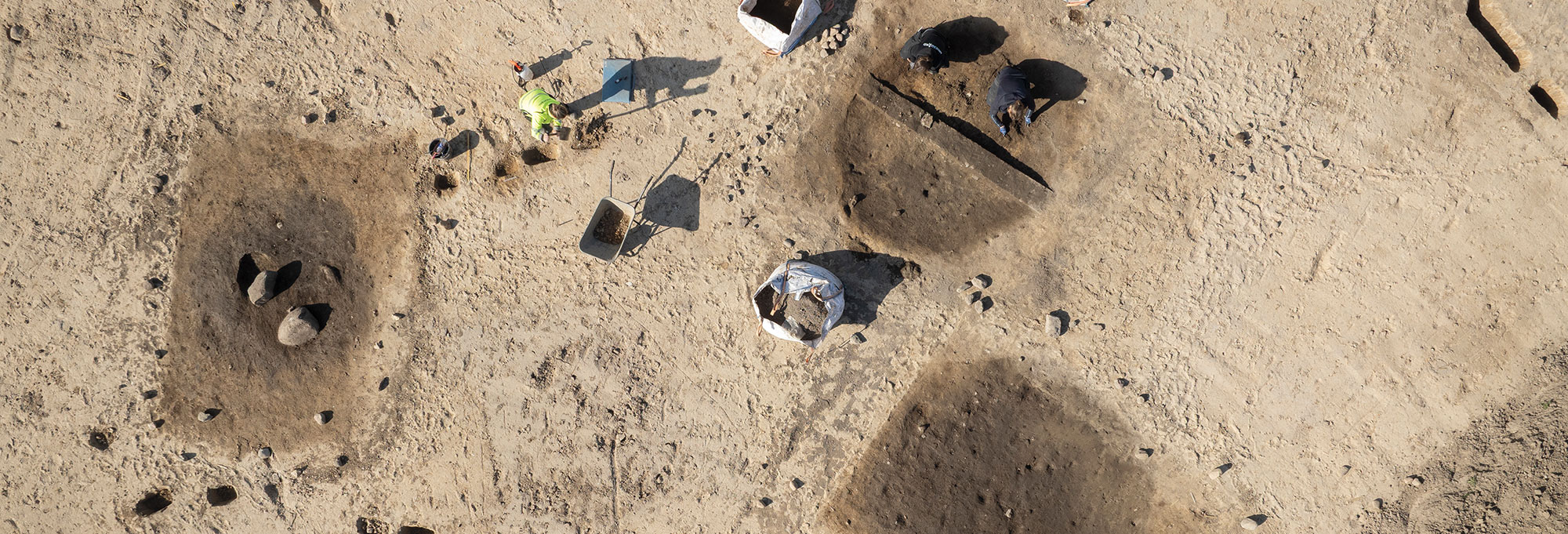



CAMBRIDGESHIRE, ENGLAND—According to a statement released by Bournemouth University, analysis of thousands of frog bones recovered from a settlement in the Cambridgeshire Fens has determined that the amphibian bones were likely left behind by birds of prey. More than 8,000 frog bones were recovered from a ditch at the site of a roundhouse. Some had suggested that the remains could be evidence of a mysterious frog cult practiced from about 400 B.C. to A.D. 43, but no cut marks were found on the bones, making it unlikely that the animals were killed by humans. Researchers led by Paul Clarkson of Bournemouth University first radiocarbon dated the bones to about 1,700 years ago, when the waters of the Fens were retreating, creating an ideal breeding environment for frogs. At that time, grazing animals also cleared the landscape and made it easier for grassland predators to spot and catch the frogs. Clarkson and his colleagues then compared damage on the bones with breakage patterns on animal bones, which were classified according to how the animal died. This led the scientists to identify short-eared owls and hen harriers as the culprits in this case. Measurement of the frogs’ arm bones also showed that many of them were less than one year old when they died. “The mystery of these frogs has been solved—a feast of frogs that were eaten and their bones left behind by a group of owls,” Clarkson concluded. Read the original scholarly article about this research in Environmental Archaeology. To read about a short-lived Bronze Age settlement uncovered in eastern England, go to “Fire in the Fens.”