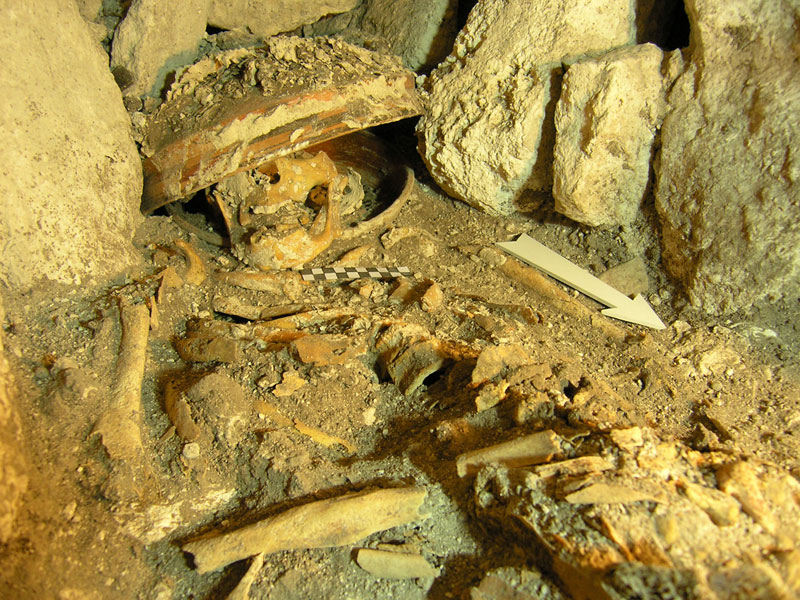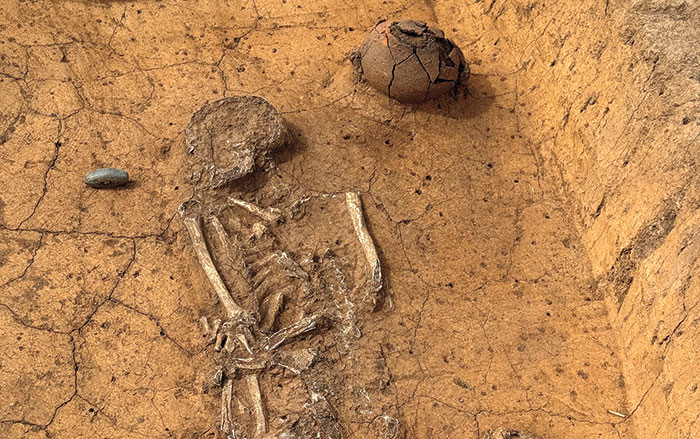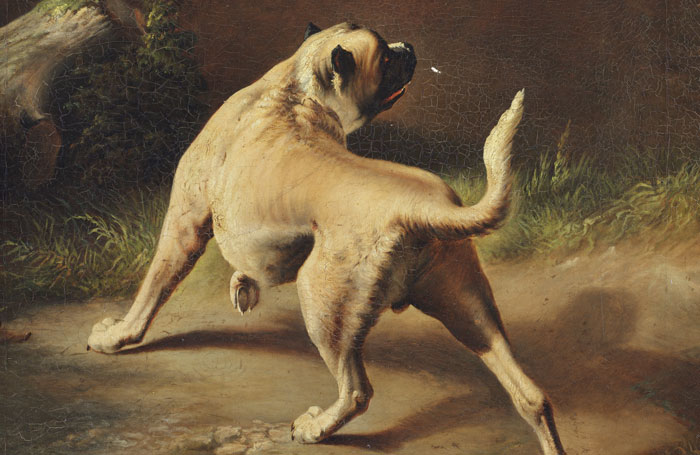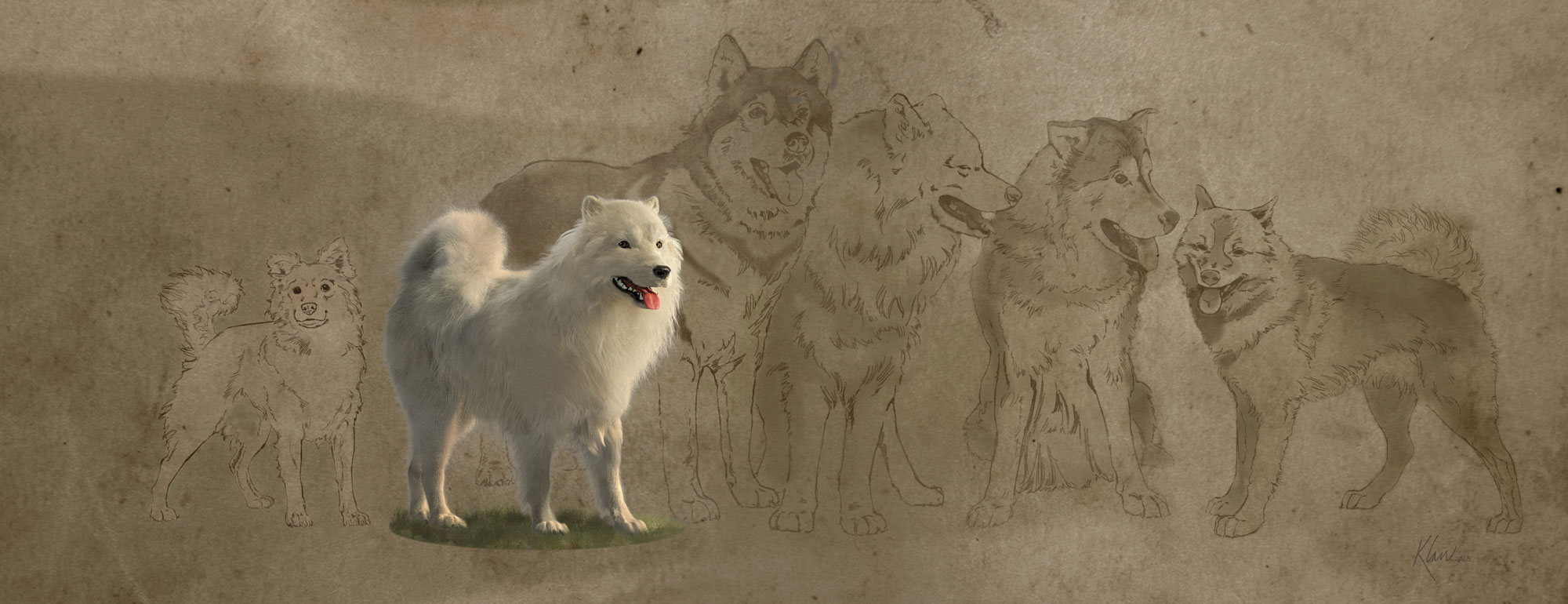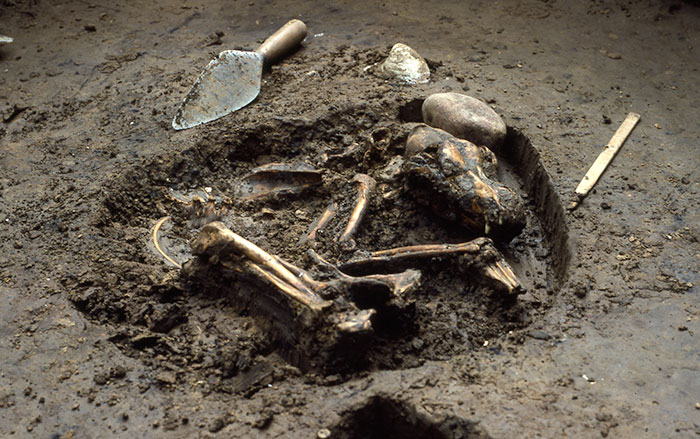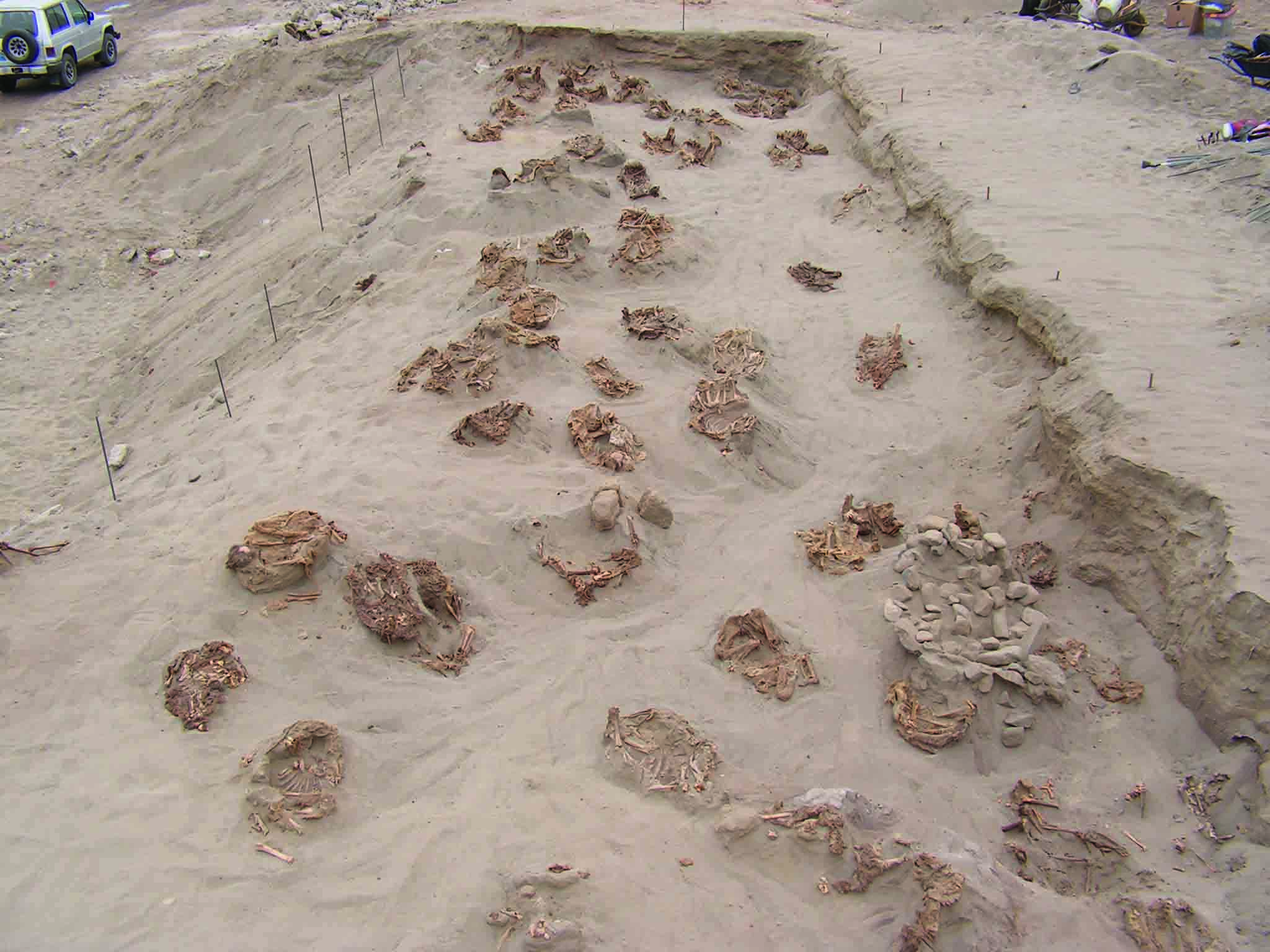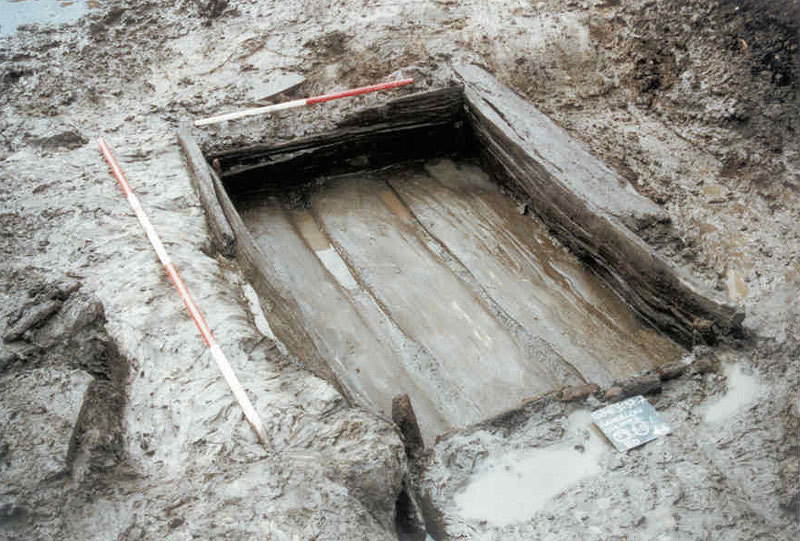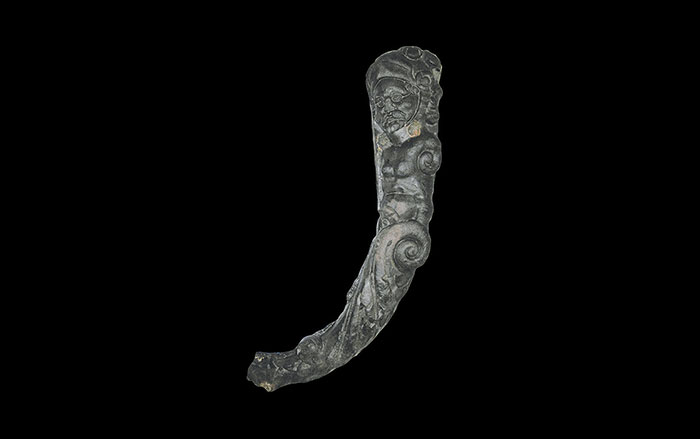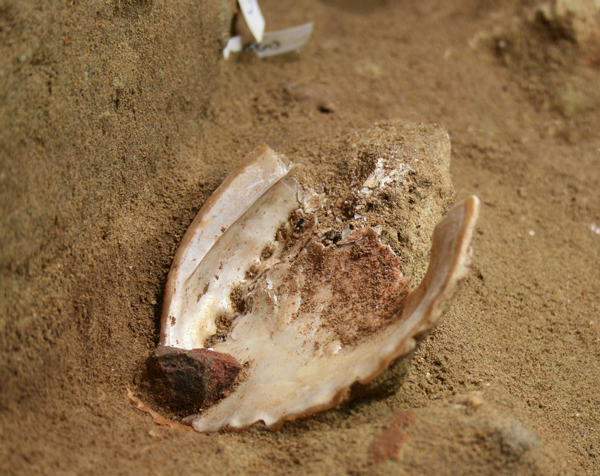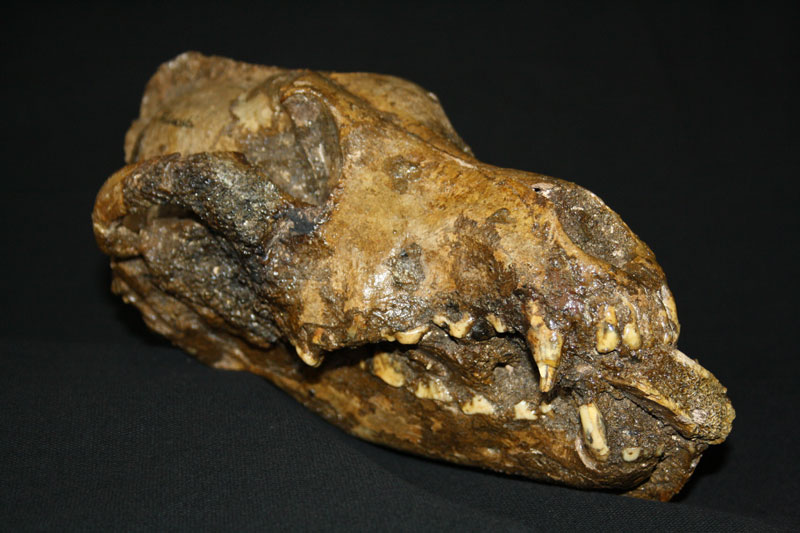
(Courtesy Mietje Germonpre)
Researchers have, until recently, thought that dog domestication occurred about 14,000 years ago. In 2011, the case for it taking place much earlier received a boost from sites across Eurasia. Mietje Germonpré, of Belgium's Museum of Natural History, and a team of researchers published a paper describing three canid skulls that had many of the distinctive traits that separate domesticated dogs from their wolf ancestors, including a shorter, broader snout and a wider brain case. The skulls, which date to roughly 31,500 years ago, were part of a collection from the site of Předmostí, in Czech Republic. In addition, a separate research team found a dog skull at Razboinichya Cave in Siberia that was dated to 33,000 years ago. Both finds support a 2009 research paper published by Germonpré and her colleagues describing a 36,000-year-old dog skull found at Goyet in Belgium. Critics could write off the single dog skull from Goyet as an aberration. "When I received the results of the date I was really disappointed," Germonpré said of the Goyet skull. "I thought no one would believe it. I couldn't believe it." But the evidence from all three sites now makes Germonpré's case much stronger.