
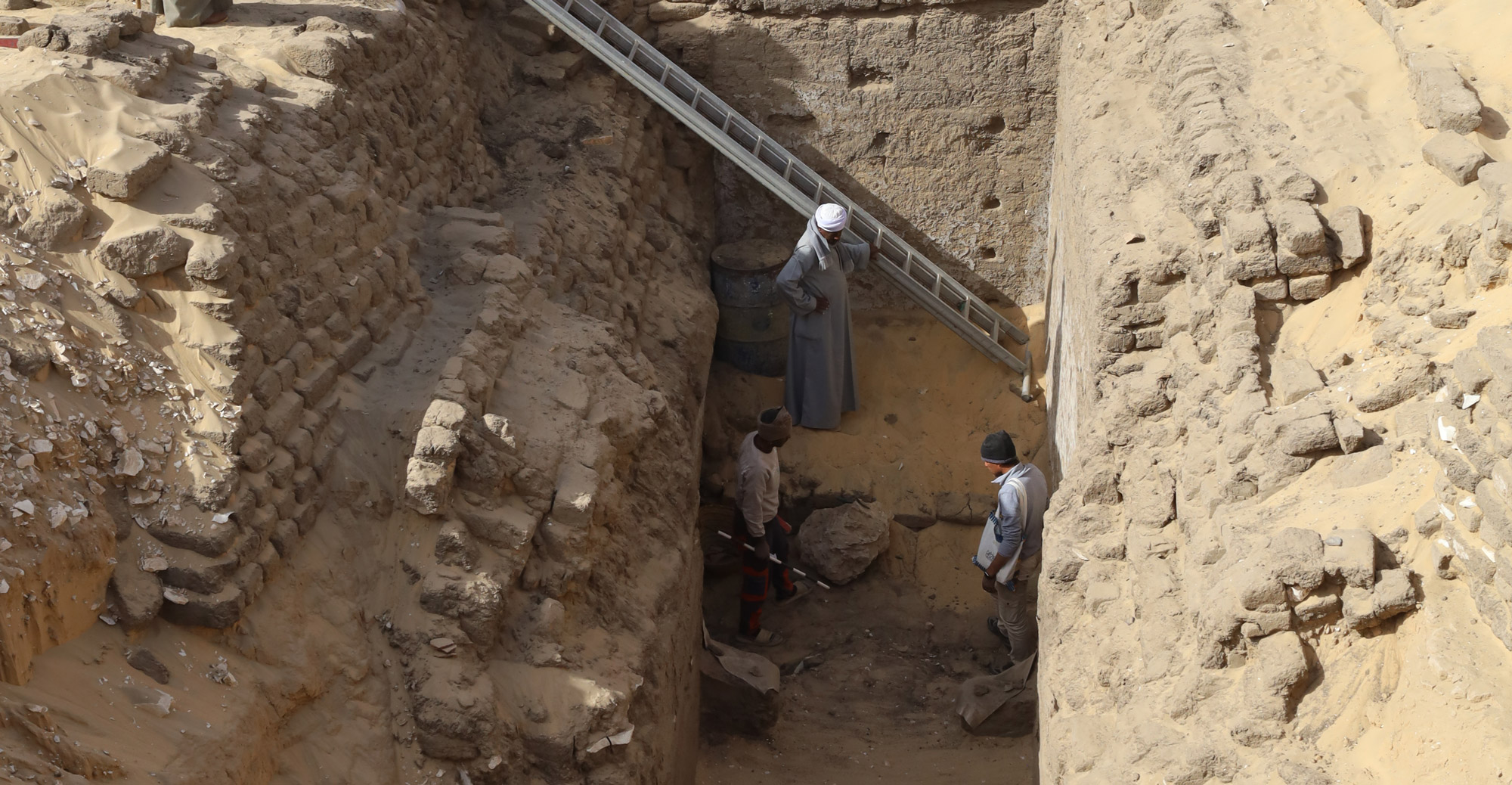
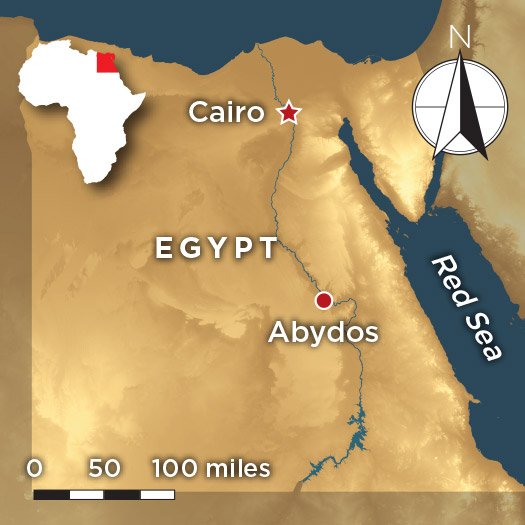
At the base of a pyramid-shaped peak in the ancient Egyptian city of Abydos lies the tomb of an unknown pharaoh. After decades of ex- cavations at the site, and con-sidering the Egyptians’ usually meticulous recordkeeping, it might seem implausible that any of these ancient rulers and their hidden burials remain to be unearthed. But, a team led by Egyptologist Josef Wegner of the Penn Museum has made just such a discovery in the royal necropolis at Anubis Mountain, which the Egyptians named after the jackal-headed god of mummification. Wegner believes the newly discovered pharaoh belonged to the short-lived Abydos Dynasty (ca. 1650–1600 b.c.), which held sway over parts of Upper, or southern, Egypt during the Second Intermediate Period (ca. 1640–1540 b.c.), a tumultuous time in the country’s history. Unlike the precise records that exist for most dynasties between the First, which began its rule in about 3000 b.c., and the 30th, whose pharaohs reigned until 343 b.c., the Abydos Dynasty wasn’t recorded in any official list of kings. The Abydos rulers only appear in what’s known as the Turin King List, a fragmentary thirteenth-century b.c. papyrus that contains a catalog of Egypt’s many rulers up to that time. Indeed, scholars debated whether the dynasty actually existed until 2014, when Wegner’s team uncovered the tomb of the Abydos Dynasty king Senebkay in the Anubis Mountain necropolis. (See “Egypt’s Forgotten Dynasty.”)