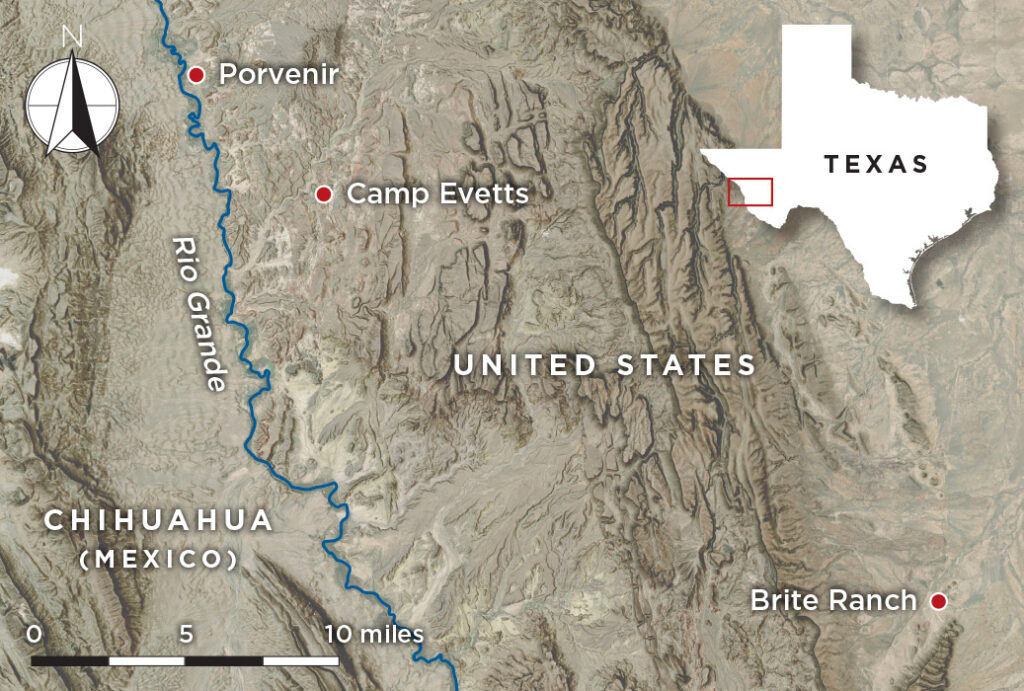


Sometimes all it takes is one small artifact to tell an entire story. In 2015, during a metal detector survey in the Big Bend region of western Texas, archaeologist David Keller found one such object under windblown sediments that had likely protected it in place for around 100 years. “It was a heavy moment,” Keller says of his initial examination of the object with a hand lens. He called over the rest of his team to have a look. It was a fragment of a .45-caliber bullet, which later analysis would show was fired from either a Colt M1873 single-action revolver or a Colt M1909 double-action revolver, that had been heavily deformed by impact. That impact had fused the lead projectile with human bone. There had never been any doubt that Keller, then with the Center for Big Bend Studies at Sul Ross State University, and the team were working at a crime scene. “Seeing that particular artifact drove it home in a way that was really visceral,” he says. “It shook us up.”