


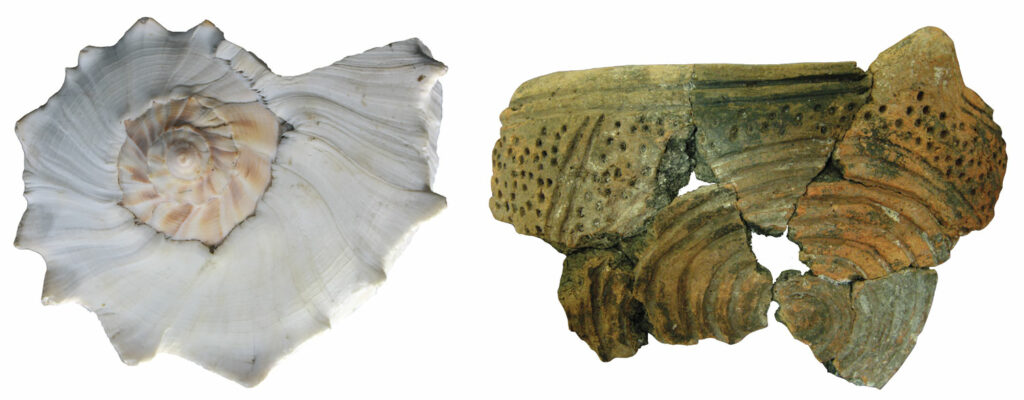
Glen complex have yielded examples of Tick
Island Incised pottery (above left), a rare type of
ceramic decorated with left-opening spirals that
may have been meant to evoke the spiral (above
right) of the lightning whelk shell
Hunter-gatherers thrived in Florida for more than eight millennia before they began to make pottery around 2600 b.c., during the Late Archaic period. This invention seems to have dramatically changed their daily and ritual lives. These people, who harvested shellfish in enormous quantities, had participated in long-distance trading networks that brought them goods such as stone beads from Mississippi and ornaments called bannerstones from Georgia. Such objects were often buried with high-status members of society, who likely controlled the trade networks. But, with the advent of pottery, people in northern Florida stopped importing such prestigious objects. “Unlike stone beads or other exotic items, pottery was accessible to anyone who could dig clay,” says archaeologist Zackary Gilmore of Rollins College. In northern Florida during the Late Archaic period (ca. 3700