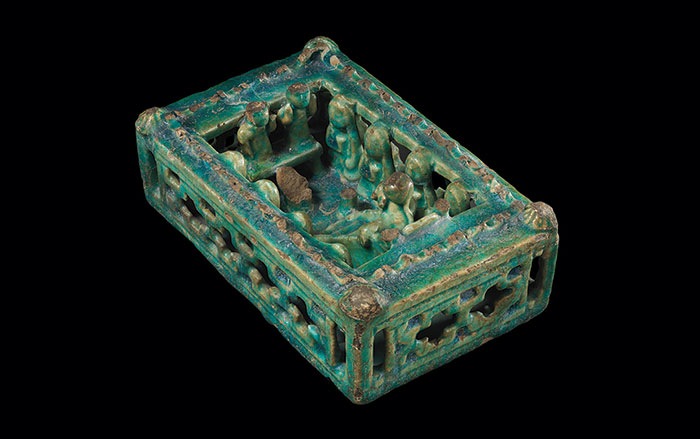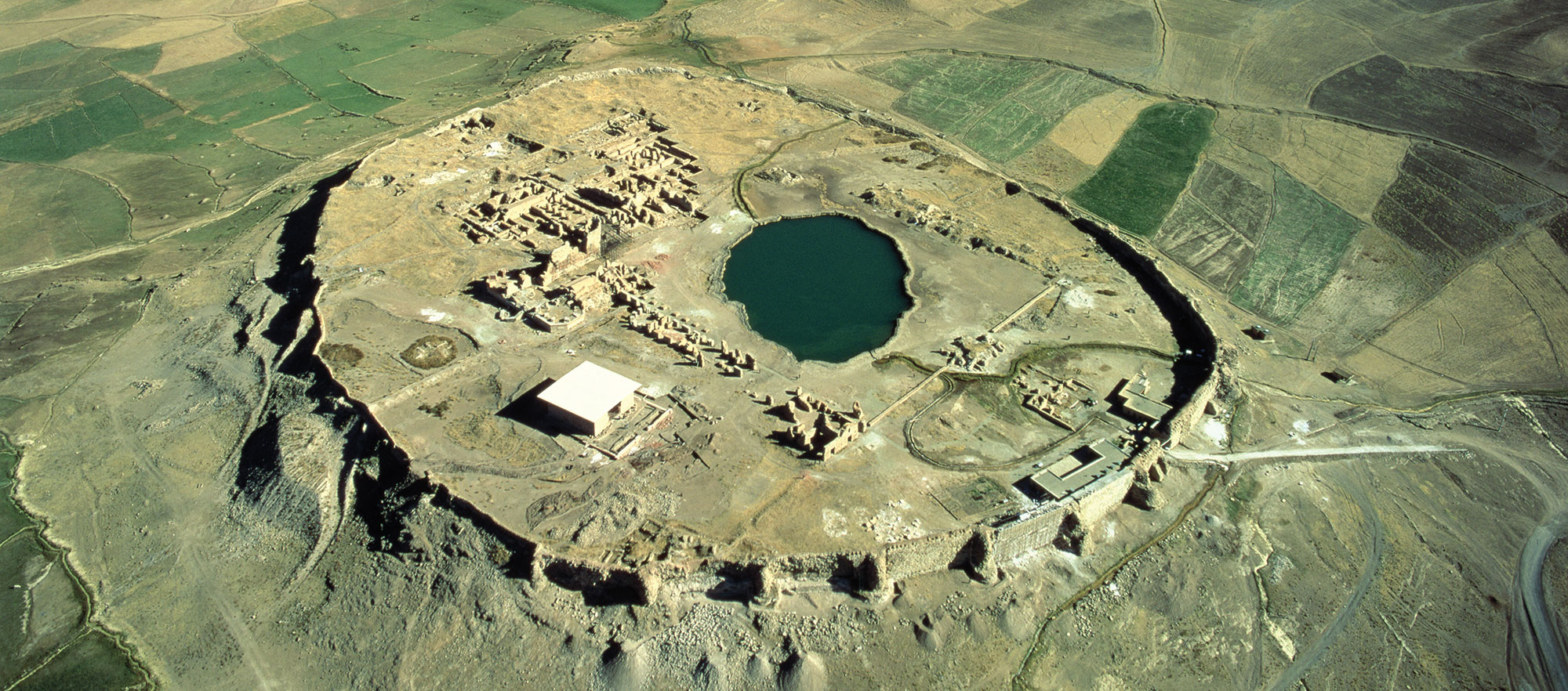
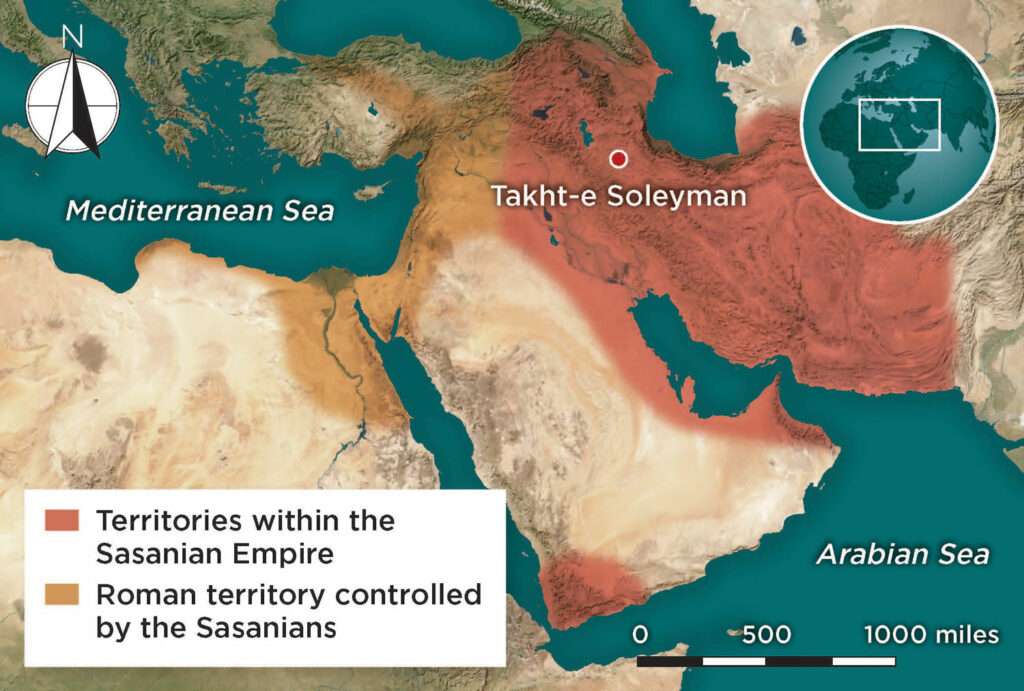
Atop a plateau in northwest Iran, above rolling pastures hemmed in by snowcapped mountains, rest the ruins of a sanctuary at a site known as Takht-e Soleyman, or Throne of Solomon. More than 1,500 years ago, this was a temple complex dedicated to Zoroastrianism, visited by kings of the Sasanian Empire, which flourished from the third to seventh century a.d. Inside the main temple, a sacred flame dedicated to warriors and military chieftains burned night and day, a testament to the importance of fire in Zoroastrianism. Sasanian kings came to the temple following their coronations, before and after military campaigns, and to celebrate the Persian New Year, Nowruz, which welcomes spring. Nearing the site, the king would dismount his horse and continue uphill on foot about 200 feet to the summit, where the sanctuary sat beside a seemingly bottomless lake—nearly 400 feet deep—about which a twelfth-century account records “no boatman has been able to plumb its depth.” Fed by a thermal spring, the lake brimmed with sparkling blue water at a near-constant 70 degrees Fahrenheit during the dry heat of summer and the blizzards of winter alike. “The lake is probably what attracted ancient Zoroastrians to this location for their sanctuary,” says philologist Almut Hintze of the University of London. “It’s a very evocative place that combines the elements of water, earth, air, and fire.”