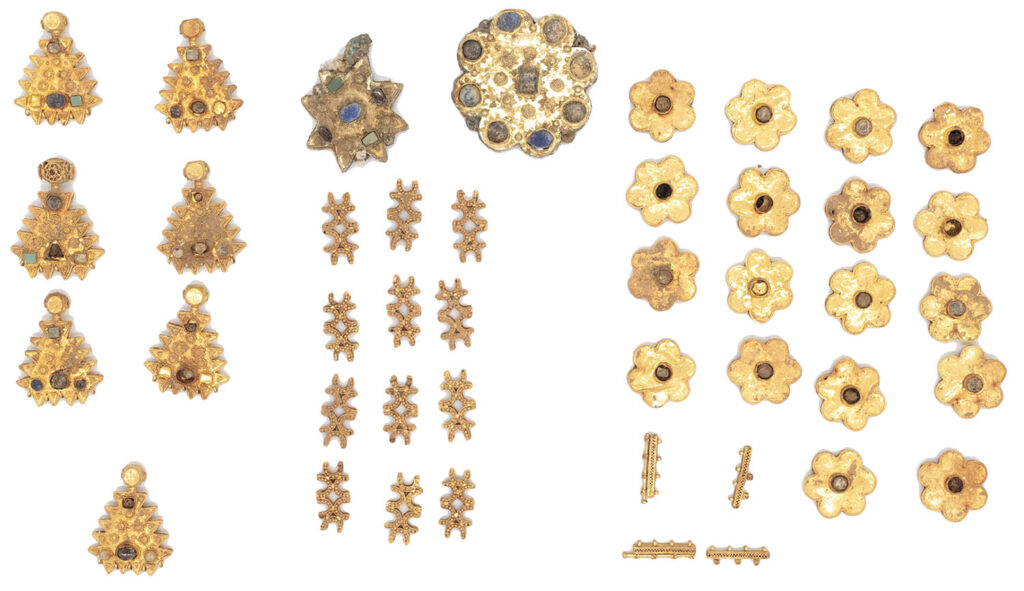
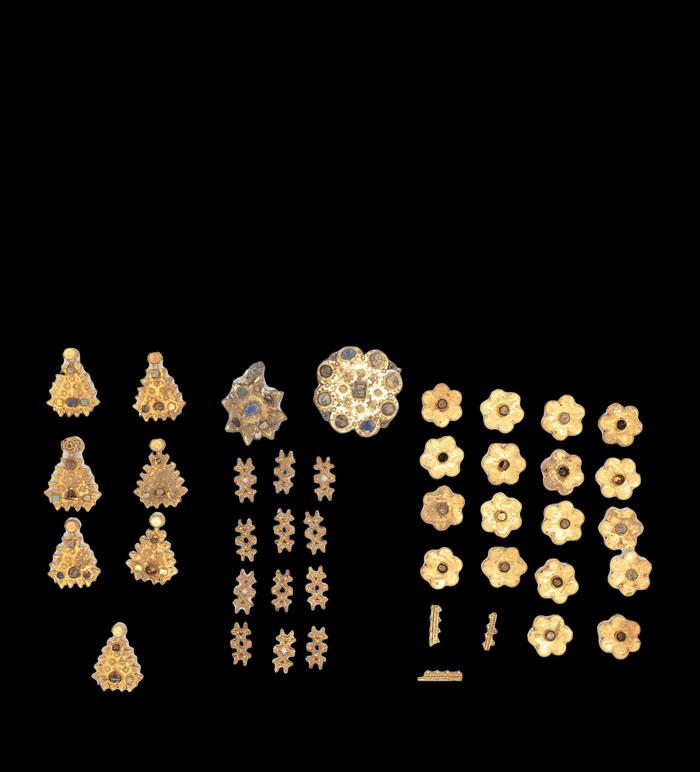
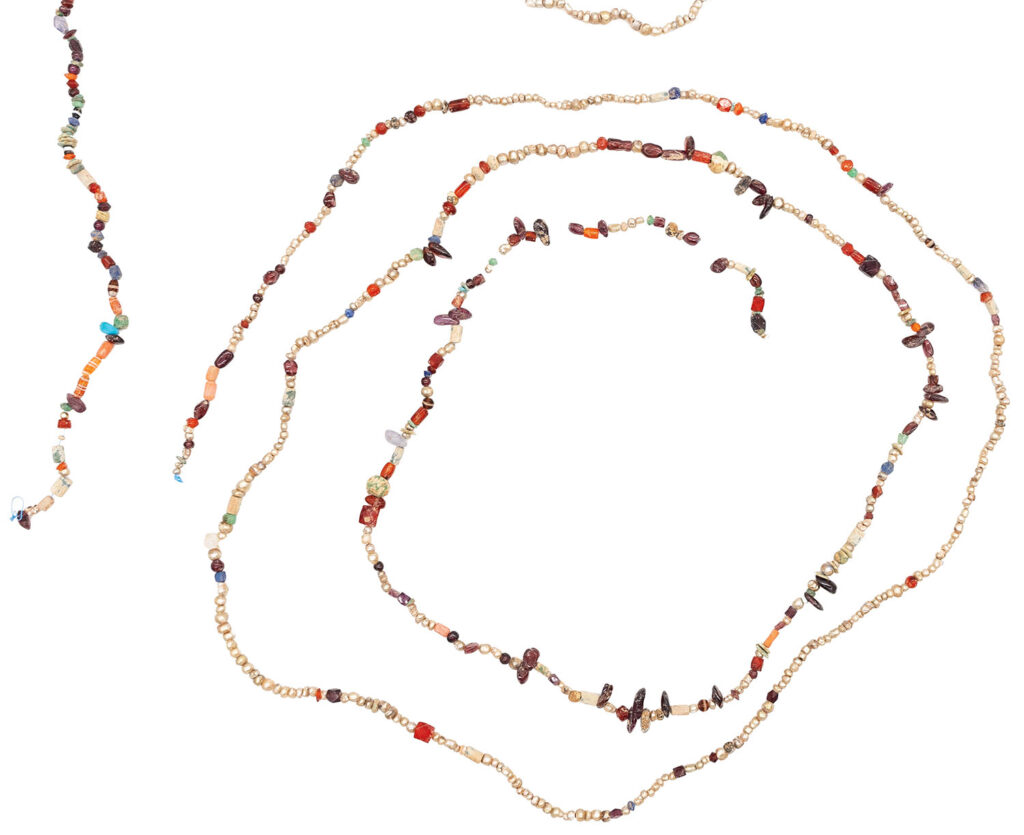
At the site of Dhariyah in central Saudi Arabia, archaeologists unearthed 100 pieces of jewelry made of gold and gemstones that were stored—or perhaps hidden—in a ceramic vessel. During the Abbasid Caliphate (a.d. 750–1258), Dhariyah was an important way station along a regional trade route, as well as on the hajj road from Basra in Iraq to Mecca in Saudi Arabia, Islam’s holiest pilgrimage destination. The jewelry likely dates to the earliest days of the caliphate. “Discoveries from the Abbasid period of this scale and quality are relatively rare in Saudi Arabia,” says archaeologist Saeed AlOtaibi of the Heritage Commission of Saudi Arabia. “This level of artistic achievement reflects the development of craftsmanship and production methods, as well as cultural and commercial connections across the Islamic world at this time.”
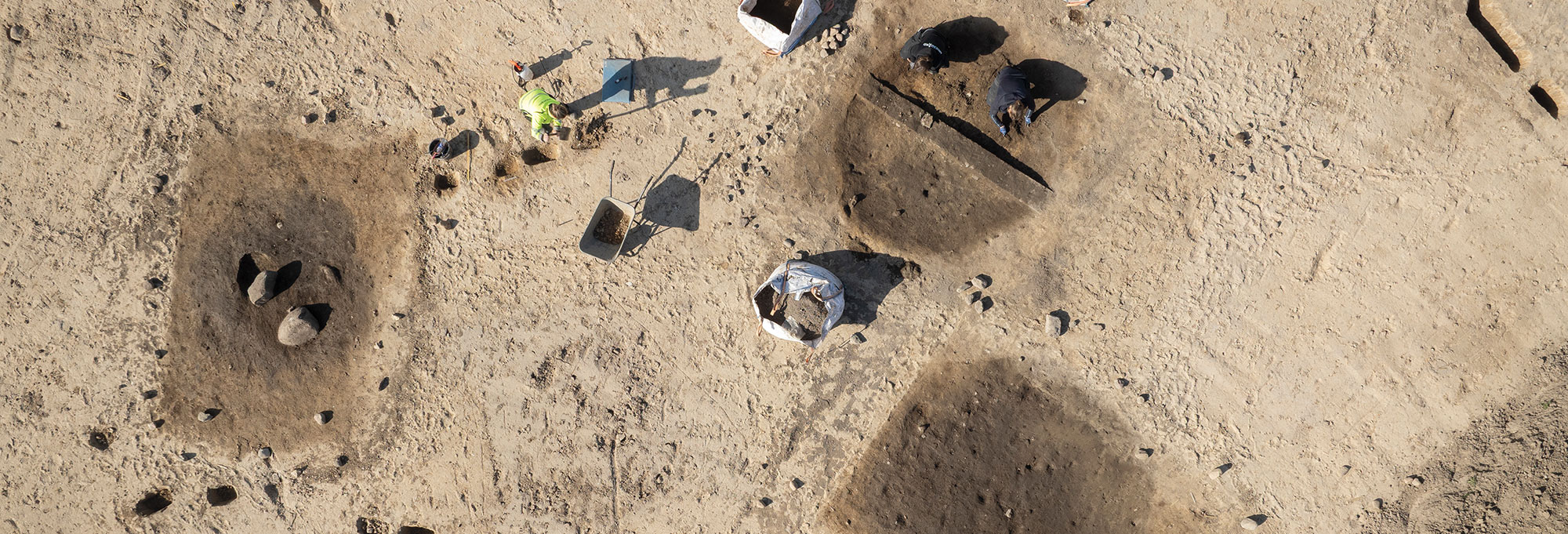
Archaeologists at Dhariyah have also revealed stone foundations, mudbrick architecture, plaster walls and floors, wells, hearths, and pottery that provide evidence of a thriving settlement filled with people from many walks of life. “Dhariyah’s inhabitants may have included merchants, craftspeople, and guards,” says AlOtaibi, “as well as local families who served caravans and pilgrims along the route.”