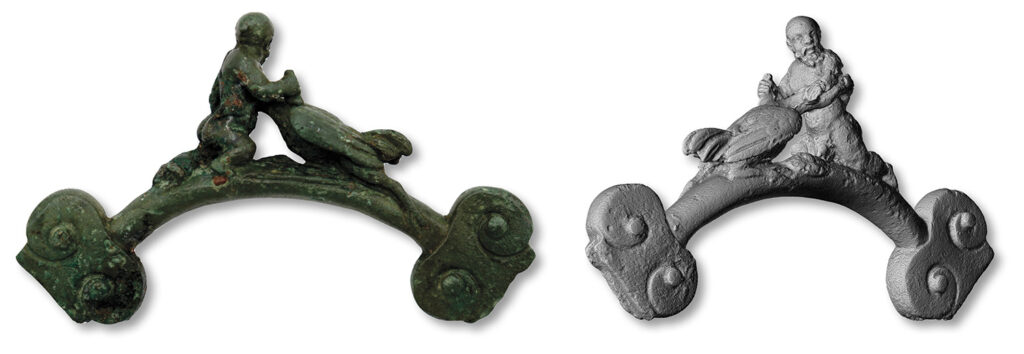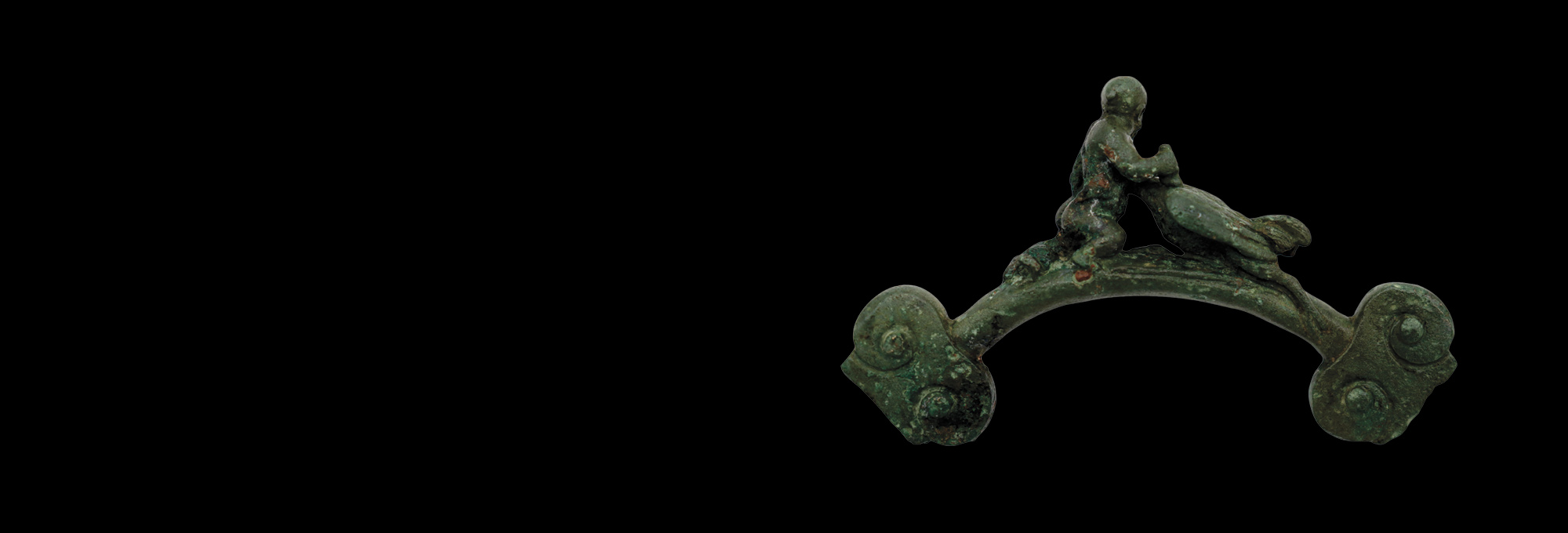
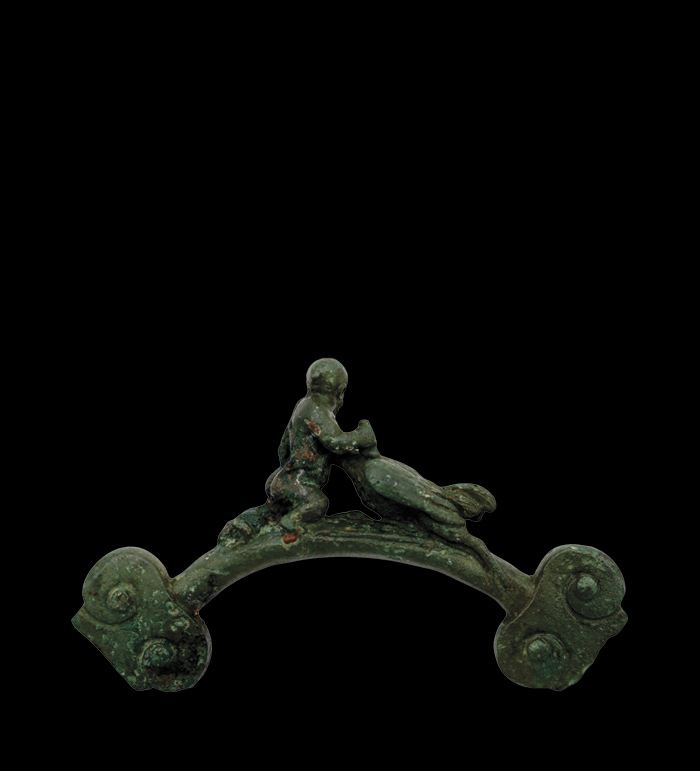
To understand the meaning of a bronze artifact found in a Roman settlement in central Romania, archaeologist Silvia Mustață of Babeș-Bolyai University had to get a 2,700-year-old joke. The artifact in question is part of a bronze ring used like a keychain to hold strigils, curved metal instruments used by bathers to scrape oil and dirt off their skin. Two figures decorating the ring enact a bizarre scene in which a person seems to subdue a large bird with a knife.
After conducting a 3D scan of the artifact, Mustață determined that the figures are combatants in an eternal struggle between pygmies and migrating cranes recounted in the Iliad. This bit of Homeric comic relief served as a set piece in Greek and Roman artwork for centuries. The pygmy on the ring, however, departs from other depictions of the myth, which tend to emphasize the pygmies’ playfulness. “This might be the most serious pygmy in all of ancient Roman art,” Mustață says. “One can detect a sense of satisfaction on his face as he glances at the viewer.” She notes that the pygmy’s victorious pose resembles depictions of Hercules defeating the Nemean lion, the first of the hero’s twelve labors. Somewhat undermining this triumphant moment is an oversize representation of the pygmy’s feces. “We may have a pygmy attempting to assume the heroic posture of Hercules,” says Mustață, “while at the same time being so frightened that he can’t control his bodily functions.” Whoever made the ring was, it seems, putting their own twist on an already ancient gag.