
(Courtesy Cambridge University)
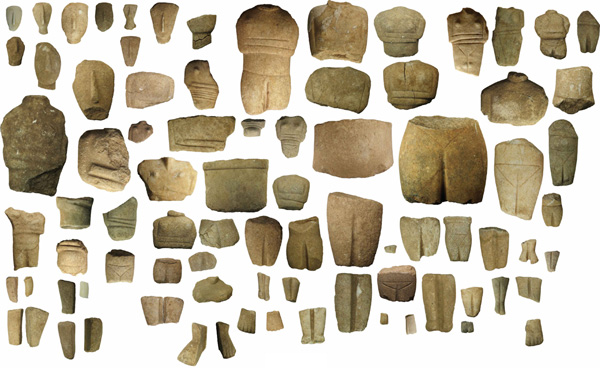
A new interpretation of evidence for a previously enigmatic Bronze Age ritual dating from 2800 to 2300 B.C. has emerged. Colin Renfrew of the University of Cambridge first visited the Greek island of Keros in the Cyclades in 1963 and found, among other artifacts at a heavily looted site, fragments of marble figurines. In the 1970s, a large quantity of broken Cycladic figurines—part of the so-called "Keros Hoard"—came onto the antiquities market, deepening the mystery of when and why they were broken. Either many of the figurines taken from the island and those left in place were broken by looters—or something entirely different had gone on.
In 1987, Renfrew began excavating and discovered that the figurine breakages were ancient and deliberate. Previously, intact versions of these figurines had generally been found in early Bronze Age graves. Since there was no evidence of burials or marble chips on Keros, this suggests the figurines had been broken elsewhere and then transported to the island. Renfrew and his team returned to Keros in 2006. By excavating an unlooted site 450 feet south of the original, they discovered that among the hundreds of fragments found, only a small number matched any others. Further, the number of figurine fragments found on Keros far exceeds the number of whole figurines found on all other Cycladic islands. This told Renfrew that the fragments must have been imported for a special purpose. He concluded that Keros, with its central location, was a ritual site. It seems the islanders were breaking their figurines after their use-life was over and bringing fragments with them to Keros.
On Dhaskalio, a small, rocky islet separated from Keros by a narrow channel, excavators found the remains of a settlement with a long hall, possibly used as a guesthouse, where visitors might have stayed. The islanders then traveled to Keros for the ceremony of burying the fragments. Although ritual centers of this kind have been found on other Cycladic islands, this one predates all others by 2,000 years. "Keros functioned as a 'symbolic attractor,' with visitors making periodic pilgrimages to deposit these special fragmentary artifacts," says Renfrew. "This was a social activity as well as a ritual activity." He adds, "Since similar figurines functioned as grave goods in the Cycladic cemeteries, we may infer that these rituals on Keros had a significance relating to their beliefs about life, death, and perhaps the hereafter."