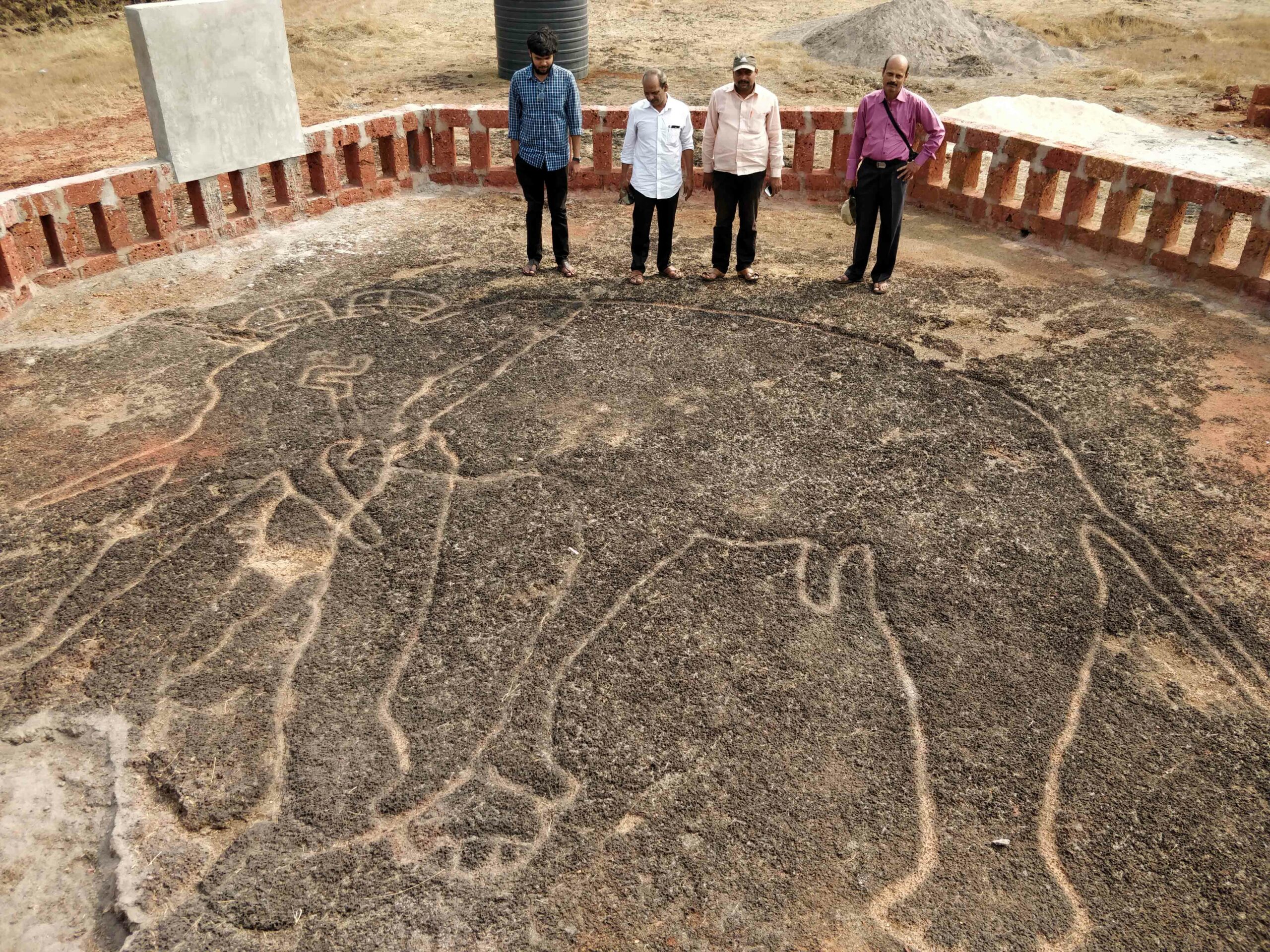
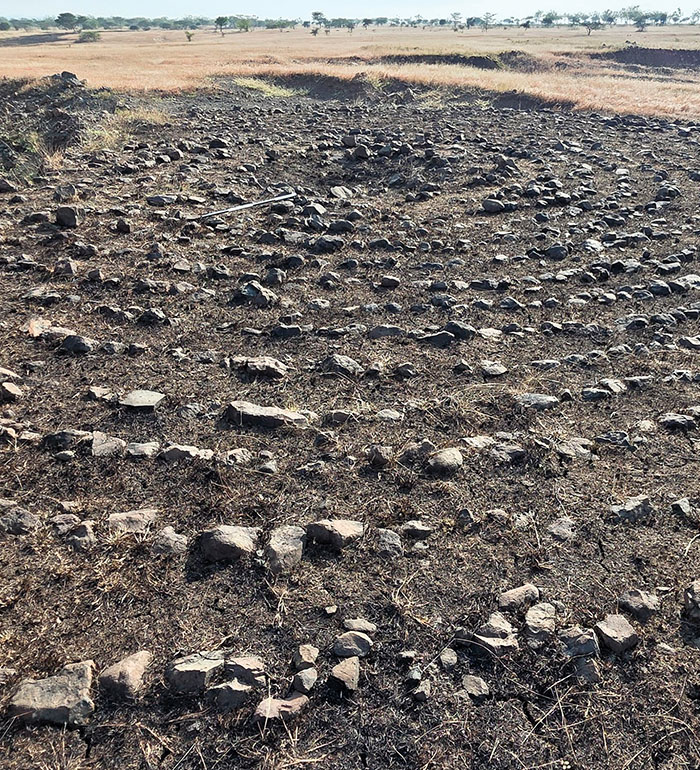
Archaeologists have identified a circular labyrinth in western India’s Maharashtra State measuring 50 feet in diameter with 15 concentric rings. The labyrinth was constructed from a single type of stone found in the area and is the largest such structure to have been discovered in India. Archaeologist Sachin Patil of Deccan College has linked the labyrinth to trade between India and Rome that flourished during the Satavahana Dynasty (ca. late second century b.c.–early third century a.d.). The labyrinth’s design closely resembles patterns found on coins from Crete, evidence of India’s ties to the ancient Mediterranean. Patil believes such labyrinths probably served as landmarks for Roman merchants traveling along the western coast of Maharashtra to the rest of India. The merchants traded gold, wine, and ornamental items from Rome for Indian silk, indigo dye, and spices. “The discovery is vital,” says Patil, “as it has corroborated historical narratives of the region being a major hub for foreign trade.”