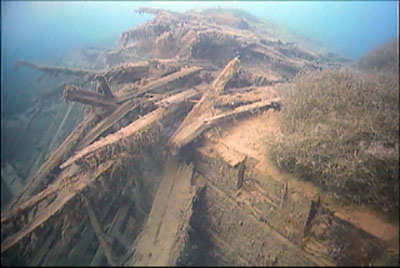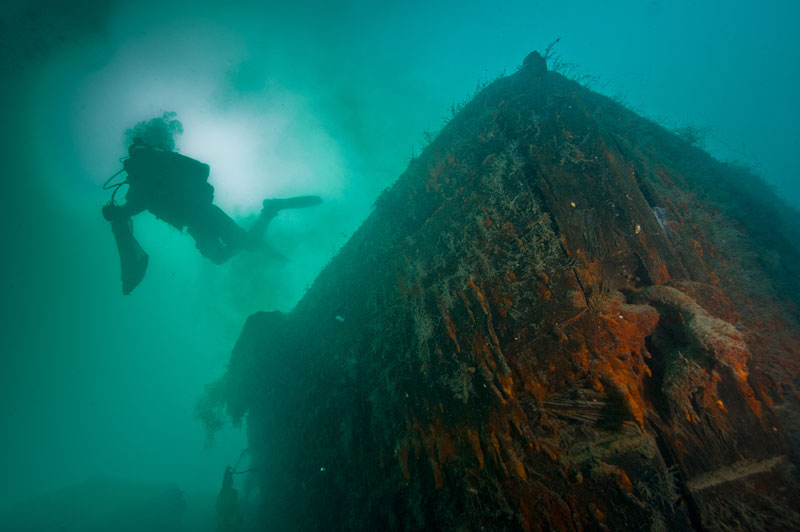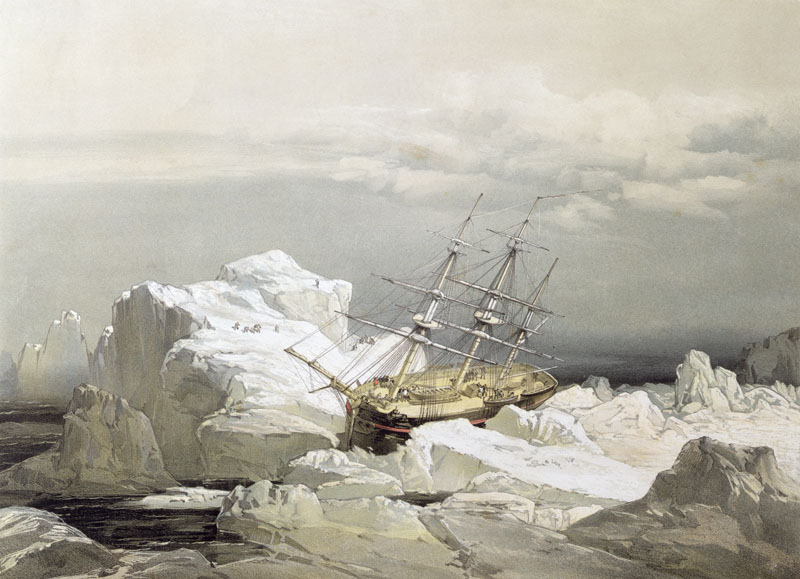
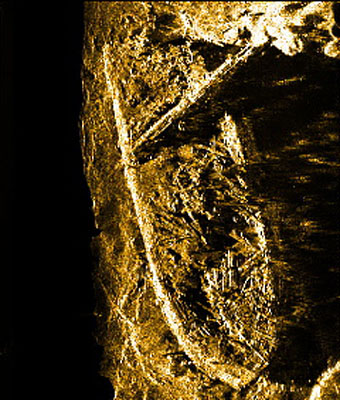
They found the old British ship exactly where it was supposed to be. It hadn't drifted out to sea, been salvaged by American whalers, or broken up by waves, as various theories had suggested. HMS Investigator—the first ship to sail the westernmost leg of the Northwest Passage—was found last July in Canada's Mercy Bay under 30 feet of water, but otherwise right where its crew left it in 1853.
The crew, abandoning the ship when it became trapped in pack ice, spent three winters in the area before being rescued and returning to Britain, which made them the first people to travel the passage (by ship, foot, and sled) from end to end. Given the remote location outside Canada's Aulavik National Park, the ease of the discovery was quite unexpected.
"We came prepared to search for 16 hours a day for two straight weeks," says Ryan Harris, an underwater archaeologist with Parks Canada who led the team. "We actually found the ship in just under three minutes."
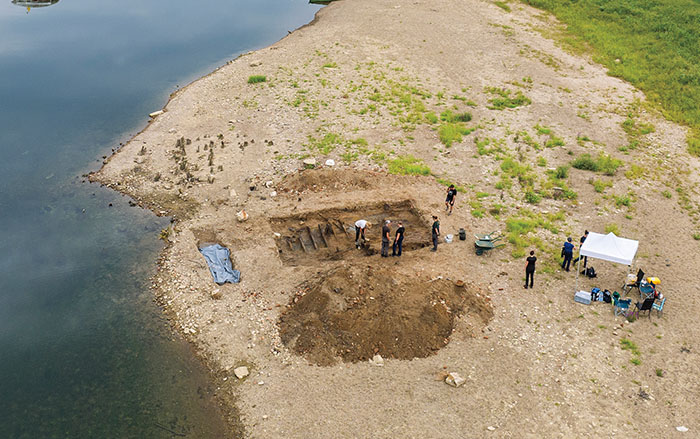
Harris used side-scan sonar towed from a 19-foot inflatable boat to locate the well-preserved wreck. At the same time, two more archaeologists documented the remains of the crew's caches (believed to have influenced the material culture of the local Inuvialuit people) and located the graves of three unlucky seamen who died of scurvy before rescuers arrived.
The crew of Investigator never found the two lost British ships, Erebus and Terror, they were sent to find. Harris plans to return to Mercy Bay with dive gear in summer 2011 to take a closer look at Investigator. And to keep an eye out for whatever else might be in those Arctic waters.